SOC 2 Timeline for SaaS Startups: What to Actually Expect
TL;DR
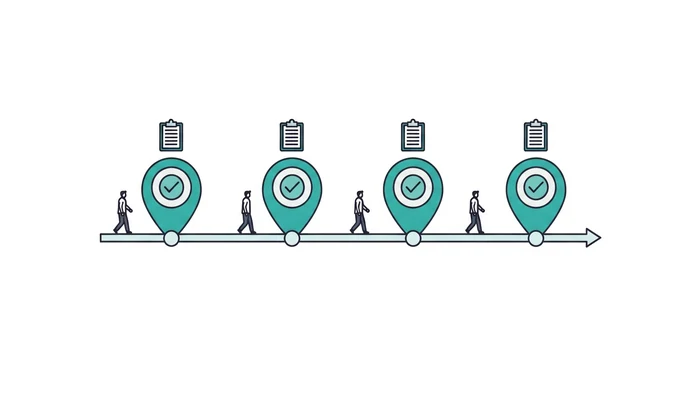
- SOC 2 Type 1 takes 6-10 weeks from kickoff to delivered report for a 10-50 person SaaS startup.
- SOC 2 Type 2 requires a minimum observation period, plus readiness work before it opens and audit fieldwork after it closes; total is 6 months at the fastest.
- A-LIGN notes the Type 2 observation window is "usually between 3-12 months"; Schellman describes it as "typically six months or more."
- GRC platforms (Vanta, Drata, Secureframe, Sprinto, Thoropass) shorten the readiness phase by automating evidence collection across connected systems.
- Audit costs for boutique CPA firms differ meaningfully from Big Four engagements. See the SOC 2 audit cost page for a full breakdown.
Who This Is For
This guide is written for SaaS founders and engineering leads at companies with 5-150 employees who have received a customer request for a SOC 2 report and need a realistic answer to "how long will this take?" It is not written for enterprises, regulated industries, or teams with existing compliance infrastructure.
What this means in practice. When a Series A CTO first receives a security questionnaire from a Fortune 500 procurement team, the typical first instinct is to scope a full SOC 2 Type 2 immediately. In most cases, that instinct is correct for the long term but wrong for the short term: the prospect's legal team often needs only a Type 1 as a gate-clearing step, plus a written commitment to deliver Type 2 within 12 months. Starting with Type 1 does not extend the eventual Type 2 observation period; it unlocks the deal while readiness work continues. The week-by-week breakdown below reflects that sequencing logic.
What SOC 2 Actually Measures
The AICPA defines a SOC 2 examination as a report on controls at a service organization relevant to five Trust Services Criteria: Security, Availability, Processing Integrity, Confidentiality, and Privacy. Security is the only required category. Most SaaS startups begin with Security alone or Security plus Availability.
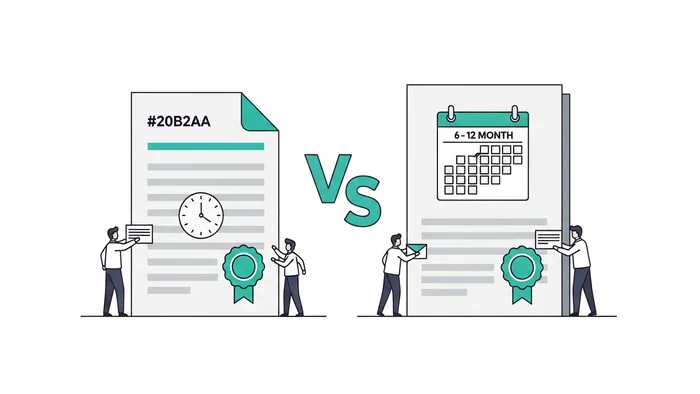
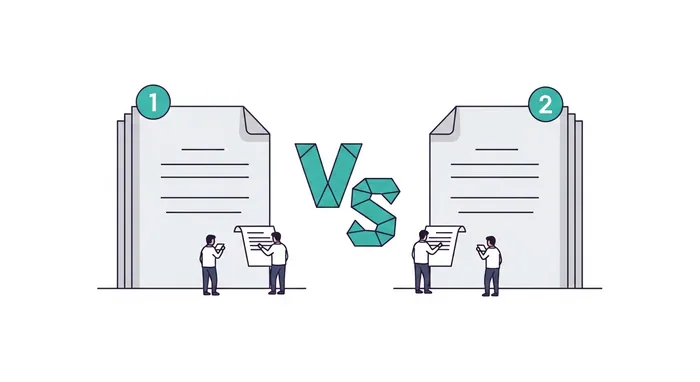
There are two report types:
- Type 1. A point-in-time assessment. The auditor confirms your controls are designed correctly as of a specific date. No observation period.
- Type 2. An operating-effectiveness assessment over a defined period. The auditor confirms controls operated as designed throughout. A-LIGN describes this period as "usually between 3-12 months"; Schellman calls it "typically six months or more."
The distinction matters for sales: most enterprise procurement teams accept Type 1 as a first step, but will ask for Type 2 before renewing or expanding a contract.
SOC 2 Type 1: 90-Day Fast Track
A focused SaaS startup with one dedicated owner can reach a delivered Type 1 report in 8-10 weeks. Below is a week-by-week breakdown.
Weeks 1-2: Scope and Setup
- Select an auditor and sign the engagement letter. Fixed-fee boutique CPA firms (Schellman, A-LIGN, KirkpatrickPrice, Prescient Assurance, Insight Assurance) close Type 1 engagements faster than large firms.
- Choose a GRC platform and connect your cloud infrastructure. Typical integrations: AWS or GCP production account, GitHub, identity provider (Okta, Google Workspace, Azure AD), MDM (Kandji, Jamf, Intune), HRIS (Rippling, Gusto, Deel), and a task tracker (Linear, Jira).
- Confirm which of the five Trust Services Criteria apply. Security is mandatory. Add Availability if uptime is a customer commitment. Add Confidentiality if you process customer business data. Add Processing Integrity if you run data transformations. Add Privacy if your system processes personal data under GDPR or CCPA.
Weeks 3-5: Controls and Policies
- Your GRC platform will auto-populate evidence for configuration-based controls (encryption at rest, MFA enforcement, audit logging, disk encryption on managed devices). Work through the remaining gaps manually.
- Author the policies your auditor requires. The standard set for a first-time engagement includes: Information Security Policy, Access Control Policy, Incident Response Policy, Business Continuity Plan, Change Management Policy, and Vendor Risk Management Policy. Fifteen to twenty policies total is a common practitioner estimate for a first-time engagement scope (editorial estimate; actual count varies by auditor and scope).
- Run the first vendor risk assessment. Inventory all subservice organizations (cloud providers, payment processors, subprocessors).
Weeks 6-7: Readiness Review
Your auditor or a readiness consultant walks through your control evidence and flags gaps. Common findings at this stage: incomplete vendor risk register, missing change-management tickets, MFA exceptions for specific accounts, and access reviews that were planned but not executed. Plan one to two weeks to close these before fieldwork opens.
Weeks 8-10: Fieldwork and Report
Schellman describes four phases for the audit: Planning and Preparation, Evidence Request and Collection, Testing (walkthroughs, interviews, evidence review), and Reporting. For Type 1, all four phases happen against the single as-of date. The draft report comes back with a management response section; your team reviews and signs off, and the final report is issued.
Total: 8 weeks if you move fast. 10-12 weeks with a part-time compliance lead or no GRC tooling.
SOC 2 Type 2: The 12-Month Plan
Most SaaS startups skip Type 1 and start Type 2 readiness directly. Type 2 satisfies more customer requirements, and doing Type 1 first adds 8-10 weeks without extending the Type 2 observation window.
Phase 1 (Months 1-2): Readiness
Same work as the Type 1 fast track above: scope, tooling, controls, policies, readiness review. The difference is that you are getting controls to a consistently operating state before you open the observation window, not just designed-and-documented.
Controls that require operating evidence include: quarterly access reviews (every user's permissions reviewed), security training completions for all employees and contractors, vulnerability scanning on a defined cadence, change-management tickets for every production change, and incident response testing.
Do not open the observation window until all of these are running. Starting the clock before controls are fully operational creates findings that require management remediation language in the final report.
Phase 2 (Month 3): Open the Observation Window
The window start date is a formal agreement with your auditor. On Day 1, your controls must already be in operation. The GRC platform begins collecting timestamped evidence automatically: access logs, configuration snapshots, training completions, vulnerability scan results, and change tickets.
Three-month observation windows are acceptable for first-time Type 2 engagements. Six-month windows are increasingly what enterprise customers expect on a first report. Twelve-month windows are standard for annual renewal audits.
Phase 3 (Months 3-9): The Observation Window
During this phase, the auditor does almost nothing. Your team runs controls. Key operational requirements each month:
- Access reviews on the cadence your policy specifies (quarterly is the minimum most auditors accept).
- Security training for every new hire within their first 30 days of employment.
- Vulnerability scans on your defined schedule, with remediation tickets for findings above your stated risk threshold.
- Change-management tickets for every production infrastructure change.
- Incident response testing: at least one tabletop exercise during the window if you have no real incidents to document.
Missing any of these during the window creates a finding. Plan the review cadence into your engineering sprint calendar before the window opens.
Phase 4 (Final 4-8 Weeks): Fieldwork and Report
After the window closes, your auditor runs the same four phases as Type 1 (Planning, Evidence, Testing, Reporting) but against the full observation period. Evidence sampling covers the entire window. Walkthroughs confirm that controls operated consistently.
Total elapsed time:
- 3-month window: 6 months end-to-end
- 6-month window: 9 months end-to-end
- 12-month window: 15 months end-to-end
What Adds Time

Five factors that practitioners consistently identify as extending the SOC 2 timeline, each described below with the typical delay range (delay estimates are editorial, based on common practitioner guidance; actual impact varies by team and scope):
No GRC tooling. Without a connected platform, evidence collection is manual. Each control requires a screenshot, export, or ticket pull per quarter. With 50-100 controls in scope and multiple quarters of data, this is a significant time sink. GRC platforms automate the majority of configuration-based evidence.
Remote engineers on unmanaged devices. SOC 2 requires evidence of disk encryption, MFA enforcement, and screen-lock policy on every device with access to production systems. If your team uses personal laptops without MDM, plan 2-4 weeks to roll out device management before the observation window opens (editorial estimate).
Multiple cloud accounts. Each AWS account, GCP project, or Azure subscription needs its own monitoring connection, access review, and configuration evidence. Limiting the initial scope to a single production account reduces evidence burden and can save 2-6 weeks in readiness (editorial estimate).
Vendor risk register in a spreadsheet. Auditors sample vendor risk reviews for timestamps, review dates, and documented risk acceptance. A spreadsheet without those fields generates findings. Migrating to structured tooling after the window opens adds 1-3 weeks (editorial estimate).
No incident response testing. Type 2 requires operating evidence for incident response controls. If your window runs without any incidents, you need a documented tabletop exercise to fill that gap. Schedule one within the first four weeks of the window.
Timelines by Company Stage
Timeline ranges below are editorial estimates based on practitioner guidance and the A-LIGN / Schellman observation-window ranges cited above. Actual timelines depend on auditor, scope, and team bandwidth.
| Stage | Headcount | Type 1 | Type 2 (3-mo window) |
|---|---|---|---|
| Pre-seed / Seed | 5-15 | 10-12 weeks | 7-9 months |
| Seed / Series A | 15-50 | 8-10 weeks | 6-8 months |
| Series A / B | 50-150 | 6-8 weeks | 9-12 months (6-mo window typical) |
| Series B / C | 150+ | Rarely done | 14-18 months (12-mo window) |
The fastest outcomes come from Seed and Series A companies with under 50 people: small enough to have one owner who knows every system, large enough to have separated production access by role. For cost estimates by stage, see the SOC 2 audit cost breakdown.
Mini-FAQ
How long does SOC 2 take for a SaaS startup? Type 1: 6-10 weeks. Type 2 with a 3-month observation window: 6 months minimum end-to-end, accounting for 2 months of readiness work before the window and 4-8 weeks of audit fieldwork after it closes.
Can a SaaS startup get SOC 2 in 3 months? Type 1, yes, if you move fast and have engineering bandwidth. Type 2, no. The observation period alone is at minimum 3 months, and that clock cannot start until readiness is complete and fieldwork cannot start until the window closes.
Is SOC 2 Type 1 enough to close enterprise deals? For initial sales, often yes. Most enterprise procurement teams accept Type 1 paired with a commitment to deliver Type 2 within 12 months. Some require Type 2 upfront. Confirm with your customer before deciding which to start.
Should a SaaS startup do SOC 2 or ISO 27001 first? SOC 2 if your customers are US enterprises. ISO 27001 if you sell primarily in Europe or APAC. The two frameworks overlap significantly but are different in structure: SOC 2 is an attestation by a licensed CPA firm under AICPA standards; ISO 27001 is a certification by an accredited certification body. See the SOC 2 vs ISO 27001 comparison for a full breakdown.
What is the shortest Type 2 observation window auditors accept? Three months for a first-time engagement at most CPA firms. A-LIGN describes the standard range as "3-12 months." A 3-month window is technically valid but many enterprise customers will ask for a 6-month window before renewing.
What if we have no dedicated security person? SOC 2 is achievable without a security hire if your CTO or Head of Engineering can dedicate significant time across the project period. Below that commitment level, the timeline extends and gaps accumulate faster than they close.
Sources
- AICPA, "SOC 2, SOC for Service Organizations: Trust Services Criteria," https://www.aicpa-cima.com/topic/audit-assurance/audit-and-assurance-greater-than-soc-2, accessed 2026-05-12.
- AICPA, "2017 Trust Services Criteria (With Revised Points of Focus, 2022)," https://www.aicpa-cima.com/resources/download/2017-trust-services-criteria-with-revised-points-of-focus-2022, accessed 2026-05-12.
- AICPA, "SOC Suite of Services," https://www.aicpa-cima.com/resources/landing/system-and-organization-controls-soc-suite-of-services, accessed 2026-05-12.
- Schellman, "SOC 2, SOC Compliance and Attestations," https://www.schellman.com/services/soc-compliance-and-attestations/soc-2, accessed 2026-05-12.
- A-LIGN, "SOC 2 Services," https://a-lign.com/soc-2/, accessed 2026-05-12.
- AICPA, "SSAE No. 18, Attestation Standards: Clarification and Recodification," https://www.aicpa-cima.com/resources/landing/ssae-no-18-attestation-standards, accessed 2026-07-03.
- NIST SP 800-53 Rev 5 control catalog (cross-walks to SOC 2), accessed 2026-06-25.
Last human editorial review: 2026-05-12. Last updated: 2026-07-03. This article was prepared by the Security Compliance Guide Editorial Team. We use AI to draft initial summaries of publicly available cybersecurity compliance documentation, then verify every claim against primary sources before publication. We are not licensed auditors, attorneys, or compliance consultants. For binding decisions, consult a qualified professional. See our editorial standards for full sourcing rules.