How Long Does SOC 2 Audit Take? Realistic 2026 Timeline
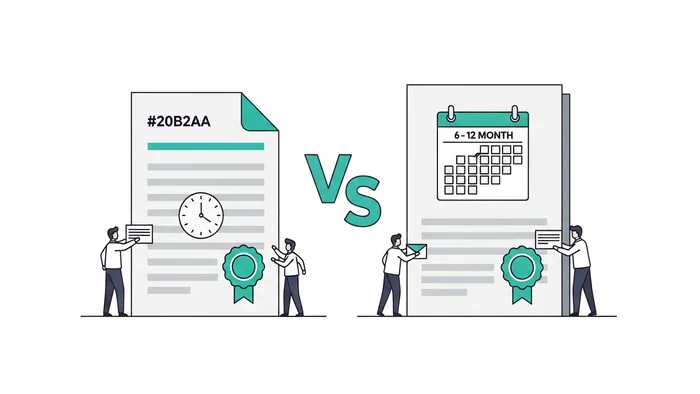
How long does SOC 2 audit take? A SOC 2 Type 1 audit typically takes 8 to 12 weeks from engagement letter to report issuance, assuming reasonable starting readiness. A SOC 2 Type 2 audit takes 5 to 12 months end to end, dominated by the required observation period rather than the fieldwork itself. Most real-world SOC 2 projects run longer than the audit firm's proposal because they include readiness and remediation work in front of fieldwork that is not explicitly quoted.
This guide, written for SaaS founders and startup CTOs preparing their first report, breaks the SOC 2 timeline into its actual phases, quantifies each, explains why fast-track promises under 8 weeks are usually marketing, and shows you where to compress time legitimately and where you cannot.
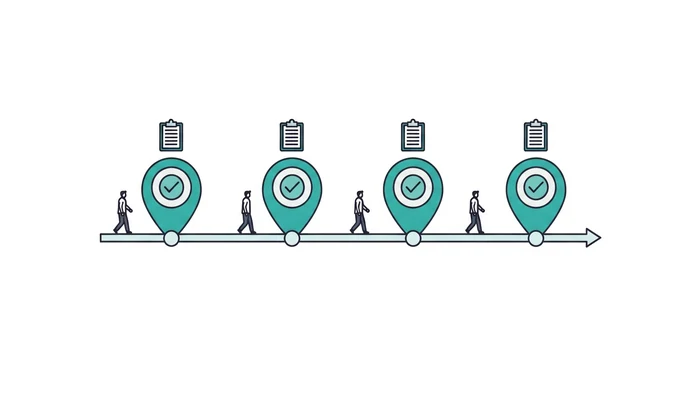
Quick Answer: SOC 2 Timeline Ranges
| Phase | Type 1 (weeks) | Type 2 (months) |
|---|---|---|
| Scoping and engagement letter | 1 to 2 | 1 to 2 |
| Readiness assessment | 2 to 4 | 2 to 4 |
| Remediation | 4 to 12 | 2 to 6 |
| Observation period | not applicable | 3 to 12 months |
| Fieldwork | 2 to 4 | 4 to 8 |
| Report issuance | 1 to 2 | 1 to 2 |
| Total end-to-end | 8 to 12 weeks | 5 to 12 months |
Remediation and observation phases dominate. Fieldwork is rarely the bottleneck. Programs that claim to deliver a Type 2 in 90 days are almost always selling a short observation period (typically 3 months) with aggressive parallel fieldwork, which works only if the client entered the engagement with mature controls already in place.
Why Type 1 and Type 2 Timelines Differ So Much

The difference is entirely the observation period. A Type 1, per the AICPA SOC 2 guidance, tests the design of controls at a single point in time. A Type 2 tests both the design and the operating effectiveness of controls over a period that must be at least 3 months (typical), 6 months (most common), or 12 months (standard renewal cadence).
Controls can be designed in weeks. Operating evidence of controls running can only be generated by time passing. Four weeks of evidence does not satisfy a Type 2 audit; only three months of continuous evidence does. This is the single hardest constraint in the SOC 2 timeline.
Enterprise buyers almost always want Type 2. A Type 1 is useful as a bridge credential while you accumulate the operating history for Type 2. The typical sequence: Type 1 in month 3, observation period months 4 to 9, Type 2 fieldwork months 10 to 11, Type 2 report month 12. See our SOC 2 compliance guide for the full framework context.
Phase 1: Scoping and Engagement (1 to 2 Weeks)
The scoping phase defines which Trust Service Criteria are in scope, which products and systems are included, what observation period you are targeting, and what the audit firm fees will be.
Typical deliverables:
- Signed engagement letter with the audit firm
- Defined scope (systems, TSCs, locations, observation period dates)
- Kickoff call with the audit partner and senior manager
- Identification of control owners in the client organization
The bottleneck is usually not the audit firm but the client's procurement and legal review of the engagement letter. Budget one to two weeks if legal is involved. Firms that quote "engagement in 72 hours" usually skip the legal step, which creates problems later if the MSA is not aligned with the audit firm's standard terms.
Phase 2: Readiness Assessment (2 to 4 Weeks)
The readiness assessment is the gap analysis against the target Trust Service Criteria. Two paths:
- Self-assessment via a compliance automation platform. Platforms like Drata, Vanta, Secureframe, and Sprinto provide a built-in readiness view mapped to SOC 2 controls. Cheap and fast, output is a gap list you work through. See Vanta vs Drata vs Secureframe.
- Formal readiness assessment by the audit firm or a third-party advisory. Deeper, produces a written report, costs $5,000 to $20,000. Takes 2 to 4 weeks including report delivery.
Most first-time SOC 2 programs benefit from a formal readiness assessment because it surfaces not just the missing controls but the sloppy implementations that will fail during fieldwork. Organizations that skip readiness save 3 weeks and then spend 6 weeks remediating surprise findings.
Phase 3: Remediation (2 to 6 Months)

Remediation is the longest variable in the timeline and the one that depends most on starting maturity. This is where you close gaps identified in readiness: roll out SSO and MFA, implement logging and monitoring, establish formal change management, write and approve 15 to 25 policies, set up vendor management workflow, and implement a security awareness training program.
Typical remediation duration by starting state:
- Startup with no formal security program. 4 to 6 months. The hardest remediation because everything from SSO to policies to ticketing has to be built.
- Mid-market SaaS with ad-hoc controls. 2 to 3 months. Controls exist but need formalization, cadence, and evidence collection.
- Company with existing ISO 27001 or HIPAA program. 4 to 8 weeks. Most control infrastructure maps directly; mostly policy and evidence-mapping work.
Remediation compresses with full-time dedicated staffing. A shared engineer allocating 20 percent of their time will take 3x longer than a dedicated compliance lead.
This is also the phase where most overruns happen. Budget generously; assume every engineering dependency will take twice as long as estimated. See our SOC 2 compliance checklist for the concrete control list to work through.
Phase 4: Observation Period (Type 2 Only)
The observation period is the calendar window during which the auditor will sample evidence of control operation. Minimum acceptable period under AICPA guidance is typically three months; most first-time Type 2 programs choose six months for a stronger report, and mature programs run 12-month periods for continuous year-over-year coverage.
Key constraint: the observation period cannot start until the controls are designed and operating. If you tried to pretend the observation started in January but only rolled out SSO in March, the auditor will either shorten the effective period or find exceptions throughout.
Three observation-period rules that determine whether fieldwork goes smoothly:
- Run every control at its documented cadence, without exception. Quarterly access review means quarterly, not "whenever we remember."
- Capture evidence immediately. Screenshots, ticketing exports, access review signatures, policy approval emails. Evidence captured three months later is evidence of nothing.
- Document every exception. A control that did not run for a legitimate reason (employee on leave, system outage) is not fatal if it is documented and compensated. An undocumented gap is a finding.
Organizations that treat the observation period as "just waiting" produce messy fieldwork. Organizations that treat it as the audit itself produce clean fieldwork.
Phase 5: Fieldwork (4 to 8 Weeks)
Fieldwork is the portion of the audit that the audit firm actually performs. It includes walkthroughs of each in-scope control with the control owner, sampling of evidence from the observation period, documentation of any deviations, and drafting of the report.
Typical fieldwork activities:
- Kickoff and evidence request list. Day 1 to 5.
- Walkthroughs. Week 1 to 3. The audit firm interviews each control owner to understand how the control operates. Plan for 30 to 60 minutes per walkthrough.
- Evidence sampling. Week 2 to 5. The firm requests samples of evidence for each testable control. Client provides. Firm tests.
- Deviation documentation and remediation. Week 4 to 6. Any control that did not operate effectively during the observation period is documented. Compensating controls may be accepted.
- Draft report. Week 6 to 7.
- Client review of draft. Week 7 to 8.
Fieldwork duration depends on (a) how fast the client responds to evidence requests, (b) how clean the evidence package is, and (c) how many control exceptions require follow-up. Clients who respond same-day compress fieldwork to four weeks. Clients with two-week response cycles extend fieldwork to eight weeks or more.
Phase 6: Report Issuance (1 to 2 Weeks)

After client review of the draft, the audit firm finalizes the report, the partner signs it, and the firm issues both a full report (for customer sharing under NDA) and a short-form letter or bridge letter. Most firms deliver the final report within one to two weeks of draft approval.
If the audit firm is one of the higher-tier firms (A-LIGN, Schellman, Prescient), this phase includes a quality review by a second partner that can add a week. Plan for two weeks as the realistic upper bound.
The report is dated as of the day the partner signs it. That date, not the last date of the observation period, is the "as-of" date that customer security questionnaires ask about. Plan the cadence so that the report date aligns with the start of a peak sales quarter, not the middle.
Fast-Track Timelines: When They Work and When They Don't
Several compliance automation platforms and advisory firms market fast-track SOC 2 timelines, sometimes promising Type 2 in 90 days. The claims are not fraudulent, but they depend on assumptions that do not apply to most companies.
Fast-track works when:
- The client has existing ISO 27001 or HIPAA certification with overlapping controls
- The scope is limited to Security TSC only
- The observation period is the minimum 3 months
- The client has a dedicated FTE for the program
- The compliance platform is live on day one with all integrations working
Fast-track does not work when:
- The client starts without SSO, MFA, or formal policies
- Multiple products or multiple environments are in scope
- The engineering team is shipping product features in parallel without bandwidth for remediation
- The audit firm's calendar is booked 6 to 8 weeks out (common in Q2 and Q4)
In the median B2B SaaS case, plan for 9 to 12 months end-to-end from "we need SOC 2" to "here is the Type 2 report," not 90 days.
What Slows SOC 2 Projects
Eight factors account for most SOC 2 project overruns:
Executive sponsor disengagement. The CEO or CTO must own the program at the commitment level. Without that, engineering deprioritizes compliance work every sprint.
Scope creep. Adding Availability, Confidentiality, or Processing Integrity mid-engagement resets readiness and can extend the project by 2 to 3 months.
Dependence on engineering for routine tasks. Compliance platforms automate most engineering-side work (access reviews, logging, change management). Organizations that run these in spreadsheets waste engineering time on non-product work.
Auditor calendar. Firms book out 6 to 8 weeks at minimum. Signing with a firm in May for a July fieldwork is tight. Sign three months ahead of desired fieldwork dates.
Policy rewrites in month 6. Rushed policy approval in month 2 often produces policies that fail field testing in month 9. Budget more time for policy drafting up front.
Turnover. The compliance lead leaving mid-project typically adds 6 to 10 weeks for replacement hiring and knowledge transfer.
Parallel framework work. Running SOC 2 and ISO 27001 simultaneously in year one is theoretically efficient and practically chaotic. Sequence them.
Late integration of the compliance platform. The longer you wait to integrate Drata, Vanta, or Secureframe into your stack, the more evidence has to be backfilled manually.
Timeline Across Company Size
Rough timeline bands based on company size and starting maturity:
- Pre-revenue / seed startup (1 to 20 people). Type 1 in 10 to 14 weeks, Type 2 in 8 to 12 months.
- Series A SaaS (20 to 100 people). Type 1 in 8 to 12 weeks, Type 2 in 6 to 10 months.
- Series B+ SaaS (100 to 500 people). Type 1 in 6 to 10 weeks, Type 2 in 5 to 9 months.
- Mid-market with existing frameworks (500+ people). Type 2 in 4 to 7 months.
Larger organizations generally complete SOC 2 faster than smaller ones because they already have SSO, MFA, HR systems, ticketing, and training infrastructure in place. The compliance work is more about mapping and evidencing than building.
Budget scales similarly. See our SOC 2 audit cost breakdown for detailed numbers by company size.
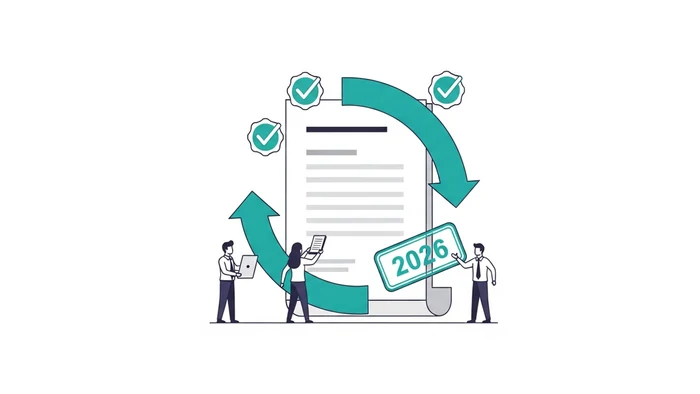
Renewal Timeline
After the first SOC 2 Type 2, renewal audits run annually to maintain continuous coverage. Renewal timelines are significantly shorter than first-year:
- Observation period. 12 months (continuous from prior report)
- Fieldwork. 3 to 5 weeks
- Report issuance. 1 to 2 weeks
- Total renewal end-to-end. 4 to 7 weeks of active work
The renewal engagement letter is typically signed 60 to 90 days before the observation period ends, and fieldwork runs during the 30 to 45 days after the period close. Annual renewals at this cadence become routine and drop to a fraction of the first-year effort when the program has matured.
How to Compress the SOC 2 Timeline
Legitimate ways to shorten a SOC 2 timeline:
Start the observation period early. The moment controls are designed and running, start the clock. Even if you have not signed the audit firm yet, the observation period can start as long as evidence is captured.
Pick a 3-month observation window for the first Type 2. Minimum acceptable under AICPA. Shortens the observation phase by 3 months vs a 6-month window.
Use a compliance automation platform from day one. Eliminates 40 to 60 percent of manual evidence work.
Run a formal readiness assessment. Counterintuitive but true. Readiness spend of 2 to 4 weeks saves 6 to 10 weeks in surprise remediation during fieldwork.
Sign the audit firm early. Sign 4 to 6 months before desired fieldwork, not 4 to 6 weeks. Most delays come from audit calendar bottlenecks.
Dedicate a full-time compliance owner. Even a 0.5 FTE is not enough for the first year. A 1.0 FTE cuts the build phase by 40 percent.
Scope tight. Security TSC only. One product, one environment. Add additional TSCs and products to the second-year renewal.
Illegitimate shortcuts to avoid: backdating evidence, hiring the audit firm as remediation consultant (independence violation), and skipping workforce training (will be sampled).
Frequently Asked Questions
What is the fastest possible SOC 2 Type 2?
A 3-month observation period plus 4 weeks of concurrent fieldwork plus 1 week of report issuance gives a theoretical minimum of approximately 4.5 months. That assumes the controls were already in place, the compliance platform was running, and readiness was complete before the period started. In practice, plan for 5 to 6 months minimum from the day controls are ready to the day the report is signed.
How long does a SOC 2 Type 1 take?
Type 1 realistic timeline is 8 to 12 weeks from engagement letter to report issuance, with readiness and remediation on the front end and fieldwork + report on the back end. The exact number depends on how much remediation is required before design testing can begin.
Can you run SOC 2 Type 1 and Type 2 at the same time?
You do not run them simultaneously; you run them in sequence. Type 1 is a point-in-time report. The day after Type 1 issuance, you start the observation period for Type 2. Some clients skip Type 1 and go directly to Type 2. That works if you do not need a bridge credential during the 6-month observation.
How long does the auditor's fieldwork actually take?
Fieldwork itself typically takes 4 to 8 weeks of calendar time. The audit firm's actual labor might be 40 to 80 hours of partner-and-manager time across that period, but the calendar window is longer because evidence sampling, walkthrough scheduling, and client response times distribute the work.
How long before enterprise buyers accept a SOC 2 Type 1 as sufficient?
Enterprise buyers typically accept Type 1 for 6 to 12 months while you accumulate the observation history for Type 2. Some buyers never accept Type 1 and require Type 2 regardless. Treat Type 1 as a bridge, not a destination.
Does a bridge letter extend the timeline?
A bridge letter (or gap letter) is a short document from the audit firm stating that no material changes to controls have occurred since the prior Type 2 period. It takes 1 to 2 weeks to issue and extends the reportable coverage by 3 to 6 months. Useful for maintaining credibility during the gap between two Type 2 reports.
How does the timeline change if I fail the audit?
A qualified or adverse opinion does not extend the initial timeline directly; the report is still issued. Remediation of the findings, followed by a new observation period and a fresh audit, adds 3 to 9 months. See what happens if you fail a SOC 2 audit.
The Takeaway
Plan for 8 to 12 weeks for a SOC 2 Type 1 and 5 to 12 months for a first SOC 2 Type 2. Remediation and observation period dominate the timeline; fieldwork itself is the smallest phase. Use a compliance automation platform, sign the audit firm early, and treat the observation period as the real audit rather than just waiting for fieldwork. Renewal audits drop to 4 to 7 weeks.
For the full program context, see our SOC 2 compliance guide. For auditor selection, see how to choose a SOC 2 auditor.
Primary Sources
This article references the following authoritative sources:
- SOC 2 report, AICPA SOC 2 reporting framework
- SSAE 18, AICPA attestation standards (SSAE 18)
- NIST SP 800-53, NIST SP 800-53 Rev 5 control catalog (cross-walks to SOC 2)