Is Stripe SOC 2 Compliant? Security and Compliance Overview
If your business processes payments through Stripe, your customers, auditors, or vendor-risk team will eventually ask: is Stripe SOC 2 compliant? The short answer is yes. Stripe maintains a SOC 2 Type 2 report, a PCI DSS Level 1 certification, and a broader compliance portfolio that covers the core payment platform and its subsidiary products.
This guide explains what Stripe's SOC 2 compliance actually includes, how to obtain the report, where Stripe's responsibilities end and yours begin, and what to do if you need your own SOC 2 compliance on top of Stripe's, whether you are a startup founder, an SMB merchant, or a consultant advising a small business.
Is Stripe SOC 2 Type 2 compliant in 2026? Yes. Stripe maintains a current SOC 2 Type 2 report issued by an independent accounting firm, covering the Security, Availability, and Confidentiality Trust Service Criteria across the Stripe platform.
Can a startup rely on Stripe's SOC 2 for its own SOC 2 audit? Partially. A startup founder running a first SOC 2 audit can carve out Stripe as a sub-service organization and rely on Stripe's SOC 2 report. The founder still needs their own SOC 2 program for everything their agency or small business controls directly.
Is There a Stripe SOC 2 Report, and Where Do You Get It?
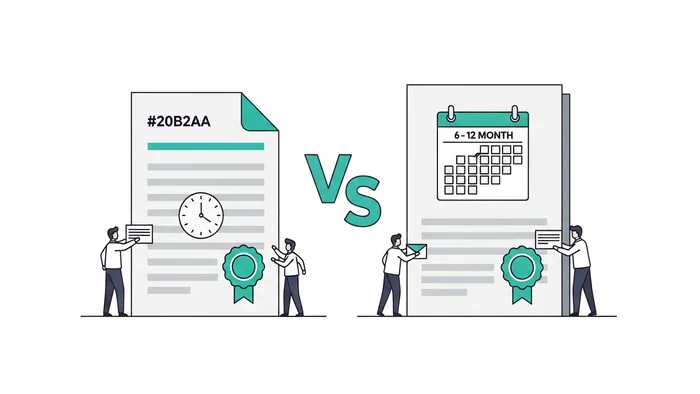
Yes. Stripe has a SOC 2 Type 2 report issued by an independent accounting firm. The report covers an audit period of 6 to 12 months and attests that Stripe's controls are both designed appropriately and operating effectively against the AICPA Trust Service Criteria for Security, Availability, and Confidentiality.
Stripe's SOC 2 Type 2 report is available to existing Stripe customers under a mutual non-disclosure agreement. Enterprise merchants and partners running vendor assessments can request it through the Stripe security portal or by contacting their Stripe account team. Stripe does not publish the full report publicly, but a SOC 3 summary report is available without an NDA.
What Stripe's SOC 2 Report Actually Covers

Understanding the scope of Stripe's SOC 2 report matters because it draws the line between Stripe's security responsibility and yours under the shared responsibility model.
Stripe's SOC 2 report covers:
- Infrastructure security: Data centers, networks, hypervisors, and the underlying cloud services that run the Stripe platform
- Application security: The Stripe Dashboard, APIs, Payments, Billing, Connect, Radar, Atlas, Issuing, and supporting products in scope
- Access controls: How Stripe employees access production systems and customer data
- Change management: The software development lifecycle, code review, deployment pipelines, and rollback procedures
- Encryption: Data at rest and in transit encryption standards and key management
- Vulnerability management: Continuous scanning, penetration testing, and remediation processes
- Incident response: Detection, response, and post-incident review for security events
- Availability: Operational uptime commitments and business continuity planning
What the Report Does Not Cover
Stripe's SOC 2 compliance does not extend to:
- Your internal business processes or how your team handles customer card data
- Custom code or webhooks you build against the Stripe API
- Your Stripe Dashboard permissions, team access, and admin hygiene
- Third-party apps in the Stripe App Marketplace
- Integrations between Stripe and your other systems (CRM, email, analytics)
The boundary is clear: Stripe secures its platform, but you remain responsible for how you configure, integrate, and operate your Stripe account.
Beyond Stripe SOC 2: The Full Compliance Portfolio
Stripe holds more than SOC 2. A complete view of Stripe's compliance posture includes:
- SOC 2 Type 2: Annual audit covering Security, Availability, and Confidentiality
- SOC 1 Type 2: Separate report focused on financial reporting controls (relevant for customers whose auditors test Stripe as a service organization for financial statement purposes)
- PCI DSS Level 1: The highest level of PCI DSS compliance, covering the Stripe payments infrastructure
- ISO 27001: Information Security Management System (ISMS) certification
- ISO 27018: Protection of personally identifiable information in public cloud environments
- ISO 27701: Privacy Information Management extension to ISO 27001
- GDPR: Compliance with the EU General Data Protection Regulation as a data processor
- HIPAA: HIPAA compliance supported under a signed Business Associate Agreement for specific products
Stripe also publishes a Data Processing Agreement (DPA), Standard Contractual Clauses (SCCs), and a BAA template for eligible customers. These documents are accessed directly through the Stripe Dashboard.
The Stripe SOC 2 Shared Responsibility Model
Stripe operates on the familiar cloud-style shared responsibility model. Here is how the responsibilities split.
Stripe's Responsibilities
- Securing the payment platform, APIs, and dashboard infrastructure
- Maintaining PCI DSS Level 1 compliance for payment card processing
- Encrypting cardholder data and tokenizing stored cards
- Running continuous vulnerability scanning and regular penetration tests
- Detecting and responding to platform-level threats
- Providing secure authentication (SSO, TOTP, hardware keys) and API authentication
Your Responsibilities as a Stripe Customer
- Dashboard access: Limiting staff permissions, enabling strong multi-factor authentication, and reviewing team access regularly
- API key management: Rotating keys, scoping restricted keys to specific permissions, and never embedding secret keys in client-side code or public repositories
- Webhook security: Verifying webhook signatures, using HTTPS endpoints, and validating event payloads before processing
- PCI DSS scope reduction: Using Stripe Elements, Checkout, or the Stripe Terminal SDK to keep cardholder data out of your own systems and reduce your PCI DSS scope to SAQ A
- Compliance evidence collection: Exporting Stripe's SOC 2, PCI AOC, and DPA into your own compliance evidence repository
- Customer data you hold: Securing any personal or business data you store in your own systems that relates to Stripe transactions
How Stripe SOC 2 Affects Your Own Compliance

Using Stripe correctly meaningfully reduces the cost and complexity of your own compliance obligations. Stripe is a sub-service organization for SOC 2, a service provider for PCI DSS, and a processor for GDPR.
Stripe and Your SOC 2
If you are pursuing SOC 2, Stripe appears in your system description as a sub-service organization. You have two options:
- Carve-out method: Exclude Stripe's controls from your audit and rely on Stripe's own SOC 2 report. Most companies choose this.
- Inclusive method: Include Stripe's controls in your audit. This is rarely used because it requires auditor access to Stripe's environment, which Stripe does not grant.
Auditors will want to see that you have obtained Stripe's SOC 2 report, confirmed it covers the Trust Service Criteria you are being audited against, and documented your complementary user entity controls (CUECs). The SOC 2 Trust Service Criteria guide covers CUECs in detail.
Stripe and Your PCI DSS
Stripe is a PCI DSS Level 1 service provider. When you use Stripe correctly (Elements, Checkout, or Terminal), your PCI DSS scope can shrink to SAQ A, the lightest-weight self-assessment questionnaire. If you inject Stripe Elements into your own page, you may need SAQ A-EP instead. If your servers ever touch raw card numbers, you are back to SAQ D, which is dramatically more expensive.
Stripe publishes a PCI Attestation of Compliance (AOC) annually. Download it from the Stripe Dashboard and keep it with your PCI evidence package.
Stripe and Your GDPR Posture
Stripe signs a Data Processing Agreement (DPA) with every EU customer. Stripe is a processor (and in limited cases a joint controller) for cardholder data and customer metadata. The GDPR compliance guide for US companies explains how to document your processor relationship and what to include in your Record of Processing Activities (ROPA).
What This Means in Practice for Founders and Compliance Teams
In practice, teams preparing their first SOC 2 audit most often discover that the Stripe scope question surfaces during the readiness phase, not at audit time. The typical pattern: a security questionnaire from a prospective customer asks whether you are SOC 2 compliant and lists Stripe as a tool in your stack. The natural next step is to pull Stripe's SOC 2 report from the Dashboard and include it in your evidence repository with a short memo documenting your complementary user entity controls. Auditors working with early-stage companies routinely accept this carve-out approach, provided the memo is clear about what you control versus what Stripe controls. The biggest friction point we see is API key hygiene: teams that have been using a single master secret key across multiple services face scope expansion during cleanup because rotating that key touches every integration at once. Scoping restricted keys by service early avoids that problem entirely.
Stripe SOC 2 Security Recommendations for Merchants
Stripe's SOC 2 and PCI compliance protect the platform, but your Stripe account is only as secure as your own operational hygiene. The highest-impact steps:
- Require TOTP or hardware-key multi-factor authentication on every Stripe user account
- Use SSO with role-based access for teams larger than 10 people
- Create restricted API keys scoped to the minimum permissions each service needs
- Never commit secret keys to source control; rotate keys immediately if exposed
- Verify every webhook signature using Stripe's signing secret before acting on events
- Enable Radar for Fraud Teams if you process significant card volumes and want an additional fraud layer
- Review the Stripe Dashboard audit log monthly and alert on unusual admin activity
How to Request Stripe's SOC 2 Report

The process is simple but requires an active Stripe account.
- Log into the Stripe Dashboard
- Navigate to Settings > Compliance & Documents (or Stripe security portal)
- Request access to the SOC 2 Type 2 report under NDA
- Sign the mutual NDA Stripe provides
- Download the PDF report once access is approved
Enterprise customers with a dedicated Stripe account manager can request the report directly through their account team. SOC 3 reports (the public summary version of SOC 2) are available without NDA in the Stripe security portal.
Stripe SOC 2 vs Competitors: Compliance Comparison
Stripe is not the only payment processor with strong compliance. Here is how Stripe stacks up against major competitors on compliance posture:
| Provider | SOC 2 | PCI DSS Level 1 | ISO 27001 | HIPAA BAA |
|---|---|---|---|---|
| Stripe | ✔ Type 2 | ✔ | ✔ | ✔ (eligible products) |
| Adyen | ✔ Type 2 | ✔ | ✔ | Partial |
| Braintree (PayPal) | ✔ Type 2 | ✔ | ✔ | Limited |
| Square (Block) | ✔ Type 2 | ✔ | Not published | No |
| Authorize.Net | ✔ Type 2 | ✔ | Not published | No |
Most enterprise payment providers now offer SOC 2 Type 2 and PCI DSS Level 1. Differentiation is in ISO 27001 coverage, HIPAA BAA availability, and the breadth of Trust Service Criteria covered. Competitor compliance data is based on publicly available trust pages and documentation as of mid-2026; verify current status on each provider's security portal before making vendor decisions.
Common Mistakes When Relying on Stripe SOC 2 for Compliance
- Assuming Stripe's SOC 2 covers your entire stack. It only covers the Stripe platform. Your application, your servers, and your employees are still in your scope.
- Storing raw card numbers outside Stripe. Doing so expands your PCI DSS scope from SAQ A to SAQ D and multiplies your audit cost.
- Using live secret keys in client-side code. Any exposure means you must rotate and may trigger a breach notification obligation.
- Ignoring webhook signature verification. Webhooks without signature verification are a common path to financial fraud.
- Forgetting to collect Stripe's compliance documents. Auditors need them, and obtaining them at the last minute slows your own audit.
Frequently Asked Questions
Is Stripe SOC 2 Type 1 or Type 2? Stripe has a SOC 2 Type 2 report, which tests controls over an operating period (typically 6 to 12 months), not just their design.
How does a startup founder request Stripe's SOC 2 report? Request it through the Stripe Dashboard under Settings > Compliance, or ask the Stripe account team. A founder at a small business will be asked to sign a mutual NDA first. The public SOC 3 summary is available without NDA.
Does Stripe sign a BAA for HIPAA compliance? Yes, Stripe offers a Business Associate Agreement for eligible products. Contact Stripe's HIPAA compliance team through the Dashboard to execute a BAA. Not every Stripe product is HIPAA-eligible; confirm product eligibility before storing protected health information.
Does using Stripe mean I am automatically SOC 2 compliant? No. Stripe's SOC 2 only covers Stripe. A startup or SMB must still build its own SOC 2 program for the application, infrastructure, and internal controls it operates. Using Stripe simply removes the payment processing platform from the SOC 2 audit scope.
Does Stripe's SOC 2 Type 2 report cover Stripe Connect? Yes. The Stripe Connect platform is typically included within the scope of the broader SOC 2 report. Verify by reading the "System Description" section of the latest SOC 2 report, which lists all in-scope products.
Does using Stripe reduce my PCI DSS scope? Yes. When a startup or small business uses Stripe Elements, Stripe Checkout, or Stripe Terminal correctly, PCI scope can reduce to SAQ A. The server never touches raw card numbers, which is the single biggest driver of PCI DSS cost.
Bottom Line
Stripe is SOC 2 Type 2 compliant, PCI DSS Level 1 certified, and ISO 27001 certified. These certifications cover the Stripe payment platform, its APIs, and its core products. They do not cover your application, your employees, or your operational controls. Request Stripe's SOC 2 report early, integrate using Elements or Checkout to keep PCI scope minimal, and layer your own SOC 2 program on top if your customers require it.
Use Stripe's compliance posture as an advantage to shrink your own audit scope, not as a substitute for building your own security program.
Primary Sources
This article references the following authoritative sources:
- Stripe Security and Compliance, Stripe's official security portal, SOC 2, PCI DSS, ISO 27001, and compliance documentation hub
- AICPA Trust Services Criteria, AICPA SOC suite of services and Trust Services Criteria
- SSAE 18, AICPA attestation standards (SSAE 18), the standard under which SOC 2 reports are issued
- NIST SP 800-53, NIST SP 800-53 Rev 5 control catalog (cross-walks to SOC 2)
- PCI DSS Requirements and Security Assessment Procedures, PCI Security Standards Council, PCI DSS v4.0 and SAQ documentation
Last reviewed: 2026-07-03. This article was prepared by the Security Compliance Guide Editorial Team. We use AI to draft initial summaries of publicly available cybersecurity compliance documentation, then verify every claim against primary sources before publication. We are not licensed auditors, attorneys, or compliance consultants. For binding decisions, consult a qualified professional. See our editorial standards for full sourcing rules.