SOC 2 vs SOC 1: Which Report Do You Need?
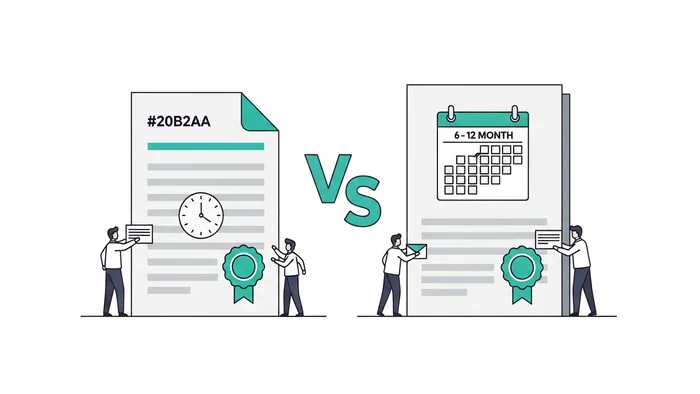
The SOC 2 vs SOC 1 question trips up most companies the first time a prospect asks for a "SOC report." The two reports look similar on paper, share an audit framework, and both come from the AICPA, but they answer completely different questions. Pick the wrong one and you spend $30,000 on a report nobody asked for.
This SOC 2 vs SOC 1 guide breaks down what each report actually covers, who needs which one, and how to decide when both are required. For implementation detail, see our SOC 2 compliance checklist and the broader SOC 2 compliance guide.
SOC 2 vs SOC 1 At a Glance
| Factor | SOC 1 | SOC 2 |
|---|---|---|
| Standard | SSAE 18 (AT-C 320) | SSAE 18 (AT-C 105 + AT-C 205) |
| Focus | Internal controls over financial reporting (ICFR) | Security, availability, processing integrity, confidentiality, privacy |
| Who asks for it | Customer auditors, financial auditors, public company buyers | SaaS buyers, enterprise procurement, security teams |
| Best for | Payroll, billing, fund administration, financial transaction processors | SaaS, cloud services, data processors, modern B2B software |
| Trust criteria | None (custom control objectives) | AICPA Trust Services Criteria (TSC) |
| Audience | Restricted (customer auditors and management) | General use possible (Type 2) |
| Average cost | $20,000 - $40,000 | $15,000 - $50,000+ |
| Audit firm | CPA firm | CPA firm |
| Report types | Type 1 (point in time), Type 2 (over period) | Type 1, Type 2 |
What SOC 1 Actually Covers

A SOC 1 report covers internal controls over financial reporting at a service organization. The audience is the customer's external auditor. If your platform processes data that flows into a customer's financial statements (payroll, accounts payable, billing, fund accounting), the customer's auditor needs assurance your controls are sound so they can sign the customer's annual financial audit without expanding their own work.
SOC 1 control objectives are custom. The service organization picks them, often with input from auditors, and they cluster around things like:
- Transaction completeness and accuracy
- Authorization and approval workflows
- Segregation of duties on financial systems
- Change management on financial systems
- Logical access to financial data
A SOC 1 report does not measure security in the modern SaaS sense. It does not directly evaluate encryption, MFA, or vulnerability management unless those map to a stated financial reporting control objective.
What SOC 2 Actually Covers
A SOC 2 report covers controls relevant to security, availability, processing integrity, confidentiality, and privacy at a service organization. The audience is broader: enterprise customers, procurement teams, partners, and regulators who want assurance the service organization handles data responsibly.
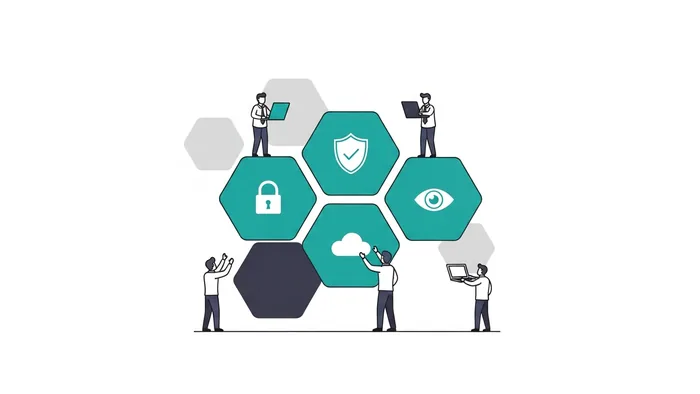
SOC 2 control criteria are not custom. They follow the AICPA Trust Services Criteria (TSC), which break into five categories:
- Security (mandatory), protection against unauthorized access, disclosure, and damage.
- Availability, system uptime and operational performance.
- Processing Integrity, completeness, validity, accuracy, and timeliness of processing.
- Confidentiality, protection of confidential information.
- Privacy, collection, use, retention, and disposal of personal information.
Most SOC 2 reports cover Security only or Security + Availability. Adding more categories increases scope, audit time, and cost.
For a deeper breakdown, see our SOC 2 Trust Service Criteria explained guide.
When You Need SOC 1
You need a SOC 1 if any of these apply:
- You process payroll, billing, or accounts payable for customer companies that file financial statements.
- You run fund administration, transfer agency, or custody services.
- Your platform sits inside customer revenue recognition, expense recognition, or financial close workflows.
- Customer external auditors are asking for a "SOC 1 report" or a "SAS 70 report" (the predecessor) by name.
- You serve public companies and your service is material to their financial reporting.
If you operate in fintech, payroll, ERP, accounting software, financial close automation, fund admin, or treasury, you almost certainly need SOC 1.
When You Need SOC 2

You need a SOC 2 if any of these apply:
- You sell B2B SaaS and enterprise prospects ask for "the SOC 2 report" during procurement.
- You handle customer data that is not directly tied to their financial reporting (CRM data, support tickets, marketing data, product analytics, identity).
- You process health data, education data, or any data subject to confidentiality expectations.
- Your contracts include security clauses requiring audited evidence of controls.
- You compete with vendors who already have SOC 2 and your prospects compare you on the same checklist.
If you operate in cloud services, B2B SaaS, data infrastructure, AI platforms, identity, MarTech, devtools, or HR tech outside payroll, you almost certainly need SOC 2.
When You Need Both
Some platforms need both reports. The pattern looks like this:
- Payroll and HRIS platforms with security-conscious enterprise buyers (Gusto, Rippling, Justworks-tier).
- Spend management platforms (Brex, Ramp-tier).
- Billing and revenue platforms (Stripe, Chargebee, Recurly-tier).
- Treasury and corporate banking platforms.
- Insurance technology platforms processing claims data.
The classic case: a billing platform's customer ledger flows into customer revenue recognition (SOC 1 territory) but the same platform also stores customer-of-customer payment information that triggers security and confidentiality obligations (SOC 2 territory). Two reports, one audit window if you plan well.
For a multi-report engagement, audit firms often run them in parallel and discount the second report 20 to 30 percent because evidence overlaps.
Type 1 vs Type 2 (For Both Reports)
Both SOC 1 and SOC 2 come in two flavors:
- Type 1 is a point-in-time report. The auditor evaluates the design of controls on a single date. Cheaper, faster, useful as a first step.
- Type 2 is a period-of-time report covering 3 to 12 months. The auditor evaluates the operating effectiveness of controls over the full window. This is what enterprise buyers actually want.
Most companies start with Type 1 to unlock the first enterprise deal, then complete Type 2 within 6 to 12 months. For more on the timing and tradeoffs, see what is SOC 2 Type 2 and how long does a SOC 2 audit take.
How the Costs Compare

Pricing varies by audit firm, scope, and platform complexity, but the rough 2026 ranges look like this:
| Report | Type 1 | Type 2 |
|---|---|---|
| SOC 1 | $15,000 - $25,000 | $25,000 - $45,000 |
| SOC 2 (Security only) | $10,000 - $20,000 | $20,000 - $35,000 |
| SOC 2 (Security + 2 more TSCs) | $20,000 - $30,000 | $35,000 - $60,000 |
| SOC 1 + SOC 2 bundle | $25,000 - $40,000 | $50,000 - $90,000 |
Add GRC platform fees (Vanta, Drata, Sprinto, Secureframe) of $5,000 to $40,000 per year and a penetration test of $8,000 to $25,000 if your buyer requires one.
For more on SOC 2 budgeting specifically, see our SOC 2 audit cost breakdown and the SOC 2 cost calculator.
How the Audit Process Differs
Both reports follow the SSAE 18 standard and both are signed by a CPA firm. The differences show up in scoping and evidence.
Scoping. SOC 1 scoping focuses on which financial transaction flows you operate, what data you process, and which customer financial statement assertions are affected. SOC 2 scoping focuses on which Trust Services Criteria you cover and what system boundary you draw around the audited services.
Control objectives. SOC 1 lets you write your own control objectives. SOC 2 anchors you to the AICPA TSC. Vanta, Drata, and Sprinto pre-map their control libraries to the TSC, which is one reason GRC automation is more mature for SOC 2 than for SOC 1.
Evidence. SOC 1 evidence is heavily transactional (samples of approvals, exception reports, reconciliations). SOC 2 evidence is heavily configuration-based (encryption settings, access logs, vulnerability scans, change management).
Audit window. SOC 1 Type 2 windows align with customer fiscal years to make life easier on the customer's external auditor. SOC 2 Type 2 windows can run on any schedule, with most companies picking 6 or 12 months ending in their off-cycle quarter.
Common Mistakes
Ordering SOC 1 when you need SOC 2. Happens to fintech-adjacent SaaS that assumes "financial = SOC 1" without checking with the buyer. The customer's CISO wanted SOC 2 and now you have a $30,000 report nobody reads.
Ordering SOC 2 when you need SOC 1. Happens to payroll and ERP startups serving public companies. The customer's external auditor asks for SOC 1 in February and you have a SOC 2 Type 2 that does not satisfy the request.
Treating SOC 2 + Privacy as a magic upgrade. Adding the Privacy TSC adds 30 to 50 percent to audit cost. Most B2B SaaS does not need it. Stop adding TSCs because they sound thorough.
Picking the wrong audit window. A 12-month Type 2 window is overkill for a first audit. Start with a 3 to 6 month window for Type 2 to cut cost without losing buyer credibility.
How to Decide in 2026
Use this three-question test:
- Who is asking? Customer external auditor → SOC 1. Customer CISO or procurement → SOC 2.
- What is the data? Data that flows into customer financial statements → SOC 1. Data that is sensitive but not part of customer accounting → SOC 2.
- What is the contract clause? "Service organization control report covering controls relevant to financial reporting" → SOC 1. "Service organization control report covering security, availability, and confidentiality" → SOC 2.
If two of three answers point one direction, that is your report. If the answers are split, you probably need both.
Next Steps
If SOC 2 is your answer, start with the SOC 2 compliance checklist, scope your control library against the SOC 2 Trust Service Criteria, and read how to choose a SOC 2 auditor before you commit to a CPA firm.
If both are your answer, ask your audit firm for a combined engagement and bundle the GRC platform contract to cover both report scopes. Vanta, Drata, and Secureframe all support SOC 1 + SOC 2 dual scope, though SOC 1 automation is less mature than SOC 2.
Frequently Asked Questions
What is the main difference between SOC 1 and SOC 2?
SOC 1 covers internal controls over financial reporting and is for customer external auditors. SOC 2 covers security, availability, processing integrity, confidentiality, and privacy and is for customer security and procurement teams. Both are signed by a CPA firm under SSAE 18, but they answer different questions for different audiences.
Can a company have both SOC 1 and SOC 2?
Yes. Payroll, billing, ERP, and fintech platforms commonly hold both because they touch customer financial reporting (SOC 1) and store sensitive customer data (SOC 2). Audit firms typically discount the second report 20 to 30 percent because evidence overlaps.
Is SOC 2 stricter than SOC 1?
Neither is inherently stricter. They cover different ground. SOC 1 is anchored to financial reporting controls and lets you write custom control objectives. SOC 2 is anchored to the AICPA Trust Services Criteria, which are fixed and security-focused.
Do startups need SOC 1 or SOC 2 first?
For most B2B SaaS startups, SOC 2 Type 2 is the first audited report because enterprise procurement asks for it during sales cycles. SOC 1 is only relevant if your platform processes data that flows into customer financial statements.
How long does each audit take?
A SOC 1 Type 2 typically runs 6 to 12 months depending on customer fiscal year alignment. A SOC 2 Type 2 typically runs 3 to 12 months, with most first-time audits choosing a 6-month window to balance cost and buyer credibility.
Which report does my SaaS startup need?
If your buyers are asking about security, encryption, MFA, and incident response, you need SOC 2. If your buyers are asking about transaction accuracy, segregation of duties, and financial controls, you need SOC 1. Most modern SaaS needs SOC 2. Fintech and payroll-adjacent SaaS often need both.
Is a SOC 1 report public?
No. SOC 1 reports are restricted to the service organization, the user entity, and the user entity's auditor. SOC 2 Type 2 reports can be issued as general use reports under specific conditions, which is why some companies share SOC 2 reports under NDA via a trust center.
What replaced SAS 70?
SSAE 16 replaced SAS 70 in 2011, and SSAE 18 replaced SSAE 16 in 2017. Modern SOC 1 and SOC 2 reports are both issued under SSAE 18. If a customer asks for a "SAS 70 report," they almost always mean SOC 1.
About the Author
This SOC 2 vs SOC 1 guide was written by Security Compliance Guide Editorial Team, a compliance and security analyst with 8+ years of experience helping SaaS startups and fintech platforms scope and complete SOC reports. His SOC 2 audit guides have been referenced by founders at YC and Techstars portfolio companies.
Sources: AICPA SOC 2 Trust Services Criteria, AICPA SOC for Service Organizations overview, SSAE 18 (AT-C section 320 and 205).