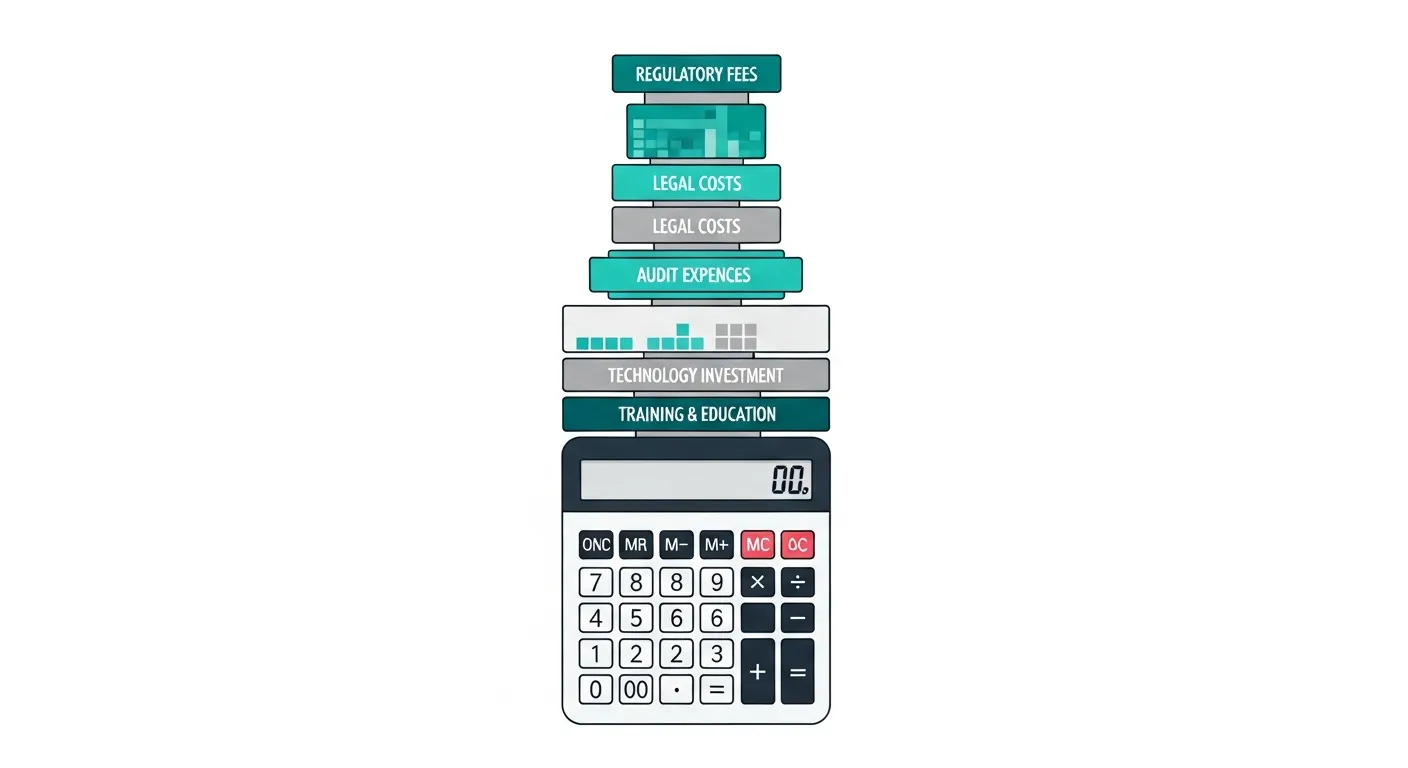
SOC 2 Compliance Cost Calculator: Estimate Your Real Budget
TL;DR
- Total first-year costs typically fall between $10,000 and $350,000 depending on company size, audit scope, and whether you use a compliance automation platform.
- None of the major platforms, Vanta, Drata, or Secureframe, publish fixed pricing; you must request a quote. Treat any published per-seat figures you find elsewhere as outdated.
- Audit firm fees run roughly $5,000-$20,000 for a Type 1 and $7,000-$150,000+ for a Type 2, per Secureframe's published guidance.
- The single biggest cost lever is scope: every Trust Services Criterion you add beyond Security increases both audit time and fees.
- Year-two renewal audits typically cost 20-40% less than the initial engagement because your control documentation is already built (editorial estimate; auditor-specific terms vary).
Who this is for: Engineering leaders, finance teams, and first-time compliance owners at SaaS and cloud companies building a SOC 2 budget. This guide covers every cost component with sources, organized by scenario, so you can estimate before committing to a vendor or auditor.
What Drives the Wide Cost Range
The AICPA defines a SOC 2 examination as an attestation of controls relevant to security, availability, processing integrity, confidentiality, or privacy. Those five categories are the Trust Services Criteria (TSC): Security, Availability, Processing Integrity, Confidentiality, and Privacy.
Security is the only required criterion. All others are optional, added when customers ask for them or when your service description requires them.
Three variables account for almost all of the spread in SOC 2 costs:
- Company size and infrastructure complexity. Auditors price by effort. A 12-person startup running a single-region AWS deployment takes fewer hours to audit than a 200-person company operating across multiple cloud providers with dozens of integrations.
- Criteria scope. A Security-only Type 2 engagement is the baseline. Adding Availability or Confidentiality adds 15-30% to audit scope each (editorial estimate); Privacy adds the most, often 25-50% (editorial estimate), because it requires detailed data flow analysis.
- Build approach. You can reach audit readiness using a compliance automation platform, external consultants, or internal staff. Each path has a different cost profile for the same destination.
Schellman, one of the specialist CPA firms that issues more than 2,000 SOC reports per year, sets fees independently per engagement and does not publish rate cards. Neither does A-LIGN, Prescient Assurance, or Coalfire. Vanta, Drata, and Secureframe all moved to quote-only pricing as of 2025; the per-seat figures circulating on older blog posts no longer reflect current market rates.
The scope-percentage impacts described in this article are editorial estimates derived from publicly available auditor guidance and practitioner accounts; no audit firm publishes exact per-criterion surcharge tables.
What follows uses the best publicly available data, primarily Secureframe's published cost guidance, auditor guidance on scope factors, and verified tool pricing, to give you working ranges.
The Three Spending Buckets

Every SOC 2 engagement breaks into three distinct spending areas. Budget conversations that focus only on the audit firm fee routinely produce surprises.
Bucket 1: Readiness and preparation. Policies, control implementation, evidence collection, gap remediation. This is where compliance platform subscriptions and consultant fees land.
Bucket 2: Audit firm fees. What the licensed CPA firm charges to conduct the examination and issue the report.
Bucket 3: Ongoing maintenance. Annual re-audits, platform renewal, security training, and continued tooling costs.
Bucket 1: Readiness Costs
Compliance Automation Platforms
Compliance platforms handle continuous control monitoring, automated evidence collection from cloud integrations, policy templates, and audit workflow management. The three dominant options in this space, Vanta, Drata, and Secureframe, all require direct quotes. None publish pricing pages with fixed numbers as of July 2026.
When you contact them, pricing scales with company size (headcount and number of connected systems) and the number of frameworks in scope. Expect the conversation to start in the low-to-mid five figures annually for a 10-30 person company pursuing a single framework.
Secureframe reports that their customers see "25-50% savings on compliance costs" compared to manual readiness approaches, and that 35% complete audit preparation in less than half the time compared to non-platform users. Those figures come from Secureframe and should be treated as vendor claims rather than independent validation, but they are directionally consistent with the labor savings a platform provides through automation of evidence collection.
Smaller and lower-cost alternatives include Scytale, Tugboat Logic (now acquired), and Sprinto. These may publish pricing or offer lower entry points, though audit firm integration and support depth vary.
If you skip the platform entirely: Readiness shifts to internal labor and external consultants. A gap assessment from a compliance consulting firm runs approximately $5,000-$15,000 (editorial estimate; actual quotes vary by firm and scope). A full readiness engagement covering gap assessment plus remediation support runs $15,000-$50,000 over three to six months (editorial estimate). A fractional vCISO retainer, for companies without internal security staff, typically runs $3,000-$10,000 per month (editorial estimate).
In practice, teams building SOC 2 controls for the first time most often underestimate policy documentation time. The AICPA's Trust Services Criteria lists 33 criteria under the Security category alone; each one needs a control mapped to it, evidence that the control runs, and a policy that describes it. Compliance platforms automate the evidence side, but the policy writing and internal sign-off still require human hours.
Penetration Testing
SOC 2 does not explicitly mandate penetration testing in the Trust Services Criteria, but auditors increasingly expect to see one for the Security criterion, and it is standard practice for any engagement including Availability. Secureframe lists a penetration test as a standard line item at roughly $15,000 in their cost breakdown.
Market rates vary by scope (the following ranges are editorial estimates based on practitioner-reported pricing; no vendor publishes a fixed rate card):
- Focused web application pentest, 5-10 day engagement, small startup: $7,000-$12,000
- Web app pentest, complex application with APIs, mid-size company: $12,000-$25,000
- Infrastructure pentest (internal and external), small environment: $8,000-$15,000
- Infrastructure pentest, mid-size environment: $15,000-$35,000
Crowdsourced pentest platforms like Cobalt offer lower entry points, but dedicated team engagements produce more thorough results for SOC 2 purposes. Annual retesting is standard; some enterprise buyers require semi-annual.
The NIST Cybersecurity Framework provides additional context for the security control categories that auditors typically evaluate during a SOC 2 examination, and many organizations use it alongside the Trust Services Criteria as a readiness reference.
Security Tooling You May Need to Add
The gap assessment often uncovers tooling gaps. These costs are not compliance overhead, they are the security infrastructure your controls require. Current market rates for common tools:
Identity and access management:
- Okta Workforce Identity (SSO, MFA): pricing by tier, request quote for current rates
- JumpCloud: starts at $9/user/month for core device management billed annually ($11/user/month billed monthly)
- Microsoft Entra ID (formerly Azure AD): included with Microsoft 365 Business Premium at $22/user/month
Endpoint detection and response:
- CrowdStrike Falcon Go: $59.99/device/year, capped at 100 devices per purchase (public pricing as of 2026)
- Microsoft Defender for Business: $3/user/month, included in M365 Business Premium
MDM:
- Jamf Pro (Mac fleet): quote-based only, no published per-device rate as of this writing; request a quote for current pricing
- Microsoft Intune: $8/user/month standalone, included in M365 Business Premium
Vulnerability scanning:
- Nessus Essentials: free for up to 5 IPs, adequate for very small environments; the paid Essentials Plus tier raises the cap to 20 IPs at low annual cost
- Tenable.io: quote-based for cloud; Essentials is the free self-hosted option for SOC 2 baseline needs
Security awareness training:
- KnowBe4: quote-based; publicly available rates from resellers typically run $15-$30/user/year for base plan
- Proofpoint Security Awareness: quote-based
Bucket 2: Audit Firm Fees
Secureframe publishes the most transparent cost breakdown available from a firm with direct engagement data. Their 2025 guide states:
- SOC 2 Type 1 audit fee: $5,000-$20,000
- SOC 2 Type 2 audit fee: $7,000-$150,000+
These ranges are wide because the inputs vary enormously. Schellman, one of the leading specialist SOC audit firms, explains in their cost guidance (last updated June 2026) that they "set fees for each engagement independently, based on the scope and effort involved." There is no published rate card.
The factors Schellman identifies as the primary cost drivers:
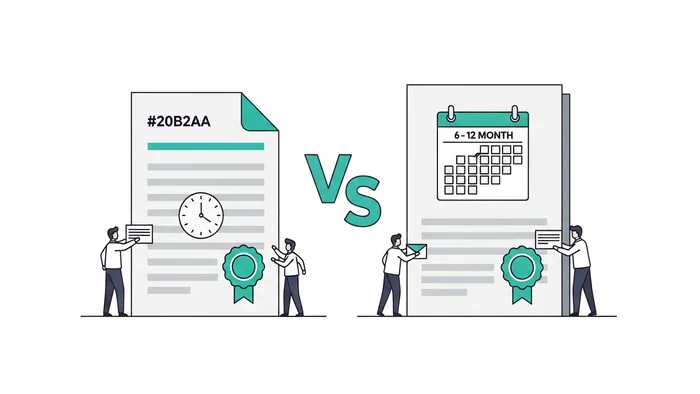
- Project type: Type 2 costs more than Type 1; Type 1 costs more than a readiness assessment alone. Type 2 requires testing controls across an observation period (typically 6 or 12 months) rather than assessing design at a point in time.
- Control scope: Each additional Trust Services Criterion adds auditor hours. Processing Integrity adds the most complexity when your product performs data transformation or transaction processing. Privacy adds extensive data flow documentation requirements.
- Environmental complexity: Multiple cloud providers, additional product lines, acquired entities, and non-standard infrastructure all increase scope.
Auditor Tier and What It Means for Price
Big Four (Deloitte, PwC, EY, KPMG): Fees sit well above the market ranges above. Their SOC 2 reports carry brand recognition with the largest enterprise buyers. For most SaaS companies below Fortune 500, a Big Four auditor is not required and buyers do not ask for it.
Specialist mid-tier CPA firms (Schellman, A-LIGN, Prescient Assurance, Coalfire, Aprio, Johanson Group): These firms focus on SOC 2 and similar attestation work. Fees are lower than Big Four and auditor experience in SOC 2 specifically is typically deeper than a generalist regional firm. This is the right tier for most SaaS companies. None publish fee schedules; all require direct engagement to get a quote.
Regional and boutique CPA firms: Lowest fees. Quality and auditor experience varies significantly. Ask specifically about the lead auditor's SOC 2 examination history before signing.
Preferred auditor networks: Vanta, Drata, and Secureframe each maintain partner auditor networks. These auditors work regularly with the platform's evidence format, which reduces back-and-forth during fieldwork and can lower audit hours. Worth asking each platform which auditors they work with most frequently.
Renewal Audits
Year-two and subsequent audit fees are typically 20-40% lower than the initial engagement (editorial estimate; actual savings depend on scope changes and auditor). Your control documentation is established, your staff is trained, and the auditor already understands your environment. The observation period is also already running continuously rather than being built from scratch.
Bucket 3: Costs Most First-Time Budgets Miss

Legal review of vendor agreements: Before satisfying the third-party risk management requirements in SOC 2, you need Data Processing Agreements (DPAs) with subprocessors and possibly a review of your customer contracts. Depending on the number of agreements and data flow complexity, legal review runs $3,000-$10,000 (editorial estimate; attorney billing rates vary significantly by region and firm).
Policy documentation: Compliance platforms provide templates, but customizing 15-20 security policies and obtaining organizational sign-off requires internal time. At a fully loaded rate of $150/hour for an engineering lead, 40-80 hours of policy work is $6,000-$12,000 in opportunity cost. This is not a cash expense, but it is a real cost that delays other work.
Gap remediation: The gap assessment finds issues that require engineering time to fix. Secureframe's cost breakdown includes a line item for "compliance preparation" at $25,000-$85,000 specifically because remediation work is often larger than organizations expect. Budget 20-40% of your audit firm fee as a remediation contingency for the first engagement.
Ongoing maintenance: Secureframe estimates annual maintenance at $10,000-$60,000, which includes platform renewal, annual pentest, training, and re-audit fees.
Total Cost by Scenario
The following scenarios use Secureframe's published ranges as anchors, adjusted by scope and size. They are estimates, not quotes. Your actual costs depend on which vendors and auditors you engage and your negotiation.
Scenario 1: Seed-stage company, under 25 employees, Security criterion only, Type 2
| Component | Range |
|---|---|
| Compliance platform (starter tier, quote-based) | Request quote |
| Web application penetration test | $7,000-$12,000 |
| Audit firm (Type 2, Security only) | $7,000-$30,000 |
| Security tooling gaps (EDR, MDM, training) | $3,000-$8,000 |
| Legal (DPAs, policy review) | $2,000-$5,000 |
| Total year one (excl. platform) | $19,000-$55,000 |
Platform cost adds to this range. Contact Vanta, Drata, or Secureframe for quotes. For very small companies, some platforms offer lower-cost starter tiers or startup programs, ask specifically about these.
Scenario 2: Series A company, 25-75 employees, Security + Availability + Confidentiality, Type 2
| Component | Range |
|---|---|
| Compliance platform (growth tier, quote-based) | Request quote |
| Web app + infrastructure penetration test | $15,000-$30,000 |
| Audit firm (Type 2, multi-criteria) | $30,000-$80,000 |
| Security tooling (IAM, EDR, SIEM basics) | $10,000-$25,000 |
| Legal review and DPAs | $4,000-$8,000 |
| Training (company-wide) | $1,000-$3,000 |
| Gap remediation contingency | $8,000-$20,000 |
| Total year one (excl. platform) | $68,000-$166,000 |
Scenario 3: Growth-stage company, 100-300 employees, all five criteria, Type 2
At this size and scope, Secureframe's total range of $80,000-$350,000 for a full SOC 2 program is the most directly applicable published figure. Audit firm fees alone at this scope and size typically run $55,000-$150,000 based on Secureframe's guidance. Platform costs, tooling, legal, and remediation add substantially on top.
For 100+ employee engagements, get quotes from at least three audit firms. The spread between the lowest and highest bids is often $30,000-$50,000 for the same scope.
Cost-Saving Approaches That Have Evidence Behind Them
Narrow scope at the start. Start with Security only. Add criteria in subsequent years as customer requirements develop. Every criterion you add costs money at both the readiness and audit stages, and most early-stage buyers accept a Security-only report.
Use the compliance platform's partner auditor network. Auditors familiar with your platform's evidence format spend less time during fieldwork understanding your documentation. This reduces audit hours and occasionally produces lower quotes.
Start readiness early. A rushed 3-month readiness sprint before an urgent customer deadline costs significantly more than a 9-12 month structured program. Evidence collection under pressure requires more consultant support; gap remediation done in sprints often requires outside contractors.
Negotiate multi-year terms. Audit firms have more pricing flexibility than their initial quotes suggest, particularly for multi-year commitments. Ask for a year-two rate reduction (15-25% is common per practitioner accounts; results vary by firm) in exchange for committing to the same firm.
Choose your observation period start date deliberately. For a Type 2 engagement, your observation period starts when your controls are fully operational. If you start the clock before controls are implemented, exceptions from the early weeks weaken your report. Delay the start until your environment is clean.
Mini-FAQ

Is a Type 1 report worth doing before committing to Type 2?
For most companies, no. Enterprise buyers increasingly ask for Type 2 specifically, and a Type 1 alone does not satisfy most procurement requirements. The time and money spent on Type 1 delays your Type 2 by months. The exception is a deal with a firm deadline that will accept any SOC 2 report: if you have not yet completed an observation period, a Type 1 can bridge the gap while you run the Type 2 clock.
Does penetration testing have to be done by the same firm as the audit?
No. The auditor reviews the pentest report; they do not conduct the test themselves. Most companies engage a separate penetration testing firm and provide the report as evidence. Auditors from the specialist CPA firms (Schellman, A-LIGN, etc.) are not penetration testing firms and do not offer the service.
Do all five Trust Services Criteria cost the same to add?
No. Security is the base and is nearly always required. Availability and Confidentiality each add roughly 15-30% to audit scope (editorial estimate). Processing Integrity adds 20-40% (editorial estimate) and is only necessary if your product performs transaction processing or data transformation for customers, it is uncommon for pure SaaS applications. Privacy adds 25-50% (editorial estimate) and is the most documentation-intensive criterion; it requires detailed analysis of personal data flows and a documented privacy program. Schellman identifies these scope variations as primary drivers of their per-engagement fee setting, though they do not publish specific percentage breakdowns.
Can I deduct SOC 2 compliance costs?
Generally yes. Audit fees, platform subscriptions, security tooling, and consulting fees are ordinary and necessary business expenses deductible under US tax law. Capital expenditures on infrastructure that primarily serves a non-compliance purpose may need to be depreciated rather than expensed in full. Consult your tax advisor for your specific situation.
What is the difference between a readiness assessment and an audit?
A readiness assessment is an internal or consultant-led review of your controls against the Trust Services Criteria before the formal audit. It produces a gap report. The audit is conducted by a licensed CPA firm and produces the SOC 2 report that you share with customers. The readiness assessment is preparation; the audit is the formal attestation. You can use the same firm for both, or separate firms.
Sources used
- AICPA defines a SOC 2 examination, accessed 2026-05-12
- Trust Services Criteria, accessed 2026-05-12
- more than 2,000 SOC reports per year, accessed 2026-07-09
- Secureframe reports, accessed 2026-07-09
- Okta Workforce Identity, accessed 2026-05-12
- JumpCloud, accessed 2026-07-09
- Microsoft Entra ID, accessed 2026-07-09
- CrowdStrike Falcon Go, accessed 2026-07-09
- Microsoft Defender for Business, accessed 2026-05-12
- Jamf Pro, accessed 2026-07-09
- Microsoft Intune, accessed 2026-07-09
- Nessus Essentials, accessed 2026-07-09
- Tenable.io, accessed 2026-05-12
- KnowBe4, accessed 2026-05-12
- Proofpoint Security Awareness, accessed 2026-05-12
- cost guidance, accessed 2026-07-09
- NIST Cybersecurity Framework, accessed 2026-07-03
Last reviewed: 2026-07-09. This article was prepared by the Security Compliance Guide Editorial Team. We use AI to draft initial summaries of publicly available cybersecurity compliance documentation, then verify every claim against primary sources before publication. We are not licensed auditors, attorneys, or compliance consultants. For binding decisions, consult a qualified professional. See our editorial standards for full sourcing rules.