SOC 2 Compliance Timeline: How Long Does It Really Take?
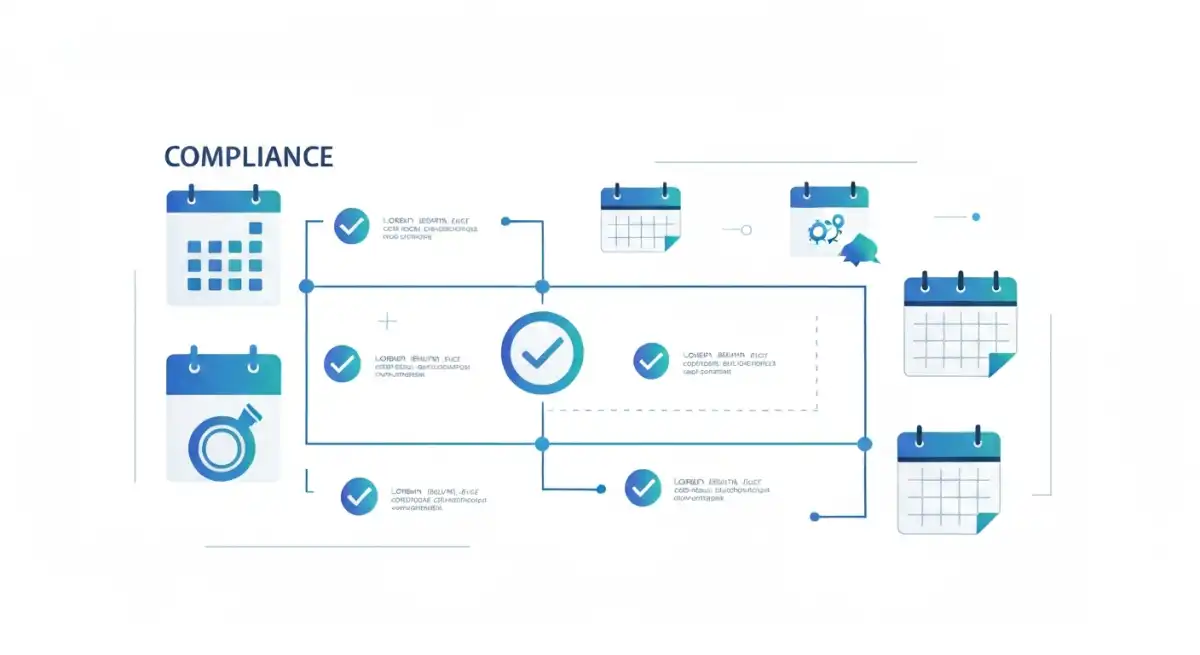
Getting SOC 2 compliant is one of the most common security milestones for growing companies, but the timeline catches many teams off guard. Between scoping, gap remediation, evidence collection, and the audit itself, the process typically spans 3 to 12 months depending on your starting point, chosen report type, and internal resources.
This guide breaks down the SOC 2 compliance timeline phase by phase, with realistic durations for each stage and the factors that speed things up or slow them down.
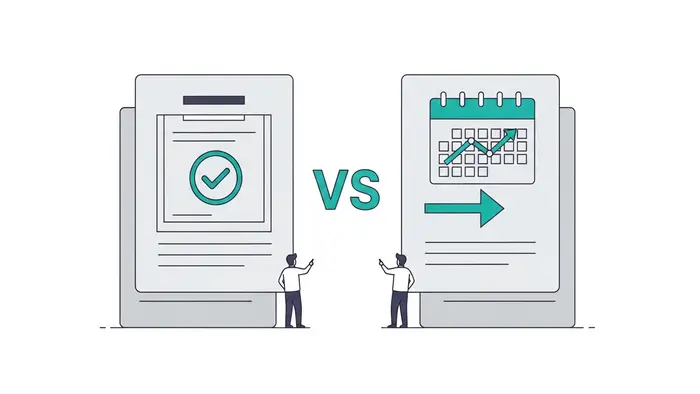
Understanding the Two SOC 2 Report Types and Their Timelines
Before mapping out your timeline, you need to decide between a Type I and Type II report. This choice is the single biggest factor in how long your SOC 2 journey takes.
Type I evaluates whether your controls are properly designed at a specific point in time. The audit itself takes 4 to 8 weeks. Including preparation, most companies complete a Type I report in 2 to 4 months.
Type II evaluates whether your controls operate effectively over a review period, typically 3 to 12 months. Including preparation and the observation window, a Type II report takes 6 to 12 months from start to finish.
Phase 1: Scoping and Readiness Assessment (2 to 4 Weeks)
The first phase defines what your SOC 2 audit will cover. You will determine which Trust Service Criteria to include (Security is mandatory, others are optional) and which systems, people, and processes fall within audit scope.
What happens during scoping:
- Identify all systems that store, process, or transmit customer data
- Map your technology stack (cloud providers, SaaS tools, databases)
- Define organizational boundaries (which teams and roles are in scope)
- Select Trust Service Criteria based on customer requirements
A formal readiness assessment is strongly recommended at this stage. It identifies gaps between your current controls and SOC 2 requirements before you engage an auditor. Companies that skip this step typically discover critical gaps mid-audit, causing delays of 4 to 8 weeks.
Typical duration: 2 to 4 weeks for scoping, plus 1 to 2 weeks for a readiness assessment.
Phase 2: Gap Remediation (4 to 12 Weeks)

Gap remediation is where most of the variance in SOC 2 timelines comes from. A startup with mature security practices might need 4 weeks. A company starting from scratch could need 12 weeks or more.
Common gaps that require remediation include:
- Access management. Implementing role-based access control, multi-factor authentication, and quarterly access reviews.
- Change management. Establishing code review processes, approval workflows, and deployment documentation.
- Incident response. Writing and testing an incident response plan, designating an incident commander, setting up alerting.
- Vendor management. Creating a vendor inventory, collecting SOC 2 reports or security questionnaires from critical vendors, establishing review cycles.
- HR security. Implementing background checks, security awareness training, documented onboarding and offboarding procedures.
- Encryption. Ensuring data is encrypted at rest and in transit across all in-scope systems.
Typical duration: 4 to 12 weeks depending on starting maturity. GRC platforms like Vanta, Drata, and Secureframe can reduce this by automating evidence collection and providing pre-built policy templates.
Phase 3: Evidence Collection and Control Documentation (3 to 6 Weeks)
Once gaps are remediated, you need to document your controls and begin collecting evidence that they are operating as designed. This phase runs concurrently with the start of your Type II observation window (if pursuing Type II).
Key activities:
- Write or finalize security policies (information security, acceptable use, data classification, incident response, business continuity)
- Configure continuous monitoring for in-scope systems
- Set up automated evidence collection through your GRC platform
- Document control descriptions mapped to SOC 2 criteria
- Establish recurring compliance tasks (quarterly access reviews, annual risk assessments, monthly vulnerability scans)
Typical duration: 3 to 6 weeks for initial documentation. Evidence collection then continues throughout the Type II observation period.
Phase 4: Auditor Selection and Engagement (2 to 4 Weeks)
Choosing the right auditor is a critical decision that affects both timeline and quality. CPA firms specializing in SOC 2 audits often have wait times of 4 to 8 weeks during peak season (Q4 and Q1).
Timeline considerations for auditor selection:
- Start conversations with auditors during Phase 2, not after remediation is complete
- Request proposals from at least 3 firms
- Confirm the auditor's availability aligns with your target completion date
- Verify the firm is registered with the AICPA and has relevant industry experience
Typical duration: 2 to 4 weeks for selection and contracting. Add 4 to 8 weeks of lead time for popular auditors during busy seasons.
Phase 5: The SOC 2 Audit (4 to 12 Weeks)

The audit itself consists of fieldwork, testing, and report writing.
Type I audit timeline:
- Fieldwork and testing: 2 to 4 weeks
- Report drafting and review: 2 to 4 weeks
- Total: 4 to 8 weeks
Type II audit timeline:
- Observation period: 3 to 12 months (6 months is the most common for first-time audits)
- Fieldwork and testing: 3 to 6 weeks (starts near the end of the observation period)
- Report drafting and review: 2 to 4 weeks
- Total: 4 to 13 months including the observation window
During fieldwork, your auditor will:
- Interview control owners across your organization
- Test a sample of controls for design and operating effectiveness
- Review evidence from your GRC platform or shared folders
- Document exceptions or deviations from stated controls
What can cause delays during the audit:
- Missing or incomplete evidence (most common cause of delays)
- Control exceptions that require management responses
- Key personnel unavailability during fieldwork
- Disagreements between management and auditors on scope or findings
Realistic SOC 2 Timelines by Company Profile
Here are realistic total timelines based on company starting points:
Early-stage startup (seed to Series A, minimal security infrastructure):
- Type I: 4 to 6 months
- Type II: 9 to 14 months
- Key bottleneck: Gap remediation (building security program from scratch)
Growth-stage company (Series B+, some security controls in place):
- Type I: 2 to 4 months
- Type II: 6 to 10 months
- Key bottleneck: Documenting existing controls and filling specific gaps
Mature organization (established security program, prior audits):
- Type I: 6 to 10 weeks
- Type II: 4 to 7 months
- Key bottleneck: Auditor availability and observation period
How to Accelerate Your SOC 2 Timeline
Several strategies can shorten your path to a SOC 2 report:
Use a GRC platform. Tools like Vanta, Drata, and Secureframe automate evidence collection, provide policy templates, and integrate directly with your cloud infrastructure. Companies using GRC platforms report 40-60% faster audit preparation compared to manual processes.
Start with Type I. A Type I report can be completed in as little as 2 months, giving you a credential to share with prospects immediately while your Type II observation period runs in the background.
Choose your auditor early. Begin auditor conversations during gap remediation, not after. This eliminates 4 to 8 weeks of scheduling delays.
Limit your initial scope. Include only the Security criterion in your first audit. Adding Availability, Confidentiality, or Processing Integrity increases the number of controls you need to implement and the amount of evidence you need to collect.
Assign a dedicated compliance owner. Companies with a full-time compliance lead complete SOC 2 up to 30% faster than those splitting compliance duties across multiple roles.
SOC 2 Compliance Timeline After Initial Certification
SOC 2 is not a one-time event. After your initial report, you need to maintain compliance continuously:
- Annual audits. SOC 2 reports cover a specific period and must be renewed annually. Plan for your Type II audit cycle to begin 2 to 3 months before the current report period ends.
- Continuous monitoring. Use your GRC platform to track control effectiveness between audits. Address issues as they arise rather than discovering them during fieldwork.
- Scope expansion. Add additional Trust Service Criteria as your customer base matures. Most companies add Availability and Confidentiality by their second or third audit cycle.
- Control evolution. Update controls as your technology stack and organizational structure change. Document changes and assess their impact on your SOC 2 program.
The cost of SOC 2 compliance also evolves over time. Initial certification is typically the most expensive year due to tool setup, remediation, and first-time audit fees. Renewal years are usually 20-30% less expensive.
Common Mistakes That Delay SOC 2 Timelines
Avoid these pitfalls that consistently add weeks or months to SOC 2 projects:
- Treating compliance as an IT project. SOC 2 touches HR, legal, operations, and engineering. Failing to involve all stakeholders early leads to gaps discovered late in the process.
- Underestimating vendor management. Collecting security documentation from third-party vendors can take 4 to 8 weeks. Start early.
- Waiting to engage an auditor. Peak season wait times can add 2 months to your timeline.
- Choosing too broad a scope. Including all five Trust Service Criteria in your first audit significantly increases complexity and duration.
- Neglecting employee training. Security awareness training must be documented and completed before your audit. Rolling this out company-wide takes time.
Frequently Asked Questions

How long does it take to get SOC 2 certified for the first time?
Most first-time companies need 3 to 6 months for a Type I report and 9 to 14 months for a Type II report. Companies using GRC automation platforms and limiting their initial scope to the Security criterion can achieve the faster end of these ranges.
Can you get SOC 2 compliant in 30 days?
Achieving full SOC 2 certification in 30 days is extremely unlikely for any organization. Some vendors advertise "audit-ready in 30 days," which means your controls are documented and evidence collection has started, not that you have received your SOC 2 report. The audit process alone takes 4 to 8 weeks minimum.
What is the difference between SOC 2 Type I and Type II timelines?
Type I evaluates controls at a point in time and typically takes 2 to 4 months total. Type II evaluates controls over 3 to 12 months of operation and takes 6 to 14 months total. Type II is the preferred report for enterprise buyers because it demonstrates sustained control effectiveness.
How often do you need to renew SOC 2?
SOC 2 reports must be renewed annually. Most companies begin their renewal audit 2 to 3 months before the current report period ends to avoid coverage gaps. Renewal audits are generally faster than initial audits because controls and documentation are already established.
What is the fastest way to get SOC 2 compliant?
The fastest path combines a GRC automation platform (Vanta, Drata, or Secureframe), a Type I report focused on Security only, an experienced auditor engaged early, and a dedicated compliance owner. This approach can yield a SOC 2 Type I report in as little as 8 to 10 weeks for companies with reasonable existing security practices.