SOC 2 Type 1 vs Type 2: Key Differences in 2026
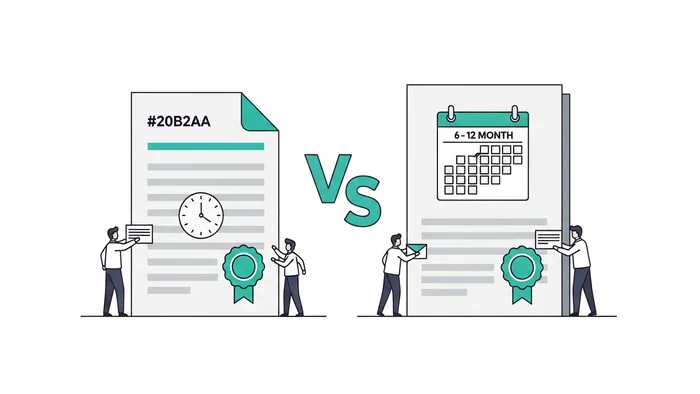
A SOC 2 Type 1 report tells your prospects that on a single day, your security controls were designed correctly. A SOC 2 Type 2 report tells them that over six to twelve months, those controls actually worked. The difference is the difference between a photograph and a documentary, and the wrong choice can either burn three months of audit budget or lose you an enterprise deal you needed yesterday.
This guide compares SOC 2 Type 1 and SOC 2 Type 2 across what they cover, how long they take, what they cost, and what enterprise buyers actually accept. By the end you will know which report to pursue first, when to upgrade, and how to budget for the full path.
What is SOC 2?
SOC 2 (System and Organization Controls 2) is an audit framework managed by the AICPA that evaluates how a service organization handles customer data across the five Trust Service Criteria: Security, Availability, Processing Integrity, Confidentiality, and Privacy. Security is the only mandatory criterion; the rest are scoped in based on customer commitments.
A SOC 2 audit produces a report — not a certificate. There is no "SOC 2 certified" status the way ISO 27001 awards certification. Instead, a licensed CPA firm issues an opinion on your controls, and you share that report under NDA with prospects, customers, and auditors.
According to a 2024 Drata customer survey, 74% of B2B SaaS deals over $50,000 ARR now require a SOC 2 report before signature. That number was 52% in 2021. Type 1 vs Type 2 has become the next nuance enterprise procurement teams probe.
For background on the framework, see our SOC 2 compliance guide.
SOC 2 Type 1: a snapshot of control design

A SOC 2 Type 1 report (sometimes called Type I) examines the design of your controls at a single point in time. The auditor walks in, you show them your policies, your evidence, your access reviews, your monitoring, and the auditor confirms — yes, on this date, your controls are designed appropriately to meet the Trust Service Criteria.
What it covers: control design as of a specific date.
Audit window: essentially zero. The "as of" date is the date the report is signed.
Preparation time: 6 to 12 weeks for a typical SaaS startup, depending on the maturity of the existing security program.
Audit duration: 2 to 6 weeks of fieldwork.
Cost: $7,500 to $25,000 in audit fees plus $5,000 to $15,000 in preparation cost (tooling, consulting, time).
What it proves: that you have written and implemented the policies, procedures, and technical controls that should keep customer data safe.
What it does not prove: that those controls actually operate effectively over time.
SOC 2 Type 2: control design plus operating effectiveness
A SOC 2 Type 2 report (sometimes called Type II) examines both the design of your controls and their operating effectiveness over a sustained observation window. The auditor pulls evidence samples from across the period — access reviews, security alerts, change records, vendor reviews — and confirms not just that the control exists, but that it ran every time it should have.
What it covers: control design plus operating effectiveness over a defined audit window.
Audit window: 3, 6, or 12 months. Six months is the most common minimum that enterprise buyers accept; twelve months is the gold standard.
Preparation time: roughly the same setup work as Type 1, plus the full observation window.
Audit duration: 4 to 8 weeks of fieldwork after the observation window closes.
Cost: $15,000 to $60,000 in audit fees plus the operational cost of running compliance during the observation window. Total program cost in year one typically lands at $40,000 to $100,000.
What it proves: that you have the right controls AND that you actually operated them consistently over a meaningful timespan.
What it does not prove: anything about your controls before the observation window started, or anything about future periods.
For a deep look at the longer report, see our SOC 2 Type 2 guide.
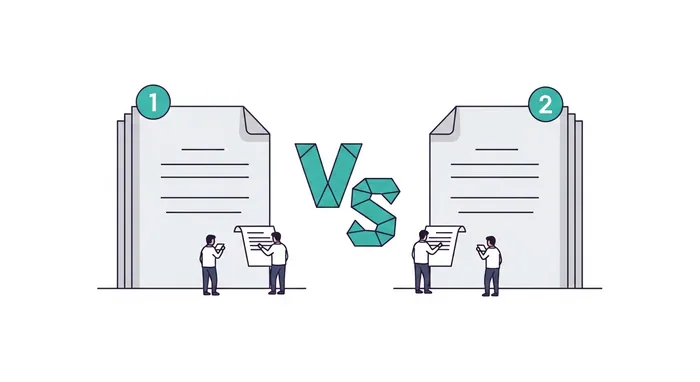
SOC 2 Type 1 vs Type 2 at a glance
| Dimension | SOC 2 Type 1 | SOC 2 Type 2 |
|---|---|---|
| What it tests | Design of controls | Design + operating effectiveness |
| Audit window | Single point in time | 3, 6, or 12 months |
| Total time to issue | 3 to 5 months | 9 to 18 months from kickoff |
| Audit fee | $7,500 to $25,000 | $15,000 to $60,000 |
| Total program cost (Year 1) | $15,000 to $40,000 | $40,000 to $100,000 |
| Renewal cadence | Once, then move to Type 2 | Annual |
| Enterprise acceptance | Often as bridge only | Standard for procurement |
| Best for | Early-stage startups, fast-moving deals | Companies with active enterprise pipeline |
For full pricing, see our SOC 2 audit cost guide.
The path most SaaS companies actually take

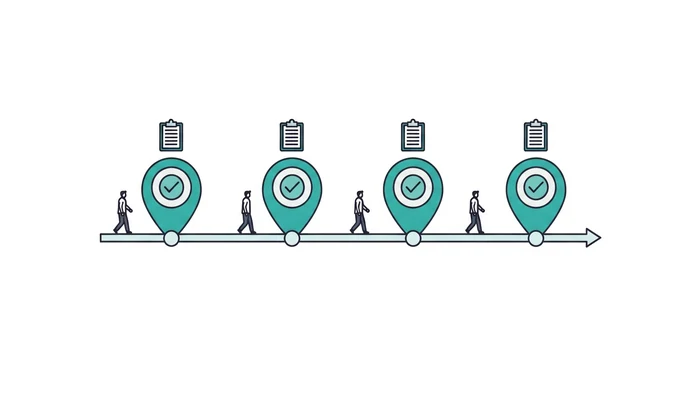
The vast majority of B2B SaaS companies follow the same staged path:
Stage 1 (months 0 to 3): prepare. Adopt a compliance automation platform, write policies, configure technical controls, train staff.
Stage 2 (month 3 or 4): complete a SOC 2 Type 1 audit. The Type 1 report can be shared with prospects within 30 days of finishing fieldwork.
Stage 3 (months 4 to 10): run controls during the Type 2 observation window (typically 6 months for a first audit).
Stage 4 (months 10 to 12): complete the Type 2 audit. Report is issued roughly 30 to 60 days after the window closes.
Stage 5 (annual): repeat the Type 2 with a fresh 12-month observation window.
This staged approach lets a startup put a Type 1 in front of customers within four to five months of starting compliance work, while building toward the Type 2 that enterprise buyers will eventually demand. According to Vanta's 2024 customer data, 71% of customers go through Type 1 before Type 2; the rest skip directly to Type 2 because their pipeline has time to wait.
When a SOC 2 Type 1 is enough
Type 1 is sometimes the right destination, not just a stop on the way:
- You are pre-revenue or pre-product-market-fit and need a security signal for early adopters.
- Your initial deals are SMB or mid-market and a Type 1 satisfies their procurement.
- You are running a 90-day window to win a single named customer who explicitly accepts Type 1.
- You have a hiring or fundraise milestone where "we have a SOC 2 report" matters more than which type.
In all these cases, the cost-benefit favors Type 1 in the short term. The risk: enterprise procurement will eventually ask for Type 2, and you will have spent money on a report that becomes a bridge document.
When you should skip directly to SOC 2 Type 2
Skip the Type 1 if:
- Every active enterprise opportunity in your pipeline requires Type 2 before signature.
- Your timeline allows the full 9 to 12 month path.
- Your security program is mature enough that the auditor would not flag design issues — a Type 1 finding here would be a false sense of progress.
- You are in a regulated industry (healthcare, fintech) where buyers expect operating effectiveness from day one.
The economic case is straightforward: a Type 1 audit costs $7,500 to $25,000 that does not get refunded against the Type 2. Skipping Type 1 saves that fee, but you lose the ability to share any SOC 2 report for the first 6 to 12 months of the program.
For startups specifically, see our guide on whether startups need SOC 2.
What enterprise buyers actually accept

Procurement teams are the ones reading these reports. Their preferences in 2026:
For deals under $25K ARR: a SOC 2 Type 1 report or a security questionnaire is usually fine.
For deals $25K to $250K ARR: Type 2 is preferred but Type 1 is often accepted as a bridge if accompanied by a target Type 2 completion date.
For deals above $250K ARR: Type 2 is essentially required. Some enterprise buyers will sign with a "Type 2 underway" commitment if the rest of the security posture is strong.
For Fortune 500 procurement: Type 2 with a 12-month observation window is the floor. Some require a SOC 2 + Trust Center + customer references before signature.
The shift since 2022 has been clear: SOC 2 Type 2 is the new "table stakes" assurance for enterprise SaaS, and Type 1 has been demoted to "first stop on the path."
Common mistakes when choosing between Type 1 and Type 2
A few patterns that cost SaaS companies real money:
Buying Type 2 too early. A Type 2 audit covering a window before your controls were actually mature produces a report full of exceptions. Exceptions get read out loud in deal calls. Better to let a Type 1 cover the messy first 90 days and start the Type 2 window after the program stabilizes.
Letting the Type 1 expire without starting Type 2. A Type 1 report has no formal expiry, but enterprise buyers consider it stale after 6 to 12 months. If you are not actively working toward Type 2, the Type 1 stops carrying weight.
Mixing observation windows on renewal. Once you start a Type 2 cadence, the next year's audit window must contiguous with or close to the previous one — gaps are flagged. A common mistake is letting the budget cycle slip and creating a 60-day gap between reports.
Paying for Type 2 with a 3-month window. Some auditors will issue a Type 2 over a 3-month window, but most enterprise buyers consider 3 months too short. Six months is the minimum that lands as credible.
Frequently asked questions
Can I share a SOC 2 Type 1 report while my Type 2 is in progress?
Yes. Type 1 is the standard bridge document. Most SaaS companies share their Type 1 alongside a "Type 2 in progress" note that names the observation window and expected completion date.
How often do I need to renew a SOC 2 Type 2?
Annually. Each report covers a fresh 12-month window (or 3 to 6 months for the first one). A lapse longer than 60 days between reports is flagged by sophisticated procurement teams.
Is a SOC 2 Type 1 worthless if I plan to do Type 2?
No. The Type 1 satisfies prospects during the 6- to 12-month observation window when no Type 2 is yet available. It is also a useful internal milestone — if your auditor flags design issues at Type 1, you fix them before they cost you on the Type 2.
Can I do a SOC 2 Type 2 without doing Type 1 first?
Yes. Direct-to-Type-2 is increasingly common, especially for companies whose pipeline can wait. The trade-off is no SOC 2 report to share for the first 6 to 12 months.
How long is the observation window for a SOC 2 Type 2?
The minimum that most enterprise buyers accept is 6 months. Most companies choose 12 months for the renewal Type 2. Anything shorter than 6 months tends to land as not credible.
What happens if a control fails during my SOC 2 Type 2 observation window?
The auditor records it as an exception in the report. A small number of exceptions with documented remediation is normal. Many high-severity exceptions or any exception you ignored becomes a qualified opinion, which materially weakens the report's value to buyers.
Are SOC 2 Type 1 and Type 2 reports public?
No. Both are confidential and shared only under NDA. Buyers expect to receive the full report, not a summary. For more on what auditors actually check, see our SOC 2 compliance checklist.
Bottom line
SOC 2 Type 1 and SOC 2 Type 2 are not competing products — they are sequential stages. Type 1 confirms control design at a moment in time. Type 2 confirms operating effectiveness over a window. Most B2B SaaS companies start with Type 1 to put a security signal in front of customers within 4 months, then progress to Type 2 to satisfy enterprise procurement within 12.
Choose Type 1 first when speed matters and your initial customers accept it. Skip directly to Type 2 when your pipeline is enterprise-heavy and your security program is already mature. According to AICPA data, the median SOC 2 program reaches its first Type 2 report 11 months after kickoff.
Plan the path before you sign the engagement letter. The wrong sequencing is one of the most expensive mistakes in modern compliance.
For the foundational guide, see our SOC 2 compliance guide. For audit firm selection, see how to choose a SOC 2 auditor. For the official source, see the AICPA Trust Services Criteria.
Primary Sources
This article references the following authoritative sources:
- SSAE 18 — AICPA attestation standards (SSAE 18)
- NIST SP 800-53 — NIST SP 800-53 Rev 5 control catalog (cross-walks to SOC 2)