How Much Does a Penetration Test Cost in 2026?
A penetration test is the single line item that auditors care about most and buyers understand least. Quotes for the same SaaS application routinely range from $4,000 to over $40,000, and most procurement teams cannot explain the spread. The answer comes down to scope, tester skill, methodology, and the compliance framework that triggered the test.
This guide synthesizes public vendor service descriptions, industry benchmark data (including Cobalt's 2024 State of Pentesting Report on testing frequency and budgets, and PurpleSec's published pricing guidance), and practitioner experience into ranges that reflect current market conditions. Where a figure is the author's estimate rather than a number a source publishes outright, it is marked "practitioner estimate." The goal is simple: help you walk into your next penetration testing RFP with a defensible budget, a clear scope, and a checklist to spot overpriced proposals.
The 2026 Price Ranges at a Glance
| Type of test | Typical range (US, 2026) | Duration | Common trigger |
|---|---|---|---|
| Automated vulnerability scan | $500-$2,000 per scan | 1-2 days | Monthly hygiene, not a real pen test |
| External network pen test | $4,000-$15,000 | 1 week | SOC 2, ISO 27001, PCI DSS |
| Internal network pen test | $6,000-$25,000 | 1-2 weeks | SOC 2, PCI DSS, insurance |
| Web application pen test | $8,000-$30,000 | 1-3 weeks | SOC 2, SaaS buyers, PCI DSS 4.0 |
| Mobile application pen test | $10,000-$25,000 | 1-2 weeks | App store, enterprise buyers |
| Cloud infrastructure pen test | $12,000-$40,000 | 2-3 weeks | SOC 2, HITRUST, FedRAMP |
| API pen test (dedicated) | $6,000-$20,000 | 1 week | Fintech, healthcare integrations |
| Red team engagement | $30,000-$150,000+ | 4-12 weeks | Financial services, regulated enterprise |
| Wireless pen test | $4,000-$10,000 | 2-5 days | Retail, campus networks, PCI DSS |
| Social engineering / phishing | $3,000-$10,000 | 1-2 weeks | Insurance, SOC 2 security awareness |
| PCI DSS full-scope pen test | $15,000-$50,000 | 2-4 weeks | PCI DSS 4.0 Requirement 11.4 |
These ranges are practitioner estimates informed by Cobalt's 2024 State of Pentesting Report (testing frequency and budget trends, not a per-type price breakdown), published service descriptions from Bishop Fox, NetSPI, and Rhino Security Labs, and PurpleSec's published pricing guidance ($8,000 to $20,000 average, up to $100,000+ for complex scopes). None of these vendors publish a fixed per-engagement-type rate card; treat the table above as a market range, not a quote from any single source.
What Actually Drives the Price

Nine variables determine the final number on a pen test invoice. Understanding them lets you compare quotes apples to apples.
1. Scope Size (the Biggest Driver)
Scope is measured in several ways depending on the asset type:
- Web application: unique roles, dynamic pages, API endpoints, and authentication flows
- Network: live IPs inside the test boundary
- Mobile: platforms (iOS, Android), authenticated flows, third-party SDKs
- Cloud: accounts, regions, services in scope (IAM, S3, Lambda, Kubernetes clusters)
A 20-endpoint web app with 3 user roles sits in the $10,000 to $15,000 band. The same product with 150 endpoints, 8 roles, and a GraphQL surface easily passes $25,000.
2. Methodology and Depth
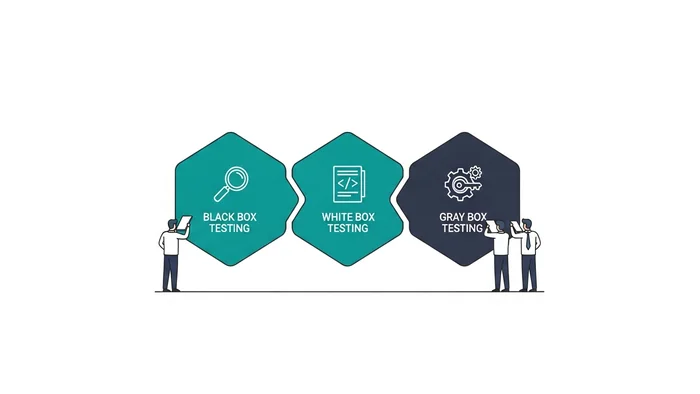
A black-box test (tester has only what a real attacker would) takes longer than a gray-box or white-box test where the tester gets source code and credentials. Gray-box is usually the best value because it front-loads reconnaissance.
Testing against a published methodology, such as PTES (Penetration Testing Execution Standard), OWASP Web Security Testing Guide, or NIST SP 800-115, adds rigor. Firms that skip methodology documentation often underprice and underdeliver.
3. Tester Skill and Certification
Senior testers with OSCP, OSCE, CREST, or Offensive Security Web Expert certifications bill at $200 to $400 per hour (practitioner estimate based on published vendor rate cards). Junior analysts working under senior oversight bill at $125 to $200 (practitioner estimate). Many firms staff junior time onto a project but charge senior rates. Ask for the day rate breakdown.
4. Compliance Framework Requirements
Tests tied to specific frameworks carry explicit requirements that affect price:
- PCI DSS 4.0 Requirement 11.4: Annual external pen test, six-monthly on internal network if material changes occur. Requires segmentation testing if you rely on scope reduction.
- SOC 2: No rigid requirement, but auditors commonly ask for an annual third-party pen test as evidence of CC7.1. Typical budget: $10,000 to $25,000 for SaaS startups.
- HIPAA §164.308(a)(8): Technical evaluation required. Most organizations interpret this as pen testing plus vulnerability management.
- ISO 27001 A.8.8 and A.8.29: Requires technical vulnerability management and secure development testing. Annual pen tests are standard practice.
- NIST 800-53 CA-8 and RA-5: Penetration testing is an explicit control for Moderate and High baselines.
PCI DSS 4.0 drives the highest average cost because it has the most prescriptive scope: all externally accessible systems, internal segmentation controls, and web applications.
5. Retesting
Most mid-market pen tests now include one round of free retesting within 30 to 90 days of report delivery. Unlimited retesting, often bundled in continuous Pentest-as-a-Service (PTaaS) models, can add 20 to 40 percent to the engagement fee (practitioner estimate) but saves money across a year because most programs need multiple retests.
6. Report Quality
The deliverable is the artifact you show auditors and customers. A good report includes an executive summary, CVSS-scored findings, proof of concept, remediation guidance, and mapping to frameworks. A poor report is a tool dump. Ask to see a sanitized sample before signing.
7. Regulatory Geography
EU-hosted tests for GDPR-governed products often require data processing addenda. UK tests for financial services frequently require CREST-accredited teams. Both add 10 to 20 percent to the quote versus a U.S.-only assessment (practitioner estimate).
8. Tester Autonomy vs Pre-Approved Actions
Strict rules of engagement that forbid denial-of-service attempts, password spraying beyond a threshold, or phishing of real employees reduce test time but also reduce realism. Flexible engagements that allow broader techniques cost more but deliver richer findings.
9. Speed and Scheduling
Expedited projects with a two-week start date commonly carry a 10 to 25 percent premium versus scheduling 6 to 8 weeks out (practitioner estimate). Q4 is the busiest season because of PCI DSS calendar-year deadlines.
The Five Pricing Models You Will See in 2026
Pen testing firms use one of five billing structures. Knowing which model you are buying is the fastest way to negotiate effectively.
- Fixed-scope fixed-fee: Firm quotes a lump sum for a defined scope. Best for audit-driven annual tests. Most common for SOC 2, PCI DSS, ISO 27001.
- Time and materials: Firm bills day rates for a set window. Best for exploratory engagements or large cloud environments where scope is hard to predict.
- Pentest-as-a-Service (PTaaS): Subscription model with continuous testing through a platform. Typical pricing: $15,000 to $80,000 per year. Examples: Cobalt, HackerOne Pentest, Synack.
- Bug bounty programs: Pay per valid finding. Typical budget: $25,000 to $200,000+ per year depending on scope. Not a replacement for a formal pen test for compliance evidence, but a strong complement.
- Crowdsourced pen test: Hybrid of PTaaS and bug bounty, where vetted testers perform time-boxed engagements. Good fit for mid-market SaaS.
For most 20-to-200 person SaaS companies chasing SOC 2 Type 2 or ISO 27001, fixed-scope fixed-fee is the cleanest fit. For companies moving into continuous compliance, PTaaS has been the fastest-growing model in the market; Cobalt's 2024 State of Pentesting Report documents significant year-over-year expansion in PTaaS adoption, though Cobalt does not publish a specific percentage growth figure publicly.
Vendor Categories and What They Charge
Not all pen testing providers compete in the same lane. Here is a rough map of the 2026 market.
| Vendor category | Typical engagement fee | Best for |
|---|---|---|
| Independent consultants | $4,000-$12,000 | Small SaaS, lightweight SOC 2 evidence |
| Boutique pen test firms (2-15 staff) | $8,000-$30,000 | Mid-market SaaS, startups, ISO 27001 |
| Mid-tier security firms | $20,000-$75,000 | Fintech, healthtech, regulated SMB |
| Tier-1 specialists (Bishop Fox, NetSPI, Mandiant, etc.) | $50,000-$250,000+ | Enterprise, high-stakes red team, federal |
| Big Four advisory arms | $75,000-$500,000+ | Large enterprise, board-level assurance |
| PTaaS platforms | $15,000-$80,000 per year | Continuous testing, agile development |
| Bug bounty platforms | $25,000-$200,000 per year | Public-facing consumer apps |
A SaaS startup preparing its first SOC 2 Type 2 should expect to evaluate boutique firms and PTaaS platforms. A Series B fintech adding PCI DSS should evaluate mid-tier firms. A public company preparing a board-level cyber risk briefing should include at least one tier-1 specialist.
Sample Budgets for 2026

Here are three realistic budget pictures based on aggregated vendor pricing data, published rate cards, and RFP responses reviewed across SaaS, fintech, and healthcare companies in 2025-2026. Exact figures will vary by vendor and scope; treat these as planning benchmarks, not fixed quotes.
SaaS Startup Preparing SOC 2 Type 2
- External network + web app pen test: $14,000
- One round of retest: included
- Executive summary plus detailed findings report
- Deliverable ready for auditor evidence
Total: $14,000. See our SOC 2 audit cost guide for how this fits into the full audit budget.
Fintech Series B Pursuing PCI DSS and SOC 2
- External network pen test: $10,000
- Internal network pen test with segmentation validation: $22,000
- Web application pen test (customer portal + admin): $22,000
- API pen test: $14,000
- Social engineering (phishing + vishing): $8,000
- Retesting included
Total: $76,000.
Healthcare SaaS Preparing HITRUST r2 Validated Assessment
- External + internal + web application: $38,000
- API and mobile testing: $22,000
- Cloud configuration review (AWS / Azure): $18,000
- Retesting included
- HITRUST-aligned report format
Total: $78,000.
These numbers align with vendor-published pricing and Software Engineering Institute / CERT guidance on realistic testing scope for regulated SaaS.
How to Avoid Overpaying
Eight tactics consistently reduce cost without reducing quality.
- Scope precisely. Count endpoints, user roles, and cloud accounts before you request quotes. Vague RFPs attract high-margin quotes.
- Reuse the same firm across compliance frameworks. Your PCI DSS test can satisfy most of your SOC 2 and ISO 27001 evidence if scoped correctly.
- Schedule off-peak. Book 6 to 8 weeks out and avoid Q4. Use Q2 and early Q3 windows.
- Bundle retests and quarterly hygiene scans. Annual contracts often include 20 to 30 percent bundling discounts (practitioner estimate).
- Ask for a sample report and a redacted methodology. Firms that cannot produce either charge more than they deliver.
- Negotiate on retests, not on the base fee. Vendors will often add unlimited retesting for 6 months before they will discount the headline fee.
- Combine external and internal testing into one engagement. You pay one mobilization fee instead of two.
- Use PTaaS platforms for annual cadence. A $40,000 annual PTaaS subscription often replaces two $20,000 fixed-fee tests and adds ad hoc testing capacity.
Questions to Ask Every Vendor
Before signing, have written answers to each of the following.
- How many hands-on-keyboard hours are allocated to testing and to reporting?
- What is the experience and certification profile of the testers assigned to my project?
- Which methodology (PTES, OWASP WSTG, NIST SP 800-115, CREST) will you follow?
- How will findings be mapped to the framework I am being audited against?
- Will you provide a sanitized sample report from a prior engagement?
- What is included in retesting? Is it time-boxed or scope-boxed?
- How do you handle findings that require active exploitation (for example, privilege escalation)?
- What happens if a critical finding surfaces during testing? Is there a pause-and-notify protocol?
- How do you handle cloud environments with production traffic?
- What evidence will you provide for my auditor beyond the report itself?
Common Mistakes That Inflate Cost

Three mistakes routinely cost buyers 20 to 50 percent more than necessary (practitioner estimate based on aggregated RFP and re-scoping patterns observed across vendor disclosures).
- Buying a "pen test" when you need a vulnerability scan. A scan on a compliance-automation platform costs a fraction of a real pen test. Use scans continuously and reserve manual testing for high-impact coverage.
- Re-scoping the test mid-engagement. Adding endpoints or roles after the SOW is signed almost always triggers change orders at 30 percent above the original rate (practitioner estimate).
- Treating the report as a compliance checkbox instead of a remediation plan. Budget separately for remediation work. Plan for remediation engineering time that can equal or exceed the pen test engagement fee itself (practitioner estimate; actual cost depends on finding severity and your internal engineering capacity).
FAQ
Q: How often should I get a penetration test? A: Annual testing is the common baseline for SOC 2, ISO 27001, and HIPAA. PCI DSS 4.0 requires annual external testing and after any material change to the cardholder data environment. Organizations shipping software more than weekly should consider continuous testing through PTaaS.
Q: Can a bug bounty program replace a penetration test? A: No, not for compliance purposes. Auditors require a structured engagement with a defined scope, methodology, and single deliverable. Bug bounties complement testing well by covering residual risk between formal engagements.
Q: What is the cheapest reliable option for a small SaaS company? A: Expect to spend $10,000 to $15,000 on an external plus web application test with a reputable boutique firm. Anything less almost always means automated scanning dressed up as a pen test.
Q: Are overseas pen testers safe to use? A: Yes, if the firm is reputable and can meet your data handling requirements. Many UK, Dutch, and Israeli firms deliver tier-1 quality at 20 to 30 percent below U.S. tier-1 prices (practitioner estimate based on vendor rate comparisons). Verify certifications, references, and data residency terms.
Q: Does a pen test cover all my compliance testing needs? A: No. Most frameworks require a layered program including vulnerability scanning, configuration reviews, code reviews, and social engineering testing. A pen test is one input into a broader security assessment calendar.
Q: What is the typical cost escalation for retesting findings? A: Most firms include one full retest cycle at no charge within 60 to 90 days of report delivery. Additional retests typically cost 15 to 25 percent of the original engagement fee each (practitioner estimate).
Conclusion
Pen test pricing in 2026 ranges from a few thousand dollars for narrow external scans to hundreds of thousands of dollars for red team engagements. The right budget depends less on vendor marketing and more on your compliance framework, environment complexity, and report quality requirements. Scope the engagement precisely, ask the nine drivers above, and compare at least three proposals on tester hours, methodology, and deliverable before signing. For most 20-to-200 person SaaS companies preparing SOC 2 Type 2 or PCI DSS, a $12,000 to $30,000 annual spend buys real manual testing that will satisfy your auditor and close your next enterprise deal.
Sources and References
Pricing data in this article is drawn from the following sources. NIST and CISA references are cited for framework scope requirements only; pricing figures come from vendor-published rate cards and industry surveys.
Pricing and Market Data
- Cobalt State of Pentesting Report 2024, annual industry benchmark for testing frequency, budget, and PTaaS adoption trends (does not break out price by test type)
- PurpleSec Penetration Testing Services, published pricing guidance on engagement fees (a vendor pricing page, not a formal research survey)
- Bishop Fox, published service and engagement descriptions
- NetSPI, published service tiers and scope descriptors
- Rhino Security Labs, published service descriptions
- Software Engineering Institute / CERT, guidance on realistic testing scope for regulated systems
Compliance Framework Requirements
- NIST SP 800-115, Technical Guide to Information Security Testing and Assessment, defines pen test methodology scope
- NIST SP 800-53 CA-8 and RA-5, penetration testing controls for Moderate and High baselines
- CISA, cross-cutting reference for vulnerability management guidance
- NIST Cybersecurity Framework 2.0, cross-cutting reference
- PCI DSS 4.0 Requirement 11.4, annual pen test mandate for cardholder data environments
- OWASP Web Security Testing Guide, web application testing methodology
- PTES (Penetration Testing Execution Standard), general pen test methodology reference
Last reviewed: 2026-07-09. This article was prepared by the Security Compliance Guide Editorial Team. We use AI to draft initial summaries of publicly available cybersecurity compliance documentation, then verify every claim against primary sources before publication. We are not licensed auditors, attorneys, or compliance consultants. For binding decisions, consult a qualified professional. See our editorial standards for full sourcing rules.