
FedRAMP Authorization: Requirements, Process, and Costs
FedRAMP (Federal Risk and Authorization Management Program) is the standardized approach for federal agencies to assess and authorize cloud service providers. If your company sells cloud services to the U.S. government, FedRAMP authorization is not optional. It is the gate you must pass through before any federal agency can use your product.
This guide covers the authorization process, requirements at each impact level, realistic cost estimates, and the strategic decisions you need to make before starting.
What Is FedRAMP?
FedRAMP provides a standardized security assessment framework for cloud products and services used by federal agencies. Established in 2011 and codified into law by the FedRAMP Authorization Act (part of the FY2023 National Defense Authorization Act), the program ensures that cloud services meet a consistent baseline of security requirements.
The core idea is "authorize once, reuse many times." Instead of each federal agency conducting its own security assessment of the same cloud product, FedRAMP creates a single authorization that all agencies can rely on. This saves time for both the government and cloud providers.
FedRAMP is managed by the General Services Administration (GSA) and builds on NIST 800-53 security controls. If you are already familiar with NIST controls, you have a head start on understanding FedRAMP requirements.
FedRAMP Impact Levels
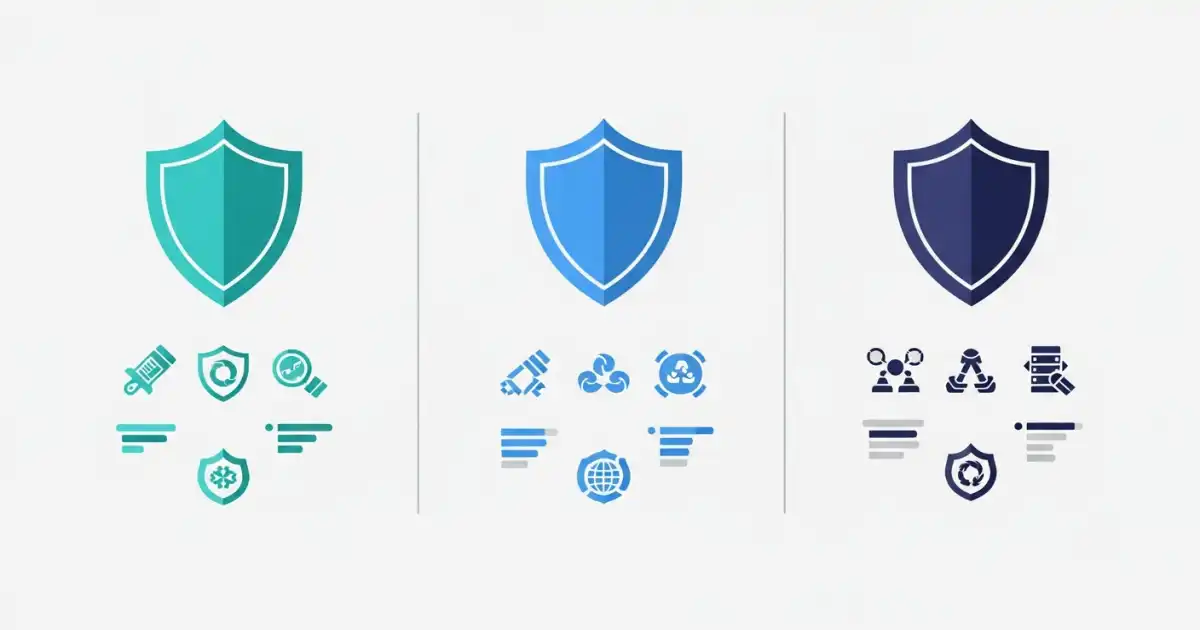
FedRAMP defines three impact levels based on the FIPS 199 categorization of information types. The level you need depends on the sensitivity of the data your service handles:
Low Impact
- Data types: Publicly available information, non-sensitive data
- Controls required: 156 controls (NIST 800-53 Low baseline)
- Use cases: Public websites, collaboration tools for non-sensitive work, development environments
- Examples: Content management systems, project management tools without CUI
Moderate Impact
- Data types: Controlled Unclassified Information (CUI), personally identifiable information (PII), financial data
- Controls required: 325 controls (NIST 800-53 Moderate baseline)
- Use cases: Email systems, HR platforms, financial management, most SaaS applications
- Examples: Google Workspace, Microsoft 365 Government, Salesforce Government Cloud
- Note: Approximately 80% of FedRAMP authorizations are at the Moderate level
High Impact
- Data types: Law enforcement data, emergency services, financial data with systemic impact, health data
- Controls required: 421 controls (NIST 800-53 High baseline)
- Use cases: Systems where a breach would cause severe or catastrophic harm
- Examples: AWS GovCloud, Microsoft Azure Government, Oracle Cloud for Government
| Impact Level | Controls | Typical Cost | Timeline | % of Authorizations | |---|---|---|---|---| | Low | 156 | K-K | 3-6 months | ~10% | | Moderate | 325 | K-M | 6-18 months | ~80% | | High | 421 | M-M+ | 12-24 months | ~10% |
Two Paths to FedRAMP Authorization

There are two ways to obtain FedRAMP authorization, and your choice has significant implications for timeline, cost, and strategy:
Path 1: Agency Authorization (Agency ATO)
An agency authorization means a specific federal agency sponsors your authorization. The agency acts as your partner throughout the process, reviews your security package, and issues an Authority to Operate (ATO).
Advantages:
- Faster than the JAB path (typically 6-12 months for Moderate)
- You work directly with one agency that already wants to use your product
- The agency has incentive to move quickly because they need your service
- More flexibility in interpreting control requirements
Disadvantages:
- Requires an agency sponsor (you need a government customer who will champion your product)
- Some agencies prefer JAB-authorized products and may view agency ATOs as less rigorous
- Must be reviewed by FedRAMP PMO before listing on the Marketplace
Best for: Companies that already have a relationship with a federal agency or a pending contract.
Path 2: JAB Authorization (P-ATO)
The Joint Authorization Board (JAB) consists of CIOs from DOD, DHS, and GSA. A JAB Provisional Authority to Operate (P-ATO) is considered the gold standard because it is reviewed by the highest-level security authorities.
Advantages:
- Highest credibility and trust across all agencies
- Agencies can leverage a JAB P-ATO with minimal additional review
- Demonstrates the highest level of security rigor
Disadvantages:
- Significantly longer process (12-18 months for Moderate)
- Competitive selection: the JAB prioritizes services with broad government demand
- More rigorous review with less flexibility on control interpretation
- Requires a FedRAMP Ready designation before entering the JAB queue
Best for: Companies targeting multiple agencies, companies with broad government use cases, companies where security credibility is a key differentiator.
The FedRAMP Authorization Process
Step 1: Preparation (2-4 months)
- Gap assessment: Compare your current security posture against the NIST 800-53 controls required at your target impact level. Identify what you have, what you lack, and what needs remediation.
- Select a 3PAO: A Third Party Assessment Organization (3PAO) conducts your independent security assessment. 3PAOs must be accredited by the American Association for Laboratory Accreditation (A2LA). Expect to spend time selecting the right 3PAO based on their experience with your technology stack.
- Boundary definition: Define your authorization boundary clearly. This is every system, component, network, and data flow that is in scope. Overly broad boundaries increase cost and complexity. Overly narrow boundaries create audit findings.
- Develop SSP: The System Security Plan (SSP) is the master document describing how you implement each required control. For Moderate, this document typically runs 300 to 500 pages.
Step 2: Security Assessment (3-6 months)
- Readiness assessment (optional but recommended): Your 3PAO conducts a readiness assessment to identify gaps before the formal assessment. This results in a Readiness Assessment Report (RAR) and a FedRAMP Ready designation.
- Full assessment: The 3PAO tests every control in your SSP through documentation review, interviews, and technical testing (including penetration testing). This produces the Security Assessment Report (SAR).
- Remediation: Address findings from the SAR. Critical and high findings must be resolved before authorization. Moderate and low findings can be documented in your Plan of Action and Milestones (POA&M).
Step 3: Authorization (1-3 months)
- Package submission: Submit your complete security package (SSP, SAR, POA&M, and supporting artifacts) to either your sponsoring agency or the JAB.
- Review: The authorizing body reviews your package, may request additional information, and may require additional testing.
- Authorization decision: If approved, you receive an ATO (agency path) or P-ATO (JAB path). Your service is listed on the FedRAMP Marketplace.
Step 4: Continuous Monitoring (Ongoing)
Authorization is not the finish line. FedRAMP requires ongoing continuous monitoring:
- Monthly vulnerability scanning and remediation
- Annual penetration testing by your 3PAO
- Annual security assessment update
- Monthly POA&M updates
- Significant change requests for any major architectural changes
- Incident reporting within specified timeframes
Cost Breakdown
FedRAMP authorization is a significant investment. Here is a realistic breakdown for a Moderate impact authorization:
Initial Authorization Costs
| Cost Category | Estimated Range | |---|---| | Gap assessment and remediation | ,000-,000 | | SSP and documentation development | ,000-,000 | | 3PAO readiness assessment | ,000-,000 | | 3PAO full security assessment | ,000-,000 | | Penetration testing | ,000-,000 | | Security tooling and infrastructure | ,000-,000 | | FedRAMP consultant (optional) | ,000-,000 | | Internal staff time | ,000-,000 | | Total initial investment | ,000-,000,000 |
Ongoing Annual Costs
| Cost Category | Estimated Range | |---|---| | Annual 3PAO assessment | ,000-,000 | | Continuous monitoring tools | ,000-,000 | | Monthly scanning and remediation | ,000-,000 | | Dedicated compliance staff (1-2 FTEs) | ,000-,000 | | Annual penetration testing | ,000-,000 | | Total annual maintenance | ,000-,000 |
How FedRAMP Connects to Other Frameworks

FedRAMP does not exist in isolation. Understanding the relationships between frameworks helps you avoid duplicate effort:
NIST 800-53: FedRAMP is built directly on NIST 800-53 controls. If you have already implemented NIST 800-53, you have completed a significant portion of FedRAMP requirements. The difference is in FedRAMP-specific parameters and additional requirements.
CMMC 2.0: Organizations pursuing both FedRAMP and CMMC compliance will find substantial overlap, especially at CMMC Level 2 (which maps to NIST 800-171, a subset of 800-53).
SOC 2: While SOC 2 and FedRAMP have different scopes, organizations with SOC 2 Type 2 reports have already demonstrated many of the operational controls FedRAMP requires. SOC 2 evidence can be leveraged during FedRAMP assessments.
ISO 27001: An ISO 27001 certification shows auditors that you have a functioning ISMS. While the control sets differ, the management system and risk assessment processes transfer directly.
StateRAMP: StateRAMP applies the FedRAMP model to state and local government. A FedRAMP authorization typically satisfies StateRAMP requirements with minimal additional effort.
Common Mistakes to Avoid
Underestimating the documentation burden. The SSP alone is hundreds of pages. Add the SAR, POA&M, configuration guides, and supporting artifacts, and you are looking at thousands of pages of documentation. Hire or contract experienced compliance writers.
Defining the boundary too broadly. Include only the systems that actually process, store, or transmit federal data. Every system in scope must meet every applicable control, so unnecessary systems in the boundary multiply your work.
Choosing the wrong 3PAO. Not all 3PAOs have experience with your technology stack. A 3PAO experienced with traditional on-premises systems may struggle with serverless or container-based architectures. Ask for references from companies with similar infrastructure.
Ignoring the sales cycle. FedRAMP authorization takes 6 to 18 months. Federal procurement takes another 6 to 12 months. Plan your go-to-market strategy well in advance of receiving authorization.
Skipping the readiness assessment. The RAR catches issues early when they are cheaper to fix. Organizations that skip it often face major findings during the full assessment, leading to costly delays and additional 3PAO testing fees.
Frequently Asked Questions
What is FedRAMP authorization?
FedRAMP authorization is the U.S. government process for evaluating and approving cloud services for federal use. It ensures cloud providers meet standardized security requirements based on NIST 800-53. Authorization allows agencies to adopt your service without conducting their own full security assessment.
How long does FedRAMP authorization take?
An agency authorization typically takes 6 to 12 months for Moderate impact. A JAB authorization takes 12 to 18 months. Including preparation time, plan for 9 to 24 months from start to authorization.
How much does FedRAMP cost?
Initial authorization at the Moderate impact level costs ,000 to ,000,000, including 3PAO assessments, documentation, remediation, and internal staff time. Ongoing annual maintenance costs ,000 to ,000.
Is FedRAMP required to sell to the government?
FedRAMP is required for cloud services used by federal agencies. If your product is deployed on-premises within an agency network (not cloud), FedRAMP may not apply. However, the trend is strongly toward cloud adoption, making FedRAMP increasingly essential.
What is the difference between FedRAMP and StateRAMP?
FedRAMP covers federal agencies. StateRAMP applies the same model to state and local government. They share the same NIST 800-53 foundation. A FedRAMP authorization typically satisfies StateRAMP requirements, but not vice versa.
Can startups get FedRAMP authorized?
Yes. Over 350 cloud services are FedRAMP authorized, including products from startups. The agency authorization path is more accessible for startups because it requires a single agency sponsor rather than JAB selection. Some accelerator programs (e.g., USDS, Defense Innovation Unit) help startups navigate the process.