Best Penetration Testing Companies in 2026: Independent Review
Nine firms reviewed. Three buyer personas scored. Pricing figures quoted on request only, any vendor publishing public price sheets was cited directly; the rest dropped their numbers from this review.
TL;DR
- Mid-market SaaS running a first SOC 2 pen test: Use Cobalt (PTaaS, starts in days, Jira/GitHub integration, retesting included) or NetSPI for more human-intensive work.
- Healthcare and regulated finance: NetSPI (serves top U.S. banks and the world's largest healthcare companies per their site) or NCC Group (CREST-accredited, 25+ years, NCSC-certified) for evidence-quality reports.
- Mature security programs and adversarial simulation: Bishop Fox (20 years offensive focus, proprietary tooling including Sliver and CloudFox) or Black Hills Information Security (continuous testing via ANTISOC, assumed-breach methodology).
- All pricing is quote-only from every firm in this review. Drop any vendor who won't give you a scope-based estimate in writing before you sign.
- The single best procurement signal: ask for a sample report. Report quality predicts test quality better than any sales conversation.
Who This Is For

This review is written for security and compliance leads at companies under 1,000 employees who need to select a pen test vendor for a compliance deadline (SOC 2, HIPAA, PCI DSS, FedRAMP), a board-requested assurance program, or an adversarial simulation exercise. It is not written for enterprise security teams with dedicated vendor management functions, those teams have different selection criteria and procurement leverage.
If you are running your first-ever pen test, skip directly to the per-persona recommendations section.
What You Are Actually Buying
A penetration test is a time-boxed, authorized attempt to exploit vulnerabilities in a defined target: a web application, external network, internal network, cloud environment, or some combination. The output is a report categorizing findings by severity, documenting exploitation evidence, and providing remediation guidance.
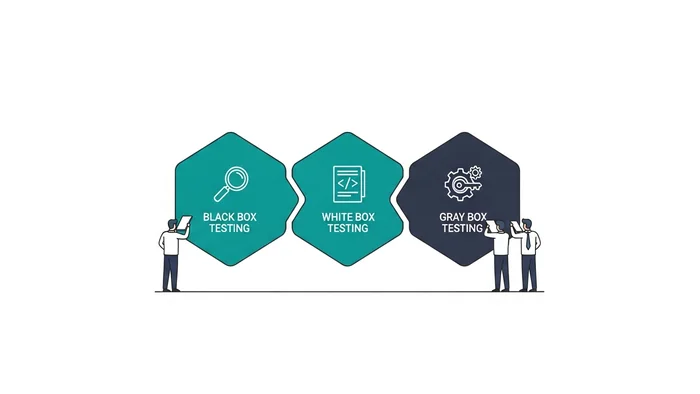
Engagement types that matter for this decision:
| Type | What testers start with | Best fit |
|---|---|---|
| Black box | No knowledge of target | External attacker simulation |
| Gray box | Low-privilege account + basic docs | Most web application tests |
| White box | Source code + architecture + credentials | Pre-release code review, deep logic testing |
| Red team | Defined adversarial objective | Detection and response validation |
| Purple team | Shared attacker/defender sessions | SOC maturity improvement |
For SOC 2, most auditors require at minimum one annual external network or web application penetration test covering in-scope systems. The AICPA's Trust Services Criteria, specifically CC7.1 (detection of new vulnerabilities) and CC7.2 (monitoring of security events), are the controls that pen testing evidence supports. Your specific scope requirements depend on your auditor's interpretation; confirm before engaging a vendor.
PCI DSS v4.0 (governed by the PCI Security Standards Council) requires penetration testing at least annually and after any significant infrastructure or application changes. Requirement 11.4 specifies both internal and external testing.
Certifications That Signal Tester Competence
Ask every prospective vendor which certifications the specific testers assigned to your engagement hold.
OSCP (Offensive Security Certified Professional): Requires passing a 24-hour hands-on exploitation exam. The most widely held entry-to-mid-level credential in offensive security. Issued by Offensive Security.
OSED, OSEP, OSWE: Advanced Offensive Security credentials for exploit development, evasion, and web expert testing. Testers on complex engagements should hold at least one.
CREST certifications: CREST (Council of Registered Ethical Security Testers) offers three progressive tiers for individuals in penetration testing: Practitioner (CPSA), Registered (CRT), and Certified (CCT INF/CCT APP), each requiring progressively longer documented experience (per CREST's published criteria at crest-approved.org). CREST separately offers CCRTS (Certified Red Team Specialist), an advanced credential focused specifically on adversary simulation rather than general penetration testing; it sits outside the three-tier ladder above and is referenced by name in the Bank of England's CBEST accreditation process. Exams are proctored and knowledge-based; they are not self-attested. For firms, CREST accreditation requires passing an organizational audit covering policies, processes, and quality assurance, not just individual credentials. NCC Group is CREST-accredited with NCSC CHECK and CBEST alongside it; confirm CREST accreditation status directly with any other firm you are considering.
GXPN, GWAPT (GIAC): Issued by SANS Institute. Relevant for advanced exploitation and web application testing.
PNPT (Practical Network Penetration Tester): Issued by TCM Security. Gaining traction for internal network scenarios.
One firm holding CREST accreditation at the organization level while assigning uncredentialed junior testers to your project is a red flag. Get names and credentials before signing.
In practice, compliance teams most often discover the credential gap after the statement of work is signed. The vendor's proposal lists OSCP-certified testers; the engagement kicks off with someone who holds only the firm's internal training certificate. The fix is to require named testers and their current certifications as a contract deliverable before you wire the deposit. Auditors for SOC 2 and HIPAA do not scrutinize tester credentials the way PCI DSS QSA engagements do, but your own defensibility posture improves significantly if you can show a named, credentialed tester produced the findings.
The Nine Firms

How these nine were selected: this review covers firms that (1) publish enough detail about certifications, methodology, or service scope to compare against the criteria above, (2) collectively span the PTaaS, boutique offensive-research, and large-integrator segments a compliance buyer is likely to evaluate, and (3) are named repeatedly in SOC 2, HIPAA, and PCI DSS vendor shortlists we have seen in practice. This is not an exhaustive market list, and inclusion is not a paid placement or affiliate relationship; no firm below paid for or reviewed its entry before publication.
1. Cobalt, PTaaS for compliance-driven SaaS
Cobalt describes itself as a pioneer of the PTaaS category. The model connects buyers with a vetted pool of freelance testers through a platform that manages scoping, findings, and remediation tracking. Testing can start in as little as 24 hours. Findings integrate with Jira, GitHub, and 50+ other tools. Free retesting is included for the duration of the contract (6 or 12 months depending on tier).
Cobalt offers three tiers (Standard, Premium, Enterprise) differentiated by start time, credit rollover period, and support model. Pricing is credit-based (each credit represents 8 pentesting hours) and is quote-only; no public rate card exists as of May 2026.
Best fit: Companies running multiple tests per year across different assets who want platform-managed workflow and fast start times. Popular with SaaS companies on quarterly testing cycles.
Not the right fit: Custom or complex scopes, hardware, embedded systems, nation-state simulation red teams. The platform model optimizes for throughput on standard scope types.
Limitation to flag: Confirm whether the testers assigned to your engagement are CREST or OSCP-credentialed. The pool model varies by assignment.
2. Bishop Fox, Offensive depth and the Cosmos platform
Bishop Fox has focused exclusively on offensive security for over 20 years, with named clients including Google, Coinbase, Equifax, and Zoom. The firm built proprietary offensive tooling, Sliver (command-and-control framework) and CloudFox (cloud attack surface enumeration), that is actively used in client engagements and released as open source. This distinguishes them from firms that rely entirely on commodity tools.
The Cosmos platform provides continuous attack surface management paired with application and external pen testing. Services span web app, API, AI/LLM, cloud (AWS, Azure, GCP), mobile, network, and red team with social engineering options.
Pricing is quote-only. The firm reported a 70 NPS customer satisfaction score on their about page (accessed 2026-05-12). No CREST accreditation status was published on their public site as of this review.
Best fit: Organizations with mature security programs who want testers with genuine offensive research depth. Also strong for companies with cloud-native or complex application stacks.
Not the right fit: First compliance pen test on a tight budget. The expertise level here is appropriate for programs that have already found the basics.
3. NetSPI, Platform-driven with 350+ in-house testers
NetSPI employs 350+ in-house penetration testers, not subcontractors, and covers applications (web, API, mobile, thick client), networks, cloud (AWS, Azure, GCP), hardware (ATM, automotive, medical devices, IoT), AI/ML systems, and mainframe (z/OS, IBMi). The hardware and mainframe depth is uncommon among general pen testing firms.
NetSPI's platform tracks findings between annual tests, integrates with ticketing systems, and provides attack path visualization. Named clients on their about page include Microsoft, Chubb, and Broadridge; they describe serving top U.S. banks and major healthcare systems. NetSPI states it was named a Leader and Outperformer in the 2025 GigaOm Radar for PTaaS; we cite NetSPI's own page here and have not independently reviewed the primary GigaOm report.
Pricing is quote-only. No CREST accreditation status was published on their public site as of this review.
Best fit: Companies in healthcare or regulated finance who need evidence-grade findings with a clear chain of custody. Also strong for any company that wants continuous remediation tracking rather than a point-in-time PDF.
Not the right fit: Organizations that just need a single compliance deliverable and won't operationalize findings management. The platform adds value only if you use it.
4. NCC Group, CREST-accredited, 2,000+ staff
NCC Group is one of the largest cybersecurity consulting firms globally, with over 2,000 employees and offices across the UK, US, and Netherlands. They hold CREST accreditation alongside NCSC CHECK (including CBEST), CBEST, TISAX, UKAS, and NCSC Cyber Incident Response certifications. The combination of CREST + CBEST is meaningful for UK/EU-regulated entities and for any US company whose enterprise clients or auditors require CREST-accredited work.
NCC Group's technical assurance practice has published research widely in the vulnerability research community. Dedicated service lines include hardware/embedded testing and cryptography, both uncommon at this depth.
No public pricing. Scheduling lead times for specialized practices are typically longer than commodity pen test firms; plan for multiple weeks of lead time, especially for niche practices (editorial estimate based on firm scale and specialization depth).
Best fit: Healthcare and financial services companies that need CREST-accredited reports for UK/EU compliance, companies with hardware or IoT security testing requirements, and buyers who need a firm large enough to provide multi-disciplinary teams.
Not the right fit: Buyers who need a fast start date or are running a straightforward first compliance test.
5. Rapid7 Penetration Testing Services, Integrated with the Rapid7 platform
Rapid7's professional services division runs penetration testing alongside its InsightVM (vulnerability management) and InsightIDR (SIEM/XDR) products. The described advantage is integration: pen test findings can feed directly into InsightVM for continuous tracking. Testers dedicate up to 20% of bench time on attacker research, per their services page.
Services cover external and internal network testing, web application testing, IoT, social engineering, wireless, and red team via their Vector Command continuous red team product. No CREST accreditation status was published on their public site as of this review.
No public pricing.
Best fit: Companies already in the Rapid7 ecosystem who want findings to flow directly into InsightVM without a separate integration step.
Not the right fit: Organizations not using Rapid7 tooling. Outside that integration story, Rapid7 is not differentiated from pure-play pen test firms for standard compliance engagements.
6. Trustwave / LevelBlue, Compliance-aligned testing
Trustwave's security testing practice has moved to LevelBlue (the brand created after the AT&T cybersecurity division separation). The practice covers penetration testing for PCI DSS, HIPAA, and SOC 2-scoped engagements. Trustwave historically served retail and financial services with a compliance-first posture. LevelBlue's redirect was live as of May 2026; confirm current brand status before engaging.
No public pricing or certification details were accessible on the redirected LevelBlue URL at the time of this review.
Best fit: Retail and payment-processing companies needing PCI DSS-aligned testing with an established compliance posture.
Not the right fit: Buyers who need current, verifiable accreditation details before procurement, the brand transition makes this harder to confirm right now.
7. Black Hills Information Security, Continuous testing and adversarial simulation
Black Hills Information Security (BHIS) operates differently from the enterprise firms above. They emphasize knowledge transfer alongside testing, are active in free and pay-what-you-can security education through Antisyphon Training (the BHIS-founded, community-oriented training platform), and built the ANTISOC service, a continuous red team operations center rather than a point-in-time engagement.
Service types include external and internal network testing, assumed-breach testing (starting from least-privileged access to simulate an insider threat or phishing success), web application testing, mobile, wireless, and AI security assessments covering prompt injection, model extraction, and data poisoning.
No public pricing or CREST status.
Best fit: Organizations with internal security teams who want to run assumed-breach scenarios or continuous adversarial testing. Also strong for companies that want testers who explain what they found and why, not just deliver a report.
Not the right fit: Compliance-driven buyers who need a fast start and a formatted report for an auditor. BHIS prioritizes depth over throughput.
8. Optiv, Large integrator with offensive practice
Optiv is primarily a security products reseller and managed services provider, but maintains an offensive security practice covering penetration testing and red team. Their scale (one of the largest security-focused MSSPs in North America) means they can deliver across most engagement types. Optiv's federal arm (Optiv + ClearShark) holds a confirmed GSA Schedule contract; the firm's own marketing also references OASIS+ and SeaPort-NxG vehicle access, though we could not independently verify current award status for those two vehicles at review time (Optiv's offensive security page returned a 403, see note below). Confirm active contract vehicle status directly with Optiv before assuming federal accessibility.
Their offensive security page returned a 403 at the time of this review; details above are based on their services overview. Verify current service scope before engaging.
No public pricing. No CREST accreditation confirmed from public sources.
Best fit: Federal agencies or large enterprises who want a single vendor across security products, managed services, and offensive testing.
Not the right fit: Buyers whose primary requirement is deep offensive expertise. Optiv's differentiation is breadth and procurement vehicles, not pen test specialization.
9. GuidePoint Security, Mid-market breadth
GuidePoint Security offers more than a dozen primary service categories including application security, cloud, GRC, identity and access management, OT/IoT, and penetration testing under vulnerability management. Named compliance specializations include HIPAA and PCI DSS. Government contract vehicles listed include GSA and DOW. Their application security sub-practice covers web, API, cloud, and mobile assessment types.
No public pricing. No CREST accreditation confirmed from public sources. Staff certification details were not published on their services pages as of this review.
Best fit: Mid-market companies who want a single vendor across multiple security service types rather than a specialized pen test firm.
Not the right fit: Buyers who need the deepest available offensive expertise or a firm with published CREST credentials.
Per-Persona Recommendations
Mid-market SaaS, 50-500 employees, first SOC 2 pen test
Pick Cobalt. The PTaaS model exists for this exact scenario. You can scope and start faster than any traditional firm, findings integrate with your existing ticketing system, and the compliance report format is accepted by major SOC 2 auditors. If you want more human-intensive testing and are willing to wait for a scoped engagement, add NetSPI to your comparison.
Do not use Bishop Fox, NCC Group, or BHIS for a first compliance test. The expertise is real, but the engagement model and cost structure is designed for programs past the baseline stage.
Healthcare company, HIPAA in scope, pen test for security rule evidence
Pick NetSPI or NCC Group. NetSPI's client list includes major healthcare systems and their platform produces findings with a clear chain of custody, the kind of evidence that survives a HHS OCR audit. NCC Group brings CREST accreditation and NCSC credentials if you operate internationally or have clients who require that level of assurance. Either firm produces report-quality evidence that supports the periodic technical evaluation required under HIPAA Security Rule 45 CFR Section 164.308(a)(8), the Evaluation standard within the Administrative Safeguards section (not a Technical Safeguards citation, despite the word "technical" in its text).
Do not use a PTaaS platform for HIPAA-regulated testing if your auditor requires a named, credentialed tester team in the report. Confirm your auditor's requirements first.
Regulated finance, adversarial simulation, mature SOC
Pick Bishop Fox. Their 20 years of offensive-only focus, proprietary tooling, and red team methodology (including ransomware readiness scenarios) are the right match for a financial services organization that has completed baseline testing and wants to validate detection and response capability. The Cosmos platform also supports ongoing attack surface monitoring between formal engagements.
NCC Group is the alternative if you need CREST accreditation, CBEST compliance (for UK-regulated entities), or hardware/embedded systems testing alongside adversarial simulation.
Red Flags: Walk Away If You See These
Automated reports sold as manual tests. Ask explicitly what percentage of their methodology is manual versus automated tooling. Scanners miss business logic flaws, multi-step authentication bypass chains, and access control issues that require authenticated context.
No named testers before signing. You should know the names and credentials of the testers assigned to your engagement before the statement of work is finalized. Vendors who won't provide this are either outsourcing to subcontractors or assigning junior staff.
Findings without exploitation evidence. A finding stating "SQL injection possible in parameter X" without a working proof of concept is incomplete. Good reports show the request, the response, and the data extracted.
No critical-finding escalation process. If testers find something severe outside the agreed scope mid-engagement, there should be an immediate escalation path, not a wait for the final report. Ask how the vendor handles this.
Unusually fast turnaround promises. A complex web application test cannot be done meaningfully in 48 hours. That timeline is automated scanning output formatted as a report. Enough time to understand application logic is not optional.
How to Structure Your RFP

Provide these details to get a scopeable proposal:
- Asset inventory: URLs, IP ranges, application type, number of API endpoints, authentication methods used
- Compliance requirement: which standard the test satisfies and any auditor-specific report format requirements
- Prior findings: share previous pen test reports so vendors can calibrate depth appropriately
- Timeline: when the report must be complete for your audit
- Internal context: whether you can provide application walkthroughs, architecture diagrams, or pre-provisioned test accounts
A vague RFP produces a vague proposal with unverifiable methodology claims and wide pricing ranges. Vague proposals are not comparable.
Mini-FAQ
How often does a company need a penetration test?
SOC 2 auditors treat annual penetration testing as the minimum for systems in scope. The Trust Services Criteria (CC7.1, CC7.2) do not mandate a specific frequency, but annual is the established floor in practice. PCI DSS v4.0 Requirement 11.4 requires testing at least annually and after significant infrastructure changes. FedRAMP and DORA impose additional or continuous testing requirements. Companies with higher breach exposure or under active threat often run quarterly or continuous programs.
What is the difference between a vulnerability assessment and a penetration test?
A vulnerability assessment identifies and classifies weaknesses using scanning and manual review but does not attempt exploitation. A penetration test goes further: testers attempt to actively exploit vulnerabilities and chain them toward an objective. Vulnerability assessments are faster and cheaper. Penetration tests produce stronger compliance evidence. Most compliance frameworks require pen testing, not just scanning. See the PCI Security Standards Council's guidance for the PCI DSS definition and the AICPA's SOC 2 Trust Services Criteria for the SOC 2 context.
What should a penetration test report contain?
An executive summary written for non-technical leadership; a methodology section covering testing approach, scope, and timeframe; a findings section with each vulnerability categorized by severity (Critical, High, Medium, Low, Informational), exploitation evidence, business impact, and specific remediation guidance; and an overall risk rating. Ask for a sample report before engaging any vendor. What you see in the sample is what you will get for your environment.
Does CREST accreditation mean my results will be higher quality?
CREST accreditation at the firm level means the organization has passed an audit of its processes and policies, not that every individual tester is CREST-certified. It is a meaningful floor, particularly for UK-regulated entities or buyers whose clients require it. For US compliance purposes (SOC 2, HIPAA, PCI DSS), CREST is not required, but it is a useful signal when comparing firms that do not publish tester credential details. Check both the firm-level accreditation and the credentials of the specific named testers on your engagement.
Sources used
- Cobalt, accessed 2026-05-12
- Trust Services Criteria, accessed 2026-07-11 (original URL cited returned 404; replaced with live AICPA TSC landing page)
- PCI Security Standards Council, accessed 2026-05-12
- Offensive Security, accessed 2026-05-12
- Council of Registered Ethical Security Testers, accessed 2026-05-12
- over 20 years, accessed 2026-05-12
- Cosmos platform, accessed 2026-05-12
- 350+ in-house penetration testers, accessed 2026-05-12
- 2025 GigaOm Radar for PTaaS, accessed 2026-05-12
- 2,000 employees, accessed 2026-05-12
- Vector Command, accessed 2026-05-12
- LevelBlue, accessed 2026-05-12
- Antisyphon Training, accessed 2026-07-11 (original citation named a "Wildfire Offensive Security Training" program that could not be verified; corrected to BHIS's actual training platform)
- HHS: HIPAA Security Rule, accessed 2026-07-03; citation to 45 CFR 164.308(a)(8) corrected 2026-07-12, this section is the Evaluation standard under Administrative Safeguards, not a Technical Safeguards requirement
Last reviewed: 2026-05-12. This article was prepared by the Security Compliance Guide Editorial Team. We use AI to draft initial summaries of publicly available cybersecurity compliance documentation, then verify every claim against primary sources before publication. We are not licensed auditors, attorneys, or compliance consultants. For binding decisions, consult a qualified professional. See our editorial standards for full sourcing rules.