SOC 2 for Healthcare Organizations: Compliance Beyond HIPAA
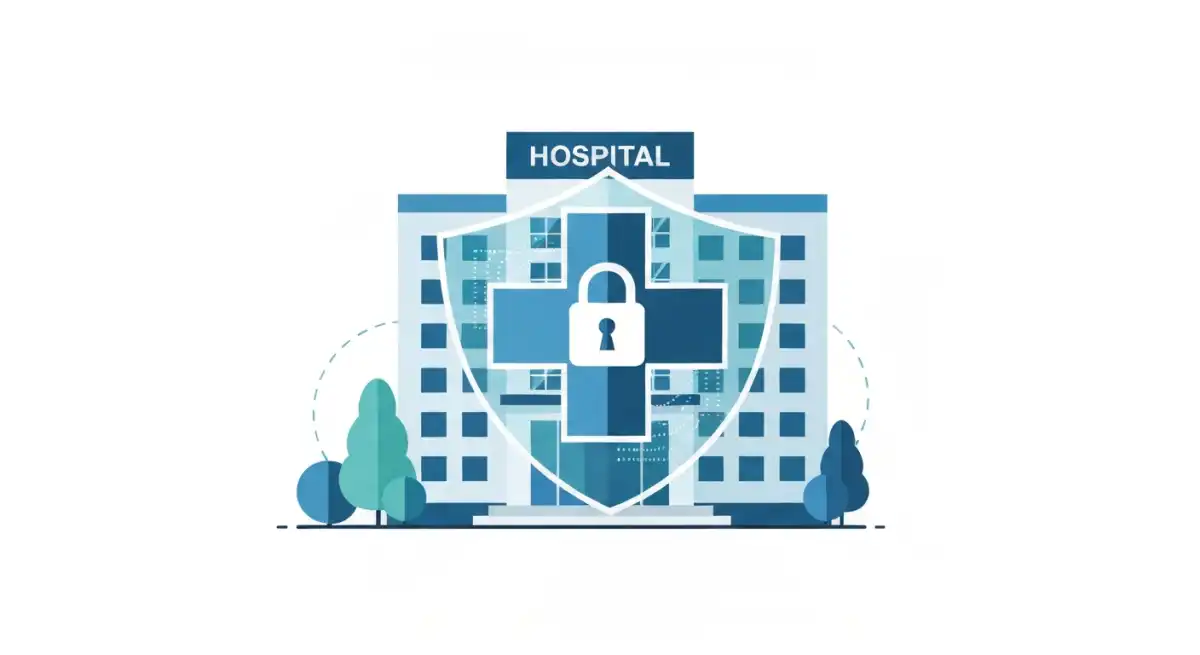
Healthcare organizations, from startups building their first EHR integration to mid-sized clinics and established health systems, face a unique compliance challenge. HIPAA covers protected health information, but it does not address the broader security posture that business partners and clients demand. SOC 2 fills that gap.
A growing number of healthcare companies now pursue SOC 2 alongside HIPAA. This guide explains why, how the two frameworks overlap, and how to achieve both without duplicating effort.
Why Healthcare Companies Need SOC 2 in Addition to HIPAA
HIPAA is mandatory for covered entities and business associates. It focuses specifically on protecting electronic protected health information (ePHI). But HIPAA has limitations as a trust signal:
HIPAA has no formal certification. There is no official "HIPAA certified" designation. Organizations self-attest to compliance, and the only external validation comes from OCR audits (which are infrequent and reactive). This makes it difficult to prove your security posture to third parties.
Enterprise buyers want SOC 2. When a hospital system or health insurer evaluates a technology vendor, they often require a SOC 2 Type II report in addition to a HIPAA Business Associate Agreement. SOC 2 provides independent, auditor-verified evidence of your security controls.
Non-healthcare clients need assurance too. Many healthcare technology companies also serve clients outside healthcare. SOC 2 provides a framework-agnostic security credential that non-healthcare buyers understand and accept.
Payers and investors expect it. Health plans, pharmacy benefit managers, and healthcare investors increasingly include SOC 2 in their vendor due diligence checklists.
How SOC 2 and HIPAA Overlap
The good news is that SOC 2 and HIPAA share significant common ground. Organizations that are already HIPAA compliant have a substantial head start on SOC 2.
Shared control domains:
| Control Area | HIPAA Requirement | SOC 2 Equivalent | |---|---|---| | Access controls | 164.312(a) | CC6.1, CC6.2, CC6.3 | | Audit logging | 164.312(b) | CC7.1, CC7.2 | | Data encryption | 164.312(a)(2)(iv), 164.312(e)(1) | CC6.7 | | Incident response | 164.308(a)(6) | CC7.3, CC7.4, CC7.5 | | Risk assessment | 164.308(a)(1)(ii)(A) | CC3.1, CC3.2 | | Workforce training | 164.308(a)(5) | CC1.4 | | Vendor management | 164.308(b)(1) | CC9.2 | | Data backup | 164.308(a)(7)(ii)(A) | A1.2 |
A healthcare company that has implemented robust HIPAA controls typically has 60-70% of SOC 2 Security criteria already addressed. The remaining gaps usually fall in areas where SOC 2 goes deeper than HIPAA: change management, system monitoring, logical access provisioning, and board-level risk governance.
Where SOC 2 Goes Beyond HIPAA

Several SOC 2 requirements have no direct HIPAA equivalent:
Change management (CC8.1). SOC 2 requires documented change management processes for system modifications, including authorization, testing, and approval workflows. HIPAA does not prescribe specific change management controls.
System monitoring and alerting (CC7.1, CC7.2). SOC 2 expects continuous monitoring of infrastructure and applications, with defined alert thresholds and escalation procedures. HIPAA requires audit logging but does not mandate real-time monitoring.
Board and management oversight (CC1.1, CC1.2). SOC 2 requires that the board of directors (or equivalent body) demonstrates oversight of the internal control environment. HIPAA has no governance requirement at the board level.
Vendor risk management depth (CC9.2). While HIPAA requires Business Associate Agreements, SOC 2 expects a formal vendor risk management program with periodic assessments, risk ratings, and documented review processes.
Availability controls (A1.1, A1.2, A1.3). If you include the Availability criterion (recommended for healthcare SaaS), SOC 2 requires documented capacity planning, disaster recovery testing, and defined recovery time objectives. HIPAA's contingency planning requirements are less specific.
Choosing the Right SOC 2 Trust Service Criteria for Healthcare
When healthcare organizations pursue SOC 2, selecting the right Trust Service Criteria is particularly important:
Security (Common Criteria): Required. This is mandatory for every SOC 2 audit and covers the controls most relevant to protecting sensitive data.
Availability: Strongly recommended. Healthcare systems have strict uptime requirements. EHR downtime can directly impact patient care. Including Availability demonstrates your commitment to system reliability.
Confidentiality: Recommended. This criterion addresses confidential information beyond ePHI, including intellectual property, business plans, and proprietary algorithms. Important for healthcare analytics and AI companies.
Privacy: Consider carefully. The Privacy criterion overlaps heavily with HIPAA's Privacy Rule. Including it adds audit scope and cost. If your clients primarily care about HIPAA privacy protections, the Privacy criterion may be redundant.
Processing Integrity: Situational. Include this if your platform performs calculations, transformations, or decisions that affect clinical outcomes, billing, or financial data.
Most healthcare organizations start with Security and Availability, then add Confidentiality in their second audit cycle.
Building a Combined HIPAA and SOC 2 Compliance Program
The most efficient approach is to build a unified compliance program that satisfies both frameworks simultaneously.
Step 1: Conduct a Unified Risk Assessment
Perform a single risk assessment that covers both HIPAA and SOC 2 requirements. Map identified risks to both frameworks, prioritize remediation based on combined impact, and document risk treatment decisions once.
Step 2: Create Unified Policies
Write security policies that address requirements from both frameworks. For example, your Access Control Policy should cover HIPAA's technical safeguards (164.312) and SOC 2's logical access criteria (CC6.1-CC6.3) in a single document. This prevents policy sprawl and ensures consistent implementation.
Step 3: Implement Controls That Serve Both Frameworks
When implementing controls, choose solutions that satisfy both sets of requirements:
- Identity and access management: Configure role-based access, MFA, and quarterly access reviews (covers HIPAA 164.312(a) and SOC 2 CC6.1-CC6.3)
- Encryption: Implement AES-256 at rest and TLS 1.2+ in transit (covers HIPAA 164.312(a)(2)(iv) and SOC 2 CC6.7)
- Logging and monitoring: Deploy centralized log management with real-time alerting (covers HIPAA 164.312(b) and SOC 2 CC7.1-CC7.2)
- Incident response: Create a single incident response plan that includes HIPAA breach notification timelines and SOC 2 communication requirements
Step 4: Use a GRC Platform with Healthcare Support
GRC platforms like Vanta, Drata, and Secureframe offer pre-built frameworks for both HIPAA and SOC 2. These tools map your controls to both frameworks simultaneously, eliminating duplicate evidence collection and reducing audit preparation time by 40-60%.
Step 5: Coordinate Audits
Consider using the same auditing firm for both your HIPAA assessment and SOC 2 audit. Some firms offer combined engagements that reduce total audit fees by 20-30% compared to separate audits. Auditors can test overlapping controls once and apply the results to both reports.
SOC 2 Timeline and Cost for Healthcare Organizations

Healthcare organizations typically experience slightly longer SOC 2 timelines than companies in other industries due to the complexity of healthcare data environments and the need to align with existing HIPAA programs.
Typical timelines:
- Type I (healthcare company with mature HIPAA program): 3 to 5 months
- Type II (first-time, with HIPAA foundation): 8 to 12 months
- Type II (no prior compliance program): 12 to 18 months
Typical costs (combined HIPAA + SOC 2 program):
- GRC platform: $15,000 to $50,000 annually
- SOC 2 audit fees: $20,000 to $60,000 (depends on scope and firm)
- HIPAA assessment: $10,000 to $30,000
- Gap remediation: $10,000 to $100,000+ (depends on starting point)
- Combined savings vs. separate programs: 15-25%
The total cost of SOC 2 varies significantly based on organizational size, scope, and existing controls. Companies with mature HIPAA programs realize the most cost savings because they have already invested in foundational security infrastructure.
Common Mistakes Healthcare Companies Make with SOC 2
Treating SOC 2 as a separate initiative. Running parallel HIPAA and SOC 2 programs creates duplicate work, inconsistent policies, and audit fatigue. Unify from the start.
Ignoring the Availability criterion. Healthcare SaaS companies that skip Availability miss an opportunity to demonstrate the reliability that health systems demand. EHR outages are front-page news.
Over-scoping the first audit. Including all five Trust Service Criteria in your first SOC 2 audit adds months and tens of thousands in costs. Start with Security and Availability, expand later.
Neglecting HIPAA breach notification in SOC 2 incident response. Your incident response plan must include HIPAA's 60-day breach notification requirement alongside SOC 2's communication controls. Auditors will check.
Failing to involve clinical stakeholders. If your product touches clinical workflows, the clinical team must participate in scoping and control design. Security controls that disrupt clinician workflows will not be sustained.
Frequently Asked Questions
Is SOC 2 required for HIPAA compliance?
No. SOC 2 and HIPAA are separate frameworks with different governing bodies. HIPAA is a federal law enforced by HHS, while SOC 2 is a voluntary auditing framework from the AICPA. However, many healthcare organizations pursue both because enterprise buyers and business partners increasingly require SOC 2 reports alongside HIPAA Business Associate Agreements.
Does a SOC 2 report cover HIPAA requirements?
A SOC 2 report does not replace HIPAA compliance, but it addresses many of the same control areas. Organizations can request a SOC 2 + HIPAA examination, where the auditor tests controls against both frameworks in a single engagement. This produces a SOC 2 report with an additional HIPAA mapping section.
Which should a healthcare startup pursue first, SOC 2 or HIPAA?
If you handle protected health information, HIPAA compliance is legally required and should come first. Once your HIPAA program is established, adding SOC 2 becomes significantly easier because 60-70% of the foundational controls are already in place. Most healthcare startups can begin SOC 2 preparation within 3 months of establishing their HIPAA program.
How does SOC 2 help with healthcare vendor assessments?
SOC 2 Type II reports provide independent, auditor-verified evidence of your security controls over a sustained period. Hospital systems, health plans, and other healthcare enterprises use SOC 2 reports to streamline vendor risk assessments. A current SOC 2 report can replace hundreds of questions in security questionnaires, shortening the procurement cycle by weeks.
Can one audit firm handle both HIPAA and SOC 2?
Yes. Many CPA firms and compliance consulting firms offer combined HIPAA and SOC 2 engagements. This approach reduces total audit costs by 20-30% and ensures consistent testing of overlapping controls. When selecting an auditor, ask specifically about healthcare experience and combined engagement pricing.