How Much Does a SOC 2 Audit Actually Cost in 2026?
SOC 2 audit costs in 2026 range from $15,000 for a lean Type 1 report at a small company to over $120,000 for a comprehensive Type 2 at a mid-market organization. The wide range reflects three key variables: your company size and complexity, whether you use a compliance platform or external consultants, and which Trust Services Criteria you include in scope.
This article breaks down every cost component, gives you real numbers by company size, and shows you where companies overspend and how to avoid it.
The Three-Bucket Cost Model
Every SOC 2 engagement has three distinct cost buckets: readiness and preparation, audit firm fees, and ongoing compliance maintenance. Most budget conversations focus only on the audit firm fee, which is a mistake that leads to budget surprises.
Bucket 1: Readiness and preparation includes the internal staff time to build policies, implement controls, collect evidence, and fix gaps. If you use a compliance automation platform, add the platform subscription here. If you hire a consultant to run your readiness process, add their fees.
Bucket 2: Audit firm fees are the CPA firm's fees for actually conducting the audit, reviewing evidence, and issuing the report. This is the most variable cost and the one most affected by scope.
Bucket 3: Ongoing maintenance covers the annual cost of keeping your controls operational, renewing your platform subscription, and conducting your annual re-audit. Many companies underestimate this; a SOC 2 report expires in 12 months and needs to be renewed.
SOC 2 Audit Costs by Company Size

Small Companies: 10 to 50 Employees
Small companies with limited infrastructure complexity and a focused product scope have the most predictable cost structure.
Readiness: Using a compliance automation platform costs $8,000 to $20,000 per year depending on the provider and tier. Internal staff time typically runs 200 to 400 hours across engineering, operations, and leadership. At a blended fully-loaded rate of $75 to $100 per hour, that is $15,000 to $40,000 in internal labor cost, though this is often absorbed rather than budgeted separately.
Audit firm fees (Type 1): $15,000 to $30,000. Straightforward scope with Security criterion only, cloud-native infrastructure, and a clean readiness process typically land in the $15,000 to $22,000 range. Adding Availability or Confidentiality criteria adds $3,000 to $8,000.
Audit firm fees (Type 2): $20,000 to $50,000. The longer observation period and more extensive evidence review drive costs up. Security-only, 6-month observation period at a small company typically runs $22,000 to $35,000.
Total first-year budget (Type 2, Security only): $35,000 to $65,000 including platform fees and audit costs.
Mid-Size Companies: 50 to 200 Employees
Mid-size companies typically have more complex infrastructure, more employees who need security training and access reviews, and more subservice organizations to assess. Audit complexity increases meaningfully.
Readiness: Platform costs at this tier range from $20,000 to $40,000 annually. If you bring in an external consultant to run the readiness process, add $15,000 to $40,000 for a 3 to 6-month engagement.
Audit firm fees (Type 1): $25,000 to $50,000 for Security criterion. Multi-criteria engagements (Security + Availability + Confidentiality) commonly run $40,000 to $65,000.
Audit firm fees (Type 2): $40,000 to $85,000. Companies with complex cloud architectures, multiple product lines, or sensitive regulated data (healthcare, financial services) typically land in the upper half of this range.
Total first-year budget (Type 2, multi-criteria): $75,000 to $130,000.
Larger Companies: 200+ Employees
Companies with 200 or more employees, particularly those in regulated industries or with complex multi-cloud environments, face meaningfully higher costs. Scope complexity is the primary driver.
Readiness: Enterprise compliance platform tiers run $40,000 to $80,000 annually. Consultant-led readiness engagements at this scale can reach $60,000 to $100,000.
Audit firm fees (Type 1): $40,000 to $80,000 depending on scope.
Audit firm fees (Type 2): $65,000 to $120,000+. Engagements with all five Trust Services Criteria, multiple product environments, and large evidence populations (hundreds of users, dozens of systems) regularly exceed $100,000.
Total first-year budget: $120,000 to $200,000+ for comprehensive engagements.
DIY vs Platform vs Consultant: Which Approach Is Right?
Each approach has a distinct tradeoff between upfront cost, internal time, and probability of a clean first audit.
The DIY Approach
Building policies, evidence collection workflows, and control documentation from scratch is entirely possible for companies with internal security expertise. The cost is minimal in out-of-pocket terms: primarily the audit firm fee plus staff time.
The risk is significant. Teams who underestimate audit requirements often discover gaps 2 to 4 weeks before the audit, forcing a scramble that either delays the audit or results in exceptions. A single qualified opinion (failed control) can require a follow-up audit that costs as much as the original engagement.
DIY is viable for companies with an experienced security engineer or CISO who has been through a SOC 2 audit before. It is not recommended for first-time engagements without that expertise.
Compliance Automation Platforms
Platforms like Vanta, Drata, Secureframe, and Tugboat Logic provide pre-built control frameworks, automated evidence collection via integrations (AWS, GitHub, Google Workspace, Okta), and audit workflow management.
They reduce internal staff time by an estimated 50 to 70% compared to manual processes, according to platform vendor claims that are broadly consistent with practitioner reports. The tradeoff is an ongoing subscription fee of $8,000 to $40,000 per year depending on company size and tier.
Platforms are the most cost-effective approach for most SaaS companies in the 10 to 150 employee range. They also make the annual re-audit significantly cheaper because evidence from the previous year is already organized and reusable.
The limitation: platforms only automate what can be automated. Policy decisions, risk assessments, and vendor evaluations still require human judgment.
External Consultants
Consultants (independent vCISOs or specialized compliance firms) run your readiness process from start to finish. Fees range from $15,000 to $80,000 for a readiness engagement depending on scope and seniority.
This approach makes sense when: you have no internal security expertise, your compliance deadline is tight and you cannot afford a learning curve, or your audit scope is complex enough that platform automation does not cover your needs.
Some consulting firms have preferred auditor relationships and can negotiate better audit fees on your behalf, partially offsetting their own cost.
Audit Firm Selection and Fee Negotiation
Not all CPA firms charge the same fees, and fee structures vary considerably. Understanding this saves real money.
Big 4 firms (Deloitte, PwC, EY, KPMG): Fees are highest, typically $50,000 to $200,000+ for Type 2 engagements. Their reports carry the most brand recognition with the largest enterprise buyers. Only relevant if your customers specifically require a Big 4 auditor, which is rare below the Fortune 500.
Mid-tier CPA firms (Schellman, Coalfire, A-LIGN, Aprio, Johanson Group): Fees range from $20,000 to $80,000 for Type 2. These firms specialize in SOC 2 and typically produce higher-quality reports than generalist CPA firms. This is the right tier for most SaaS companies.
Regional and boutique CPA firms: Fees can be as low as $12,000 to $25,000 for Type 1. Quality and auditor experience varies widely. Vetting auditor SOC 2 experience is essential if you go this route.
Fee negotiation tactics that work:
- Request a fixed-fee engagement rather than time-and-materials. Audit firms quote conservatively on time-and-materials; fixed fees force scope clarity upfront and protect you from scope creep billing.
- Bundle Type 1 and Type 2 engagements with the same firm. Many firms offer 15 to 25% discounts for clients who commit to both upfront.
- Minimize your scope deliberately. Every additional Trust Services Criterion adds audit cost. Only include criteria your customers actually require.
- Present a clean evidence package. Auditors charge by time. A disorganized evidence submission means more hours billed. Compliance platforms produce structured, auditor-ready packages that reduce review time.
Hidden Costs That Catch Companies Off Guard

Several cost categories are routinely missed in initial SOC 2 budgets.
Penetration testing: SOC 2 requires annual penetration testing as part of the Security criterion. An external pen test from a qualified firm costs $8,000 to $25,000 depending on scope. This is a separate cost from audit fees and often forgotten in initial budgets.
Employee security training: Security awareness training for all staff is a required control. Platforms like KnowBe4 or Proofpoint Security Awareness Training run $15 to $30 per user per year.
Legal fees for customer contract updates: If you are including the Privacy or Confidentiality criteria, you may need to update your customer agreements, privacy policy, and data processing agreements. Legal fees for this work range from $2,000 to $15,000 depending on how much revision is needed.
Infrastructure upgrades: Some companies discover during readiness that they lack basic controls: no MFA enforcement, no centralized logging, no production/development environment separation. Implementing these technical controls costs engineering time and potentially tool licensing. Budget $5,000 to $30,000 for technical remediation at companies with immature security programs.
Report sharing and review process: SOC 2 reports are shared under NDA. Managing the request, review, and distribution process for hundreds of customers and prospects requires either a manual process or a trust portal (Vanta Trust Center, Drata Trust Center, Whistic). Trust portals typically cost $3,000 to $8,000 per year.
How to Reduce Your SOC 2 Costs Without Cutting Corners
The three highest-impact levers for cost reduction are scope control, timing, and evidence quality.
Control scope aggressively. Start with Security criterion only. Add Availability only if customers are asking for it. Resist the urge to include all five criteria on your first audit. You can expand scope on future audits. Each additional criterion adds $5,000 to $20,000 in audit fees.
Do readiness before the observation period starts. If you begin your Type 2 observation period before controls are fully operational, exceptions accumulate throughout the period. This can trigger a qualified opinion, requiring a remediation and re-audit that costs as much as the original audit. Fix gaps first.
Invest in evidence quality upfront. Auditors charge for their time. Every hour they spend chasing missing evidence or clarifying ambiguous documentation is billable. A well-organized evidence package with clear control mapping can reduce audit hours by 20 to 30%.
Use a compliance platform for re-audits. First-year audits are always the most expensive because everything is being built from scratch. Companies using compliance platforms report that their second-year Type 2 re-audit costs 30 to 50% less than the first, because evidence collection is automated and the auditor already understands the control environment.
Annual Ongoing Compliance Costs
After your first Type 2 report, plan for annual ongoing costs to maintain compliance and renew your certification.
For a small company (10 to 50 employees), annual ongoing costs typically run:
- Compliance platform subscription: $8,000 to $20,000
- Annual Type 2 re-audit: $15,000 to $35,000 (lower than year one because the auditor already knows your environment)
- Penetration testing: $8,000 to $15,000
- Security training: $1,000 to $5,000
- Total ongoing: $32,000 to $75,000 per year
Frequently Asked Questions

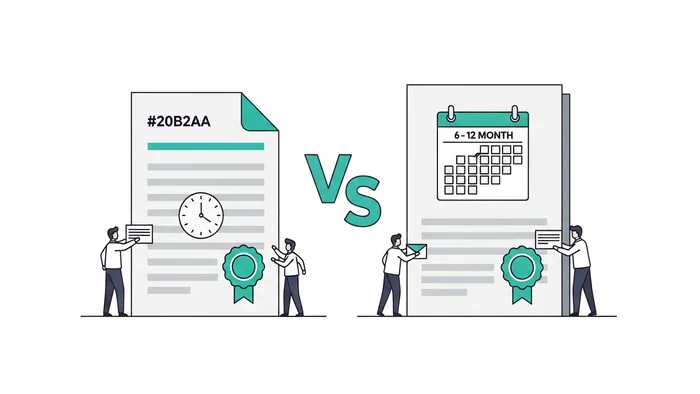
Is SOC 2 Type 1 or Type 2 cheaper? Type 1 is significantly cheaper for the audit fee itself. Audit firm fees for Type 1 at a small company typically run $15,000 to $30,000, versus $20,000 to $50,000 for Type 2. The readiness and platform costs are largely the same for both. The long-term cost picture favors pursuing Type 1 first and then immediately starting the Type 2 observation period, because you can show customers something immediately while building toward the more credible credential.
Can we do SOC 2 without a compliance platform? Yes, but it is not recommended for first-time engagements. Without a platform, you will spend significantly more internal engineering and operations time on manual evidence collection, which has a real opportunity cost even if it does not show up as an invoice. Compliance platforms typically reduce internal staff time by 50 to 70%, which often makes the platform subscription cost-neutral or better when fully accounted for.
Do audit firm fees include the penetration test? No. The audit firm reviews the results of your penetration test but does not perform it. Pen testing is a separate engagement with a separate firm. Expect to pay $8,000 to $25,000 for an external pen test from a qualified security firm. Some compliance platforms have partner pen testing firms that offer discounts to platform customers.
How much more expensive is the second year? Companies with established compliance programs and a compliance automation platform typically see second-year Type 2 re-audit costs 30 to 50% lower than year one. This is because the auditor already understands your control environment, evidence collection is automated, and much of the documentation work is already done. Budget $25,000 to $55,000 for ongoing annual compliance at a small to mid-size company.
Does the audit cost change if we add more Trust Services Criteria? Yes, each additional criterion adds scope and cost. Adding Availability to a Security-only audit typically adds $5,000 to $12,000 in audit fees. Adding Confidentiality adds a similar amount. Adding Privacy adds $8,000 to $20,000 because of the additional evidence requirements around personal data handling. Only include criteria that your customers actually require or that are relevant to your service description.
Primary Sources
This article references the following authoritative sources:
- SSAE 18, AICPA attestation standards (SSAE 18)
- NIST SP 800-53, NIST SP 800-53 Rev 5 control catalog (cross-walks to SOC 2)