NIST Compliance Checklist for Small Businesses (2026)
Most small business owners hear "NIST" and assume it is paperwork built for federal agencies. It is not. The NIST Cybersecurity Framework was rewritten in 2024 specifically so a 12-person company could implement it without a CISO, and the federal contracting world (CMMC, NIST 800-171) is increasingly pulling small subcontractors into scope whether they planned for it or not. The cost of ignoring it is no longer "we are too small to matter."
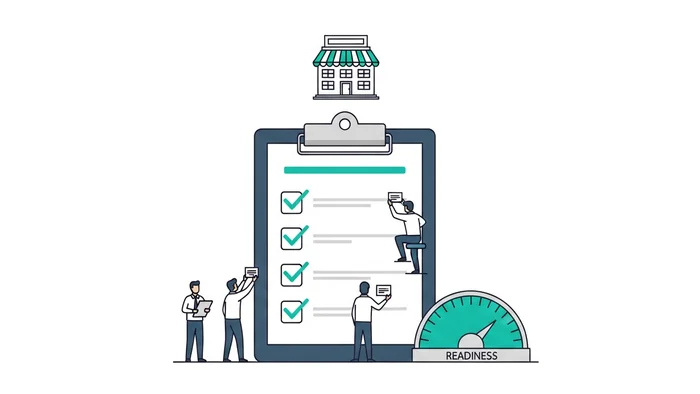
This guide is a practical NIST compliance checklist for small businesses: which framework applies (CSF, 800-171, 800-53), the controls that actually move the needle, and the order to implement them in. By the end you will have a working list you can run with a one-person IT lead and a small budget.
Which NIST framework applies to a small business?
Small businesses run into one of three NIST publications, and the right starting point depends on whether you sell to the federal government:
- NIST Cybersecurity Framework (CSF) 2.0, voluntary, the right starting point for almost every commercial small business. Six functions, 22 categories, no certification required.
- NIST 800-171, mandatory if you handle Controlled Unclassified Information (CUI) for a federal contract. 110 controls, third-party assessment via CMMC 2.0.
- NIST 800-53, federal agencies and their direct contractors. 1,000+ controls. Almost certainly out of scope for a small business unless you are pursuing FedRAMP.
If you do not have federal contracts, you want NIST CSF 2.0. If you do have federal contracts and they touch CUI, you want NIST 800-171. For background on each, see NIST cybersecurity framework guide and NIST 800-171 compliance guide.
According to the SBA, 43% of cyberattacks now target small businesses, and 60% of small businesses that suffer a major breach close within six months. NIST compliance is no longer a "big company" exercise.
NIST Cybersecurity Framework 2.0: the small business checklist

NIST CSF 2.0 organizes controls into six functions. Each is broken into categories and subcategories. For a small business, you can land 80% of the value with about 30 specific actions across these functions.
Function 1: Govern (GV), set the foundation
The Govern function is new in CSF 2.0 and is where small businesses fall down most often. It is also the cheapest to fix.
- [ ] Document a one-page cybersecurity policy. Owner, scope, how often it is reviewed.
- [ ] Identify a single accountable person for cybersecurity (often the founder or COO at small companies).
- [ ] Define what counts as an incident and who decides to escalate.
- [ ] Maintain a list of legal and regulatory requirements (state breach laws, HIPAA, PCI, contract clauses).
- [ ] Run a cyber risk discussion at least annually with leadership.
For most small businesses, the entire Govern function is 4 to 8 hours of work.
Function 2: Identify (ID), know what you have
You cannot protect what you have not inventoried.
- [ ] Maintain an asset inventory: every laptop, server, cloud service, and SaaS subscription.
- [ ] Maintain a data inventory: customer data, employee data, financial data, and where each lives.
- [ ] Document who has access to what.
- [ ] Identify your top 5 cyber risks (e.g., business email compromise, ransomware, insider, vendor breach, lost device).
- [ ] Track vendor relationships that handle your data, with their security posture noted.
Function 3: Protect (PR), preventive controls
This is where most of the technical work happens. The list looks long but most controls are configuration changes, not capital projects.
- [ ] Enforce multi-factor authentication on email, identity provider, finance, and admin accounts.
- [ ] Use unique passwords stored in a password manager (1Password, Bitwarden), banned email/password reuse.
- [ ] Apply the principle of least privilege: no employee has more access than their role requires.
- [ ] Enable full-disk encryption on every laptop (FileVault on macOS, BitLocker on Windows).
- [ ] Patch operating systems and key applications within 30 days of release for critical vulnerabilities.
- [ ] Maintain endpoint protection (built-in Defender, or a small-business EDR like ThreatDown / SentinelOne).
- [ ] Configure email security: SPF, DKIM, DMARC published; phishing protection on.
- [ ] Train every employee at hire and annually on phishing, password hygiene, and incident reporting.
- [ ] Maintain backups of critical data: ideally 3-2-1 (three copies, two media, one offsite).
- [ ] Test backup restoration at least once a year.
Function 4: Detect (DE), see attacks early
Small businesses cannot afford a SOC, but you can afford basic detection.
- [ ] Centralize logs from key systems (identity provider, email, endpoint).
- [ ] Configure alerts on impossible logins, mass file deletion, and admin role changes.
- [ ] Subscribe to threat intelligence relevant to your industry (US-CERT, MS-ISAC for healthcare/education, FS-ISAC for finance).
- [ ] Run an external attack surface scan at least quarterly (free tier of Bitsight or Detectify is enough for a small footprint).
Function 5: Respond (RS), when something breaks
A 5-page incident response plan is enough for most small businesses.
- [ ] Document your incident response plan: roles, contact list, decision tree.
- [ ] Define notification thresholds: who calls the lawyer, who calls the customer, who calls law enforcement.
- [ ] Pre-arrange a relationship with an incident response firm (Mandiant, CrowdStrike, or a regional IR retainer). Many will sign a $0 retainer that just gets you priority phone access.
- [ ] Keep your cyber insurance contact information accessible offline.
- [ ] Run a tabletop exercise once a year, even if it is 60 minutes over coffee.
Function 6: Recover (RC), get back to business
- [ ] Document recovery time objectives (RTO) and recovery point objectives (RPO) for top 3 systems.
- [ ] Validate backup integrity at least quarterly.
- [ ] Maintain communications templates for customers, employees, and the press in case of a public incident.
- [ ] Review lessons learned after every minor incident, not just breaches.
For broader context, see our NIST CSF 2.0 changes guide.
Comparing NIST framework options for small businesses
| Framework | When it applies | Mandatory? | Effort | Cost (Year 1) |
|---|---|---|---|---|
| NIST CSF 2.0 | Any commercial small business | Voluntary | 3 to 6 months | $5K - $20K |
| NIST 800-171 | Handling CUI on federal contracts | Mandatory via CMMC 2.0 | 9 to 18 months | $30K - $150K |
| NIST 800-53 (low baseline) | Federal agencies, FedRAMP | Mandatory by contract | 12 to 24 months | $100K+ |
| NIST Privacy Framework | Privacy-heavy industries | Voluntary | 2 to 4 months | $5K - $15K |
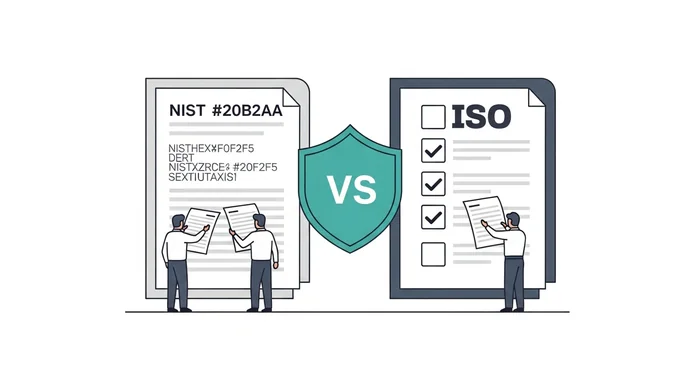
For a comparison with other frameworks, see our NIST CSF vs ISO 27001 guide.
NIST 800-171 for small businesses with federal contracts
If a federal contract requires you to handle Controlled Unclassified Information (CUI), NIST 800-171 is mandatory. Under CMMC 2.0 (effective for many DoD contracts in 2025-2026), small businesses now need a third-party assessment for Level 2.
The 110 NIST 800-171 controls span 14 families. The implementation order most small businesses follow:
- Access Control + Identification and Authentication. MFA on every CUI-touching system. Unique accounts for every user. No shared admin accounts.
- Configuration Management. Hardened baselines for every device that touches CUI. Approved software list.
- Audit and Accountability. Centralized logging with at least 90 days of retention.
- Media Protection + Physical Protection. Encrypted storage, shredded paper, locked rooms.
- System and Information Integrity. Endpoint protection, vulnerability scanning, patch management.
- Awareness and Training. All staff trained on CUI handling. Documented annually.
- Incident Response. Documented plan, tested at least annually.
- Maintenance, Risk Assessment, Security Assessment. Annual cycles documented.
Budgeting: a small business pursuing CMMC Level 2 should plan $30,000 to $80,000 for the first year of preparation plus $20,000 to $50,000 for the assessment itself, depending on scope. According to a 2024 Department of Defense small business survey, the median cost for a 25-person contractor to reach CMMC Level 2 was $77,000.
A 90-day NIST CSF rollout plan

Small business owners reading this almost always want a sequence, not just a checklist. Here is the rollout most successful programs follow:
Days 1 to 14: Govern + Identify. Write the one-page policy, build the asset and data inventories, identify the top 5 risks. Cost: 12 to 20 hours of leadership time.
Days 15 to 45: Protect (technical baseline). Enforce MFA, deploy a password manager, enable full-disk encryption, configure email authentication (SPF, DKIM, DMARC), train all staff. Cost: $1,500 to $5,000 in tooling for a 25-person company.
Days 45 to 60: Protect (process). Document access reviews, hardening standards, and the patch cadence. Run a backup test.
Days 60 to 75: Detect. Centralize logs from your identity provider, email, and endpoint. Configure 5 to 10 alert rules.
Days 75 to 90: Respond + Recover. Write the 5-page incident response plan. Run a 60-minute tabletop. Validate backup restoration.
After 90 days a 25-person small business can credibly tell a customer or insurer "we follow NIST CSF", not as marketing, but as fact. According to a 2024 Coalition Insurance underwriting report, businesses with documented NIST CSF alignment received 18% to 30% lower premiums than those without.
Common NIST compliance mistakes small businesses make
A few traps that show up in nearly every small business engagement:
Treating NIST CSF as a binary status. It is not pass/fail. Each subcategory has implementation tiers (Partial, Risk Informed, Repeatable, Adaptive). Most small businesses target Risk Informed in year one, Repeatable in year two.
Skipping Govern. Small business owners assume that documented policy is the bureaucratic part. Without it, the rest of the program drifts.
Buying tools before doing inventory. Spending $30,000 on a SIEM before you know what assets exist produces dashboards full of noise.
Confusing NIST CSF with NIST 800-171. They are different frameworks for different audiences. Most small businesses do not need 800-171.
One-and-done compliance. NIST is a continuous program. The minimum cadence is annual review of every control area. Anything less and the program decays.
For more on the compliance journey, see our guide on building a compliance program from scratch.
Frequently asked questions
Is NIST compliance mandatory for small businesses?
For commercial small businesses, no, NIST CSF is voluntary. For small businesses on federal contracts that touch CUI, yes, NIST 800-171 is mandatory and increasingly enforced via CMMC 2.0. State breach notification laws and customer contracts can also pull NIST in indirectly.
Can a small business do NIST compliance without a CISO?
Yes. Most small businesses below 50 employees handle NIST CSF with the founder or operations lead as the accountable person, supported by a fractional CISO or compliance consultant for 5 to 15 hours per month. NIST 800-171 typically requires more dedicated time.
How long does NIST compliance take for a small business?
NIST CSF baseline can be implemented in 90 days for a 25-person company. NIST 800-171 typically takes 9 to 18 months. NIST 800-53 is rarely attempted by small businesses outside FedRAMP pathways.
What is the difference between NIST CSF and NIST 800-171?
NIST CSF is a voluntary framework for any organization. NIST 800-171 is a specific set of 110 controls mandatory for federal contractors handling CUI. CSF is broader and outcome-oriented; 800-171 is narrower and prescriptive.
How much does NIST compliance cost a small business?
NIST CSF: $5,000 to $20,000 in tooling and time for a 25-person company. NIST 800-171: $30,000 to $150,000 over 12 to 18 months. NIST 800-53 low baseline: $100,000 and up.
Does NIST compliance lower my cyber insurance premiums?
Yes, materially. According to 2024 Coalition Insurance data, documented NIST CSF alignment drives 18% to 30% lower premiums on average. Carriers also use NIST language directly in their underwriting questionnaires.
What is the easiest NIST framework to start with?
NIST CSF 2.0. It is voluntary, free, and the most flexible. NIST also publishes Small Business Quick Start guides specifically aimed at companies under 100 employees.
Bottom line

A small business can meaningfully implement NIST CSF 2.0 in 90 days with one accountable owner and a $5,000 to $20,000 tooling budget. NIST 800-171 takes longer and costs more, but only applies if you hold a federal contract with CUI. NIST 800-53 is almost certainly the wrong destination for a company with under 100 employees.
Start with Govern and Identify. Layer in Protect over the next 30 days. Add Detect, Respond, and Recover. Run an annual review. Use the language in customer questionnaires and insurance applications, where "we follow NIST CSF" is now a credible, well-understood claim.
According to the 2024 Verizon DBIR, 88% of small business breaches involved an attack vector that NIST CSF directly addresses (credential abuse, phishing, basic web app misconfiguration). The framework is not just paperwork, it is a budget guide for where small business security spend earns the best return.
For the official source, see NIST CSF 2.0 documentation. For the small business adaptation, see NIST's Small Business Cybersecurity Corner.