Compliance Automation: How to Streamline Security Audits
Compliance automation uses software to replace manual evidence collection, policy tracking, and audit preparation with continuous, real-time monitoring. For organizations pursuing SOC 2, ISO 27001, HIPAA, or PCI DSS certification, compliance automation replaces the pre-audit scramble to gather screenshots and spreadsheets with evidence that is already collected and current. It also reduces the risk of compliance gaps between assessments.
This guide covers what compliance automation actually does, which tools lead the market, and how to decide whether automation makes sense for your organization's size and maturity.
What Compliance Automation Actually Does
Compliance frameworks require organizations to implement specific controls, collect evidence that those controls work, and present that evidence during audits. Traditionally, this meant spreadsheets, screenshots, and weeks of manual work before each audit cycle.
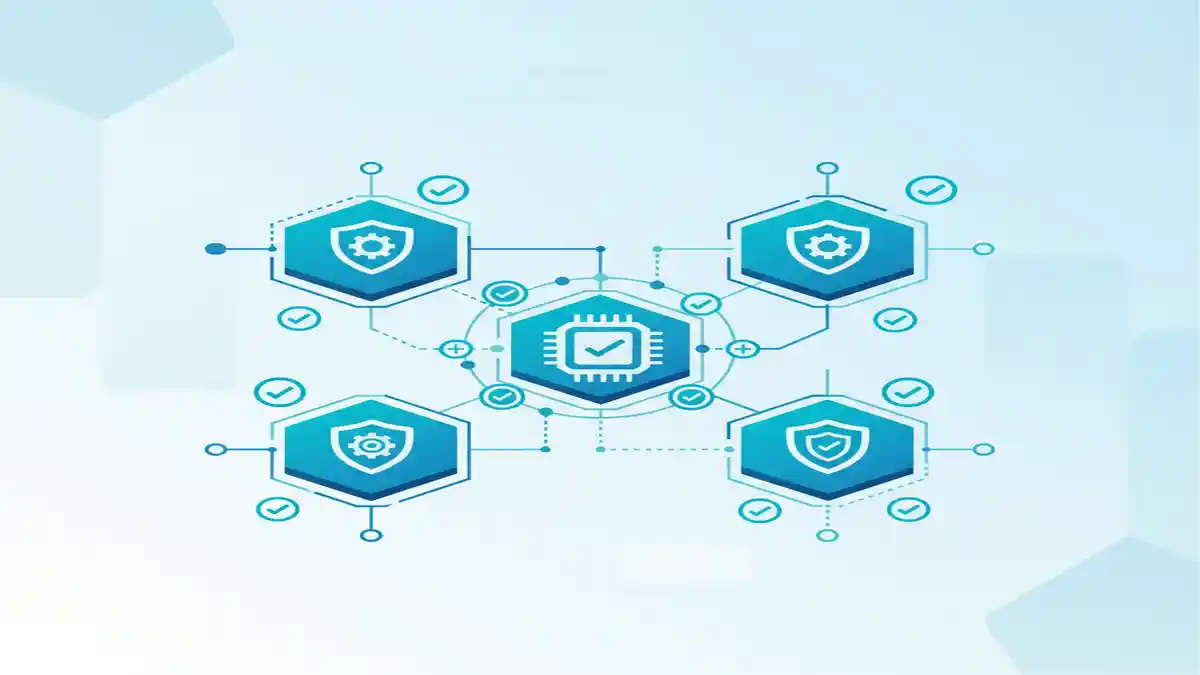
Compliance automation platforms connect to your infrastructure: cloud providers, identity systems, code repositories, and HR tools. They continuously verify that controls are in place. When a control drifts, the platform alerts the responsible owner immediately. You catch issues in hours, not at the next quarterly review.
The core functions include:
- Continuous control monitoring: Automated checks against cloud infrastructure, access controls, encryption settings, and configuration baselines
- Evidence collection: Automatic screenshots, API pulls, and log aggregation that build your audit evidence library without manual effort
- Policy management: Template libraries for common frameworks with version-controlled policy documents
- Risk assessment: Automated risk registers that track identified risks, treatments, and residual risk scores
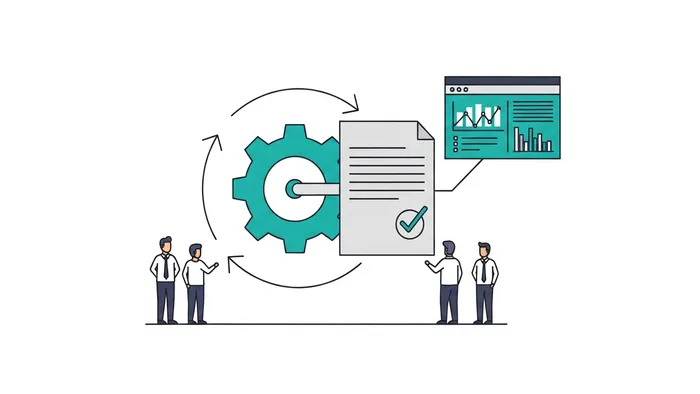
- Audit preparation: Auditor-ready dashboards and pre-packaged evidence rooms that make the actual audit faster and cheaper
- Vendor management: Tracking third-party vendor compliance status, SOC 2 reports, and security questionnaire responses
When Compliance Automation Makes Sense

Not every organization needs a compliance automation platform. The decision depends on your framework requirements, team size, and infrastructure complexity.
Automation makes sense when:
- You are pursuing SOC 2, ISO 27001, or multiple frameworks simultaneously
- Your infrastructure spans cloud providers (AWS, Azure, GCP) with dozens of services
- You have recurring annual audits and want to reduce preparation time each cycle
- Your compliance team is small (1-3 people) relative to your infrastructure complexity
- You want continuous compliance rather than point-in-time assessments
Manual approaches may still work when:
- You are a very early-stage startup with minimal infrastructure
- You are pursuing a single, simple compliance requirement
- Your environment is entirely on-premises with limited cloud footprint
- Budget constraints prevent platform licensing, which is priced per year and scales with headcount and the number of frameworks covered
Top Compliance Automation Platforms Compared
Vanta
Vanta is one of the leading compliance automation platforms for startups and mid-market companies and is listed in G2's Governance, Risk and Compliance category (accessed 2026-09-15). G2 placements are recalculated quarterly, so confirm current standing before citing it in a vendor evaluation. It supports SOC 2, ISO 27001, HIPAA, PCI DSS, and GDPR. Vanta connects to a wide range of integrations, including AWS, Azure, GCP, GitHub, Okta, and major HR platforms; the current integration count is listed on Vanta's own site and changes as it adds partners.
Strengths:
- Markets itself as the fastest path to SOC 2 audit readiness among the major platforms
- Trust Center feature lets you share compliance status with prospects without sending full reports
- Vendor risk management included in higher tiers
- Access reviews and employee onboarding/offboarding workflows built in
Vanta does not publish list pricing. It quotes each customer individually based on headcount, framework count, and integration scope, so request a quote directly from Vanta for numbers that apply to your organization.
Drata
Drata competes directly with Vanta. It has grown rapidly since its 2021 launch. It covers SOC 2, ISO 27001, HIPAA, PCI DSS, GDPR, and CCPA. Drata's interface is clean and well-organized. Teams new to compliance find it easy to learn.
Strengths:
- Strong continuous monitoring with real-time compliance posture dashboards
- Built-in risk assessment module with customizable risk scoring
- Policy templates mapped to multiple frameworks with cross-walking
- Good endpoint monitoring agent for employee device compliance
Like Vanta, Drata does not publish list pricing; it quotes deals individually based on framework count and company size, so compare actual quotes rather than published rate cards.
Secureframe
Secureframe rounds out the top three compliance automation platforms. It supports SOC 2, ISO 27001, HIPAA, PCI DSS, and GDPR. It targets the same startup-to-midmarket segment.
Strengths:
- AI-powered policy generation that creates customized policies based on your business context
- Strong personnel security module with background check integrations
- Readiness assessments that show exactly where gaps exist before engaging an auditor
- Multi-framework mapping that shows how a single control satisfies requirements across SOC 2, ISO 27001, and HIPAA simultaneously
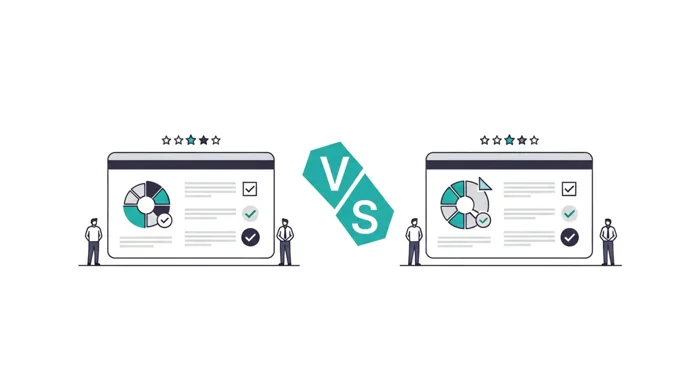
For a detailed feature comparison, see our Vanta vs Drata vs Secureframe analysis.
Sprinto and Tugboat Logic
Sprinto targets fast-growing startups in India and globally. It covers SOC 2, ISO 27001, HIPAA, GDPR, and SOC 1. Its pricing is often lower than US-based competitors. This makes it attractive for startups with tighter budgets.
Tugboat Logic (now part of OneTrust's GRC suite) serves enterprise customers who need compliance automation alongside broader privacy and governance capabilities. It is less startup-friendly but more powerful for organizations managing multiple business units across different regulatory regimes.
Features to Evaluate and Implementation
When comparing compliance automation platforms, focus on these capabilities:
Integration Coverage
The platform must connect to your actual infrastructure. Check support for:
- Cloud providers (AWS, Azure, GCP)
- Identity providers (Okta, Azure AD, Google Workspace)
- Code repositories (GitHub, GitLab, Bitbucket)
- HR systems (BambooHR, Gusto, Rippling)
- MDM/endpoint management (Jamf, Kandji, Intune)
- Ticketing systems (Jira, Linear, Asana)
Missing integrations mean manual evidence collection for those systems. That defeats the purpose of automation.
Framework Cross-Walking
If you need multiple frameworks, look for cross-framework control mapping. A single MFA policy satisfies SOC 2 (CC6.1), ISO 27001 (A.8.5), HIPAA Access Control, and PCI DSS Requirement 8. Good platforms show this mapping. You implement once and satisfy multiple frameworks.
Auditor Partnerships
Most compliance automation vendors partner with specific audit firms. Using a platform-partnered auditor can meaningfully reduce audit time, since the auditor already knows the evidence format and can pull reports directly from the platform rather than requesting them manually.
Continuous Monitoring vs Point-in-Time
The best platforms run checks hourly or daily. They do not wait for quarterly snapshots. If someone disables encryption on an S3 bucket, you know within hours. You do not discover it at the next audit.
Implementation Timeline
A typical compliance automation implementation follows this timeline:
| Phase | Duration | Activities |
|---|---|---|
| Platform setup | 1-2 weeks | Connect integrations, import employee data, configure organization settings |
| Gap assessment | 1-2 weeks | Platform identifies missing controls, unconnected systems, policy gaps |
| Remediation | 2-8 weeks | Implement missing controls, write policies, configure monitoring |
| Auditor engagement | 1-2 weeks | Select auditor, share evidence room, schedule audit windows |
| Audit execution | 2-4 weeks | Auditor reviews evidence, tests controls, issues report |
Summing the phase durations above gives a rough 7-18 week range for SOC 2. ISO 27001 runs materially longer even with automation: see our ISO 27001 implementation guide for the 9-to-18-month range, with tightly scoped, already-mature startups landing at the low end. Treat both as back-of-envelope planning arithmetic rather than a benchmark from a published study, and replace them with your own auditor's estimate as soon as you have one.
Manual vs Automated Compliance: Where the Money Actually Goes

For a mid-size startup pursuing SOC 2 Type II, the same four cost categories apply whether you go manual or automated. What changes is how much of each you pay.
Manual approach:
- A compliance consultant to build your control framework and policies from scratch
- Substantial internal team time, since someone has to manually pull screenshots, logs, and configuration exports for every control, every audit cycle
- The audit firm's fee
- Ongoing maintenance time each quarter to keep evidence current between audits
Automated approach:
- A platform license, priced per year and scaled to headcount and framework count
- Far less internal team time, since the platform pulls most evidence automatically instead of a person doing it by hand
- The audit firm's fee, sometimes discounted when the auditor is platform-partnered and can pull evidence directly from the platform
- Lighter ongoing maintenance, since the platform keeps evidence current continuously instead of a person rebuilding it before each cycle
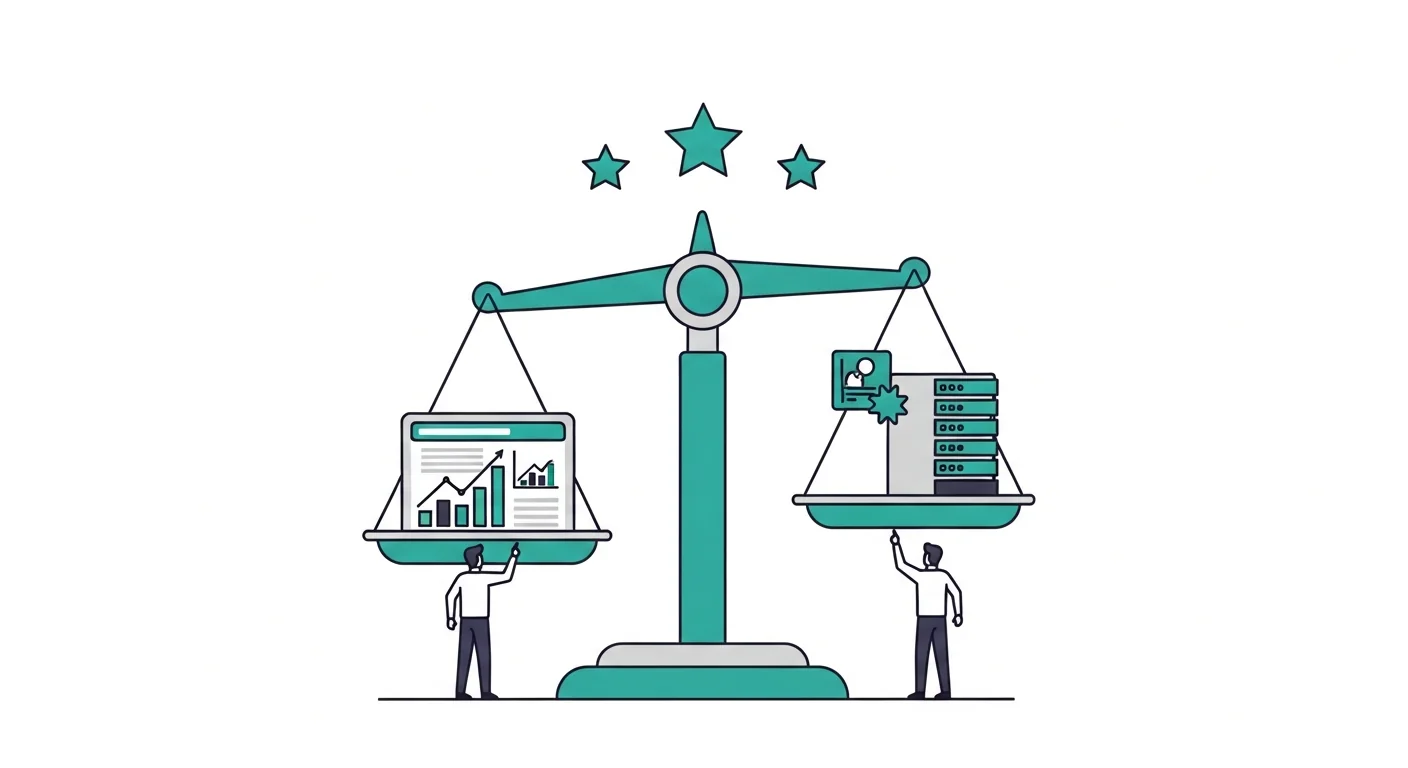
The biggest swing between the two is internal team time: manual evidence collection consumes real engineering and ops hours every audit cycle, while a platform converts most of that recurring labor cost into a flat annual license fee. Get quotes from a consultant, an audit firm, and two or three compliance automation vendors for your specific headcount and framework count before comparing totals; none of these vendors publish standard rate cards, so a generic dollar range would not reflect what you would actually pay.
Compliance Automation for SOC 2
SOC 2 is the most common framework that drives compliance automation adoption. The five Trust Services Criteria (Security, Availability, Processing Integrity, Confidentiality, Privacy), defined in AICPA's 2017 Trust Services Criteria with Revised Points of Focus (2022), require dozens of controls with continuous evidence. Automation platforms were essentially built for this use case.
If your primary goal is SOC 2 readiness, start your readiness assessment with a compliance automation platform. The platform identifies gaps, the remediation roadmap prioritizes fixes, and the evidence room builds automatically as you close gaps.
Frequently Asked Questions
What is compliance automation?
Compliance automation is the use of software platforms to continuously monitor security controls, collect audit evidence, manage policies, and prepare for compliance assessments. It replaces manual spreadsheet tracking with real-time monitoring connected to your actual infrastructure.
How much does compliance automation software cost?
None of the major platforms publish list pricing. Cost scales with company size, the number of frameworks you need, and your feature tier, and every vendor quotes deals individually, so the only reliable number is the quote you get for your own organization. See our SOC 2 audit cost breakdown for how to evaluate a quote.
Can compliance automation replace a human compliance team?
No. Compliance automation handles evidence collection, monitoring, and reporting. It cannot make risk decisions, interpret ambiguous requirements, or manage stakeholder relationships. Most organizations still need at least one compliance-focused team member to oversee the program, even with full automation.
Which compliance frameworks can be automated?
SOC 2, ISO 27001, HIPAA, PCI DSS, GDPR, CCPA, SOC 1, NIST CSF, and NIST 800-53 are all supported by major platforms. Some platforms also support FedRAMP, CMMC, and industry-specific frameworks.
How long does it take to implement compliance automation?
Initial setup and integration takes 1-2 weeks. Gap assessment and remediation can take 2-8 weeks depending on your current security posture. Total time from platform deployment to completed audit is typically 7-18 weeks for SOC 2. ISO 27001 runs longer, usually 9 to 18 months; see our ISO 27001 implementation guide for what sets your position in that range. Both figures are planning arithmetic rather than survey data, so replace them with your auditor's estimate once you have one.
Primary Sources
This article references the following authoritative sources:
- AICPA Trust Services Criteria (2017, with Revised Points of Focus 2022), defines the five Trust Services Categories (Security, Availability, Processing Integrity, Confidentiality, Privacy) cited above
- AICPA SOC Suite of Services overview, current AICPA overview of the SOC 1/SOC 2/SOC 3 reporting program
- SSAE 18, AICPA attestation standards; codified AT-C sections, current as of August 2026
- NIST SP 800-53 Rev. 5, Security and Privacy Controls for Information Systems and Organizations (published December 2020, Release 5.2.0 update August 2025), cross-walks to SOC 2
Last reviewed: 2026-09-15. This article was prepared by the Security Compliance Guide Editorial Team. We use AI to draft initial summaries of publicly available cybersecurity compliance documentation, then verify every claim against primary sources before publication. We are not licensed auditors, attorneys, or compliance consultants. For binding decisions, consult a qualified professional. See our editorial standards for full sourcing rules.