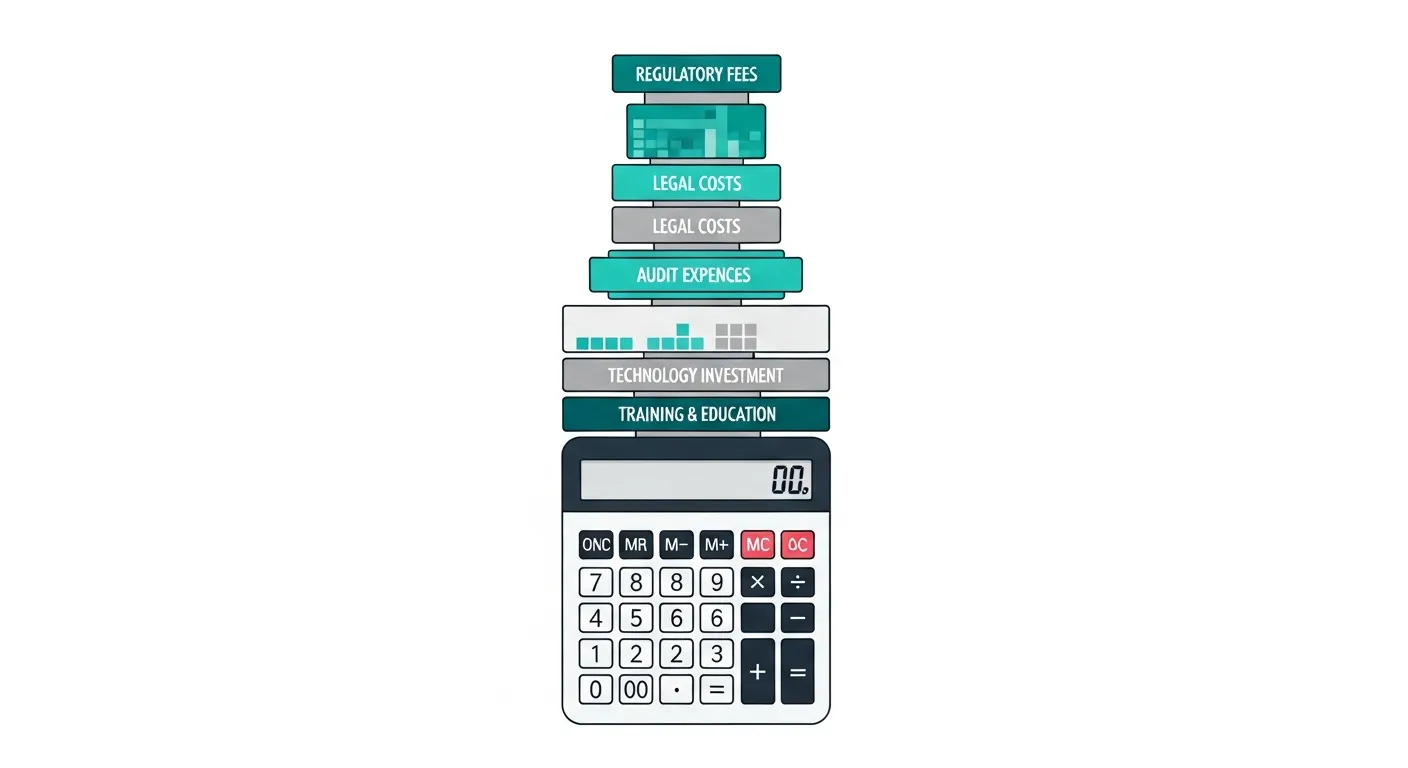
SOC 2 Compliance Cost Calculator: Estimate Your Real Budget
SOC 2 compliance costs range from $35,000 for a lean startup to over $200,000 for a mid-market company with a multi-criteria Type 2 engagement. The wide range is not arbitrary. It reflects three variables: your company's size and infrastructure complexity, which Trust Services Criteria you include in scope, and whether you use a compliance automation platform, a consultant, or internal resources for readiness.
This guide breaks down every cost component with specific numbers, organized by company size, so you can build a realistic budget before committing to any vendor or auditor.
How to Use This Guide
Read through the cost components first to understand what you are budgeting for. Then match your company to the closest scenario and add up the components that apply. The scenarios at the end give you total ranges for common situations.
The costs here represent 2026 US market rates across multiple vendor and firm types. Your actual costs will vary based on your geographic market, the specific vendors you choose, and negotiation.
Cost Component 1: Compliance Automation Platform
A compliance platform is optional, but most companies doing SOC 2 for the first time will save money overall by using one. The platform handles continuous control monitoring, automated evidence collection from integrations (AWS, GitHub, Okta, Google Workspace, etc.), policy templates, and audit workflow management.
Starter tier (1 to 25 employees):
- secureframe/">drata-vs-secureframe/">Vanta: $15,000 to $20,000 per year
- Secureframe: $12,000 to $18,000 per year
- Drata: $15,000 to $22,000 per year
- Scytale: $10,000 to $16,000 per year
Growth tier (25 to 100 employees):
- Vanta: $20,000 to $40,000 per year
- Drata: $22,000 to $45,000 per year
- Secureframe: $18,000 to $35,000 per year
Enterprise tier (100 to 500 employees):
- Vanta: $40,000 to $80,000 per year
- Drata: $45,000 to $90,000 per year
- Secureframe: $35,000 to $75,000 per year
If you skip the platform: Your costs shift to internal labor and external consultants. A readiness engagement from a compliance consulting firm runs $15,000 to $50,000 for a mid-size company and requires substantial internal staff time on top.
Cost Component 2: Readiness Consulting (If Not Using a Platform)
If you are not using a compliance automation platform, or if your platform implementation requires hands-on guidance, a readiness consultant helps you close gaps before the auditor arrives.
Gap assessment only: $5,000 to $15,000. An experienced consultant reviews your environment against the Trust Services Criteria and produces a prioritized gap report. This is a one-time cost.
Gap assessment plus remediation support: $15,000 to $50,000 for a 3 to 6 month engagement. The consultant helps you build policies, configure controls, and collect evidence. Necessary for companies without internal security expertise.
Fractional vCISO retainer: $3,000 to $10,000 per month. For startups without security staff, a virtual CISO service provides ongoing guidance, not just readiness support. Budgeted over a 6-month readiness period, this runs $18,000 to $60,000.
Cost Component 3: Penetration Testing
A penetration test is required for SOC 2 Type 2 if you include the Availability or any criterion beyond Security, and it is a best practice (and increasingly expected by auditors) for Security-only engagements. It is always required for HIPAA and PCI DSS contexts.
Web application penetration test (focused, 5 to 10 day engagement):
- Small startup, simple app: $7,000 to $12,000
- Mid-size company, complex app with APIs: $12,000 to $25,000
- Large environment, multiple applications: $25,000 to $60,000
Infrastructure penetration test (internal and external):
- Small environment: $8,000 to $15,000
- Mid-size environment: $15,000 to $35,000
Frequency: Annual pentest is the standard. Some frameworks and sophisticated customers require semi-annual testing.
Vendor options: Firms like Bishop Fox, Rapid7 Advisory Services, NetSPI, Cobalt, and Synack provide enterprise-grade pentests. Budget-tier options include Cobalt's BugBounty-style crowdsourced pentests starting around $3,000, though these are less thorough than a dedicated team engagement.
Cost Component 4: Audit Firm Fees
Audit firm fees are the most variable component and the one most people focus on. They should not be the only thing you focus on.
SOC 2 Type 1 audit (point in time):
| Company Size | Security Only | Multi-Criteria | |---|---|---| | Under 25 employees | $12,000 to $22,000 | $18,000 to $35,000 | | 25 to 100 employees | $22,000 to $40,000 | $35,000 to $60,000 | | 100 to 300 employees | $35,000 to $65,000 | $55,000 to $90,000 |
SOC 2 Type 2 audit (6 or 12-month observation period):
| Company Size | Security Only | Multi-Criteria | |---|---|---| | Under 25 employees | $18,000 to $35,000 | $28,000 to $55,000 | | 25 to 100 employees | $30,000 to $65,000 | $50,000 to $90,000 | | 100 to 300 employees | $55,000 to $100,000 | $80,000 to $150,000 | | 300+ employees | $80,000 to $150,000 | $120,000 to $250,000 |
Big Four premium: Add 100 to 200% to these figures for a Big Four engagement. Almost never justified for companies under $100M revenue.
Renewal audit discount: Year-two and beyond audits typically cost 20 to 40% less than initial engagements because the auditor already understands your environment and you have documentation from the prior year.
Cost Component 5: Security Tooling You May Need to Add
Many companies discover during readiness that they lack tools required to satisfy specific controls. These are not compliance platform costs; they are the actual security infrastructure your controls require.
Identity and access management:
- Okta (SSO, MFA enforcement): $4 to $15 per user per month depending on tier
- JumpCloud: $11 per user per month
- Microsoft Entra ID (formerly Azure AD): included with Microsoft 365 Business Premium at $22 per user per month
Endpoint detection and response (EDR):
- CrowdStrike Falcon Go: $8 per endpoint per month
- SentinelOne Singularity Core: $8 to $12 per endpoint per month
- Microsoft Defender for Business: $3 per user per month (included in M365 Business Premium)
MDM for endpoint management:
- Jamf Pro (Mac): $8 per device per month
- Microsoft Intune: included with M365 Business Premium
- JumpCloud MDM: included with JumpCloud subscription
SIEM (log management and monitoring):
- AWS Security Hub: $0.0010 per finding (very low cost for small environments)
- Microsoft Sentinel: consumption-based, typically $500 to $5,000 per month for mid-size companies
- Datadog Security Monitoring: $0.20 per GB ingested
- Splunk Cloud: $150 to $250 per GB per day (enterprise pricing)
For small companies, a combination of AWS Security Hub + CloudTrail logging satisfies basic SIEM requirements at under $500 per month.
Vulnerability scanning:
- Tenable.io (cloud-based): $2,500 to $15,000 per year depending on asset count
- Qualys VMDR: similar pricing
- Nessus Essentials: free for internal scanning (up to 16 IPs)
Cost Component 6: Hidden Costs Most Budgets Miss
These are the costs that reliably blow SOC 2 budgets for first-time programs.
Legal review of vendor agreements: Before you can satisfy the third-party risk management requirements in SOC 2, you need Data Processing Agreements (DPAs) with your subprocessors and a review of your customer agreements. Legal review runs $3,000 to $10,000 depending on the number of agreements and the complexity of your data flows.
Policy documentation (if building from scratch): Even with a compliance platform providing templates, customizing and getting organizational sign-off on 15 to 20 security policies requires internal time. At a fully loaded rate of $150 per hour for an engineering lead or vCISO, 40 to 80 hours of policy work costs $6,000 to $12,000 in opportunity cost.
Security awareness training: SOC 2 requires annual security training for all employees. Platforms like KnowBe4, Proofpoint Security Awareness, or Ninjio run $15 to $30 per user per year. Phishing simulation add-ons are an additional $5 to $15 per user.
Remediation of discovered gaps: The gap assessment almost always uncovers infrastructure or process issues that require engineering time to fix. Budget 20 to 40% of your audit firm fee as a contingency for remediation. For a $40,000 audit, that is $8,000 to $16,000 in unplanned engineering work.
Report distribution and legal review: Enterprise customers sometimes require their legal team to review your SOC 2 report before countersigning the NDA that covers it. Your legal team may need to review the report too, particularly the control descriptions and system description. Budgeted as minor ($1,000 to $3,000) but commonly forgotten.
Total Cost by Scenario
Scenario 1: Seed-stage startup, 10 employees, Security criterion only, Type 2
- Compliance platform (Vanta or Secureframe starter): $15,000
- Web application penetration test: $8,000
- Audit firm (boutique, Type 2): $22,000
- Security tooling gaps (EDR, MDM): $5,000
- Legal (DPAs, policy review): $3,000
- Security awareness training: $300
- Total year one: $53,300
- Annual renewal (years 2+): $35,000 to $40,000
Scenario 2: Series A startup, 40 employees, Security + Availability + Confidentiality, Type 2
- Compliance platform (mid-tier): $28,000
- Web application + infrastructure penetration test: $20,000
- Audit firm (boutique, multi-criteria Type 2): $55,000
- Security tooling (Okta, EDR, SIEM): $18,000
- Legal review and DPAs: $6,000
- Security awareness training: $1,200
- Gap remediation contingency: $10,000
- Total year one: $138,200
- Annual renewal (years 2+): $85,000 to $105,000
Scenario 3: Growth-stage company, 150 employees, all five criteria, Type 2
- Compliance platform (enterprise tier): $55,000
- Penetration testing (web app + infrastructure, semi-annual): $45,000
- Audit firm (regional CPA, multi-criteria Type 2): $110,000
- Security tooling (Okta enterprise, CrowdStrike, Sentinel): $60,000
- Legal: $10,000
- Security awareness training + phishing sim: $4,500
- Gap remediation contingency: $20,000
- Total year one: $304,500
- Annual renewal (years 2+): $180,000 to $220,000
Cost-Saving Strategies That Actually Work
Minimize your scope. Every subservice organization, additional product line, and additional Trust Service Criterion you add to scope increases audit time and cost. Start with Security only. Add criteria in subsequent years as customer demand requires it.
Start readiness 12 months early. The most expensive readiness scenarios are rushed ones. A 3-month sprint to close SOC 2 gaps costs two to three times as much as a 12-month structured program because everything is urgent.
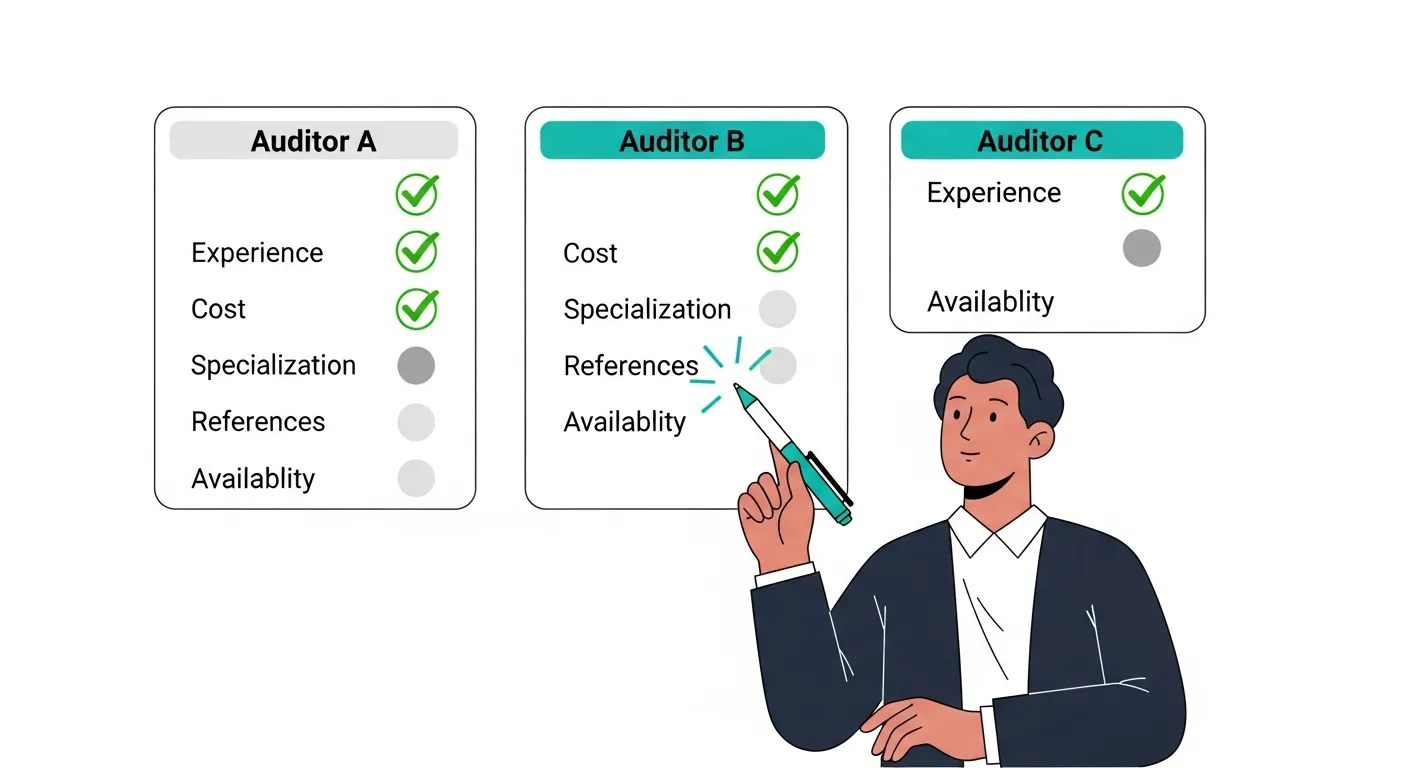
Negotiate your audit firm's rate. Audit firms have more pricing flexibility than they advertise, particularly for long-term relationships. Ask for a multi-year rate (year 1 full price, year 2 and 3 at 20% discount) in exchange for committing to the same firm.
Use the compliance platform's preferred auditor network. Vanta, Drata, and Secureframe all have partner auditor networks where auditors are experienced with the platform's evidence format. These engagements are often faster (less auditor time explaining your evidence format) and sometimes cheaper than auditors who are unfamiliar with the platform.
Time your observation period strategically. For a Type 2 report, choose your observation period start date to align with when your controls are fully operational. Starting the clock before your controls are implemented means exceptions for the early period, which weakens your report.
Frequently Asked Questions
Is SOC 2 Type 1 worth doing before Type 2?
For most companies, no. Type 1 takes 4 to 8 weeks and costs $12,000 to $40,000 depending on size. Enterprise customers increasingly request Type 2 specifically, and Type 1 alone does not satisfy most procurement requirements. The time and money spent on Type 1 delays your Type 2 by months. The main exception: if you have an urgent deal that requires any SOC 2 report and you have not yet completed an observation period, Type 1 can bridge the gap.
Why are year-two renewal costs so much lower?
Auditors already know your environment from year one. Your documentation, policies, and evidence collection processes are established. Your staff are trained. The auditor does not need to spend time understanding your systems or building the engagement from scratch. Expect 20 to 40% lower audit firm fees in year two and beyond. Platform fees stay approximately the same.
Do all five Trust Services Criteria cost the same to audit?
No. Security (CC) is the base and almost always included. Availability and Confidentiality each add 15 to 30% to audit scope. Processing Integrity adds 20 to 40% and is rarely required unless your product performs transaction processing or data transformation. Privacy adds 25 to 50% and is the most complex criterion; it requires detailed analysis of personal data flows and privacy program documentation.
Can I deduct SOC 2 compliance costs as a business expense?
Generally yes. SOC 2 compliance costs (audit fees, platform subscriptions, security tooling, consulting fees) are ordinary and necessary business expenses deductible under US tax law. Consult your tax advisor for your specific situation, particularly for capital expenditures on security infrastructure that may need to be depreciated rather than expensed in full.