Penetration Testing vs Vulnerability Scanning: Key Differences
Understanding the difference between penetration testing and vulnerability scanning is critical for building an effective security program. Both are essential tools in your cybersecurity arsenal, but they serve fundamentally different purposes. Confusing the two, or using one when you need the other, leaves gaps that attackers will find.
This guide explains what each method does, when to use it, how they complement each other, and how to decide which your organization needs right now. Whether you are a startup preparing for your first SOC 2 audit or an SMB scaling your security program, understanding these two approaches will save you time and budget.
What Is Vulnerability Scanning?
Vulnerability scanning is an automated process that identifies known security weaknesses in your systems, applications, and networks. A vulnerability scanner compares your environment against a database of known vulnerabilities (CVEs), misconfigurations, and missing patches, then produces a report of findings ranked by severity.
How it works:
- The scanner maps your network and identifies active hosts, open ports, and running services
- It checks each discovered component against its vulnerability database
- It flags issues like outdated software versions, default credentials, missing patches, and misconfigurations
- It generates a prioritized report (typically using CVSS scores) with remediation guidance
Common vulnerability scanning tools:
- Tenable Nessus (industry standard for enterprise environments)
- Qualys VMDR (cloud-native vulnerability management)
- Rapid7 InsightVM (combines scanning with risk-based prioritization)
- OpenVAS (open-source alternative for smaller budgets)
What Is Penetration Testing?
Penetration testing (pen testing) is a manual, targeted assessment where skilled security professionals simulate real-world attacks against your systems. Unlike vulnerability scanning, pen testers actively attempt to exploit weaknesses to determine what an attacker could actually achieve.
How it works:
- Scoping defines the target systems, testing boundaries, and rules of engagement
- Reconnaissance gathers information about the target (network topology, technologies, potential entry points)
- Exploitation attempts to gain unauthorized access using discovered vulnerabilities
- Post-exploitation determines how far an attacker could go after initial compromise (lateral movement, privilege escalation, data access)
- Reporting documents all findings with evidence, business impact, and remediation priorities
Types of penetration tests:
- Black box: Tester has no prior knowledge of the environment, simulating an external attacker
- White box: Tester has full knowledge (source code, architecture diagrams, credentials), maximizing coverage
- Gray box: Tester has partial knowledge, simulating an insider threat or compromised vendor
For a deeper look at web-focused assessments, see our web application penetration testing guide.
Head-to-Head Comparison

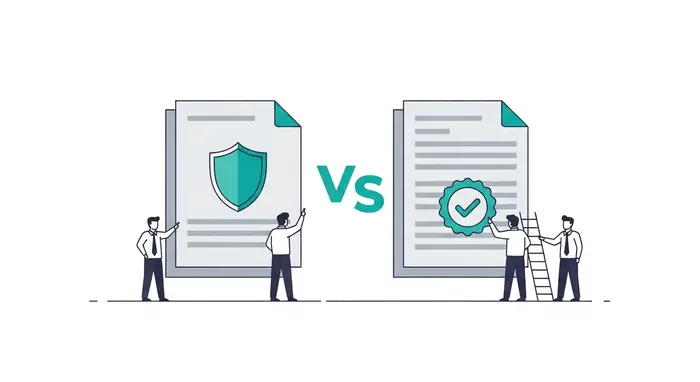
| Factor | Vulnerability Scanning | Penetration Testing | |--------|----------------------|-------------------| | Method | Automated tool-based | Manual, human-driven | | Depth | Surface-level identification | Deep exploitation and analysis | | Frequency | Weekly, monthly, or quarterly | Annually or after major changes | | Duration | Minutes to hours | Days to weeks | | Cost | $100-$3,000/year (tool license) | $5,000-$100,000+ per engagement | | Skill required | Moderate (tool configuration) | High (experienced security professionals) | | False positives | Common | Rare (findings are validated) | | Compliance | Meets basic scanning requirements | Meets pen test requirements (PCI DSS, SOC 2) | | Output | List of potential vulnerabilities | Narrative report with exploitation evidence |
When to Use Vulnerability Scanning
Vulnerability scanning should be a continuous, recurring activity in your security program. Use it in these scenarios:
Regular hygiene checks. Run scans weekly or monthly to catch new vulnerabilities as they are disclosed. The average time from CVE publication to first exploit attempt dropped to 15 days in 2025, according to Mandiant's M-Trends 2025 report. For startups and small businesses with limited security staff, automated scanning is often the first step toward a formal vulnerability management program.
Compliance requirements. PCI DSS requires quarterly external vulnerability scans through an Approved Scanning Vendor (ASV). HIPAA requires regular technical evaluations. NIST 800-53 mandates vulnerability scanning under the RA (Risk Assessment) control family.
Post-patching verification. After deploying patches or configuration changes, run a targeted scan to verify the remediation was effective.
New asset discovery. Scans help identify shadow IT, unauthorized devices, and forgotten systems that may not be in your asset inventory.
When to Use Penetration Testing
Penetration testing provides depth that scanning cannot. Use it in these scenarios:
Annual compliance obligations. SOC 2 Type II audits expect annual penetration testing. PCI DSS 4.0 requires both internal and external pen tests annually and after significant infrastructure changes.
Before major launches. Test new applications, products, or significant infrastructure changes before they go live. A pre-launch pen test catches issues that automated tools miss.
After a security incident. Following a breach or suspected compromise, a pen test validates whether remediation efforts closed all attack vectors.
Board or customer assurance. Pen test reports provide concrete evidence that your security controls withstand real-world attacks. Enterprise customers and investors increasingly require them.
How They Work Together

The strongest security programs use both methods in a complementary cycle:
Step 1: Continuous vulnerability scanning. Run automated scans weekly or monthly to maintain baseline visibility into your security posture. Remediate critical and high findings within your defined SLA (typically 30 days for critical, 90 days for high).
Step 2: Annual penetration testing. Engage a qualified penetration testing firm to validate your controls, test for business logic flaws, and simulate attack chains that scanners cannot detect.
Step 3: Remediation and rescan. Fix the issues identified by the pen test, then run targeted vulnerability scans to verify the fixes.
Step 4: Repeat. Each cycle strengthens your security posture. Pen test findings inform what to prioritize in your scanning program, and scanning data helps pen testers focus their limited time on the most impactful areas.
Choosing the Right Approach for Your Organization
Start with vulnerability scanning if:
- You are a startup or SMB with no formal vulnerability management program yet
- Your budget is limited (under $10,000/year for security testing)
- You need to meet basic compliance scanning requirements quickly
- You want continuous visibility into your security posture
Add penetration testing when:
- Compliance frameworks mandate it (SOC 2, PCI DSS, ISO 27001)
- You handle sensitive data (financial, healthcare, government)
- Enterprise customers or partners require pen test reports
- You are launching a new product or entering a new market
- Your vulnerability scan results are consistently clean and you need deeper assurance
For most organizations pursuing cybersecurity compliance: you need both. Vulnerability scanning is your continuous monitoring tool. Penetration testing is your annual deep inspection. Together, they provide a complete picture of your security posture.
Cost Considerations
Vulnerability scanning costs:
- Open-source tools (OpenVAS): Free, but requires internal expertise to configure and maintain
- Commercial tools (Nessus, Qualys): $2,000-$15,000/year depending on scope
- Managed scanning services: $500-$3,000/month including remediation guidance
Penetration testing costs:
- Small scope (single web application): $5,000-$15,000
- Medium scope (web app + API + network): $15,000-$40,000
- Large scope (enterprise-wide): $40,000-$100,000+
- Red team engagement (advanced adversary simulation): $50,000-$150,000+
For a detailed breakdown of testing costs and what influences pricing, see our guide on SOC 2 audit costs, which covers related security assessment budgeting.
Frequently Asked Questions

Can vulnerability scanning replace penetration testing?
No. Vulnerability scanning identifies known weaknesses using automated tools, but it cannot detect business logic flaws, chain vulnerabilities together, or demonstrate actual exploitation impact. Compliance frameworks like PCI DSS and SOC 2 require penetration testing separately from vulnerability scanning.
How often should I run vulnerability scans?
Best practice is weekly or monthly for internal scans and at least quarterly for external scans. PCI DSS specifically requires quarterly external scans through an ASV. High-risk environments (financial services, healthcare) should scan weekly or use continuous scanning solutions.
How do I choose a penetration testing provider?
Look for firms with relevant certifications (OSCP, CREST, GPEN), experience in your industry, and clear scoping processes. Ask for sample reports to evaluate their reporting quality. Avoid providers that rely solely on automated tools, as that is essentially a vulnerability scan repackaged as a pen test.
What is the difference between a penetration test and a red team exercise?
A penetration test focuses on finding as many vulnerabilities as possible within a defined scope and timeframe. A red team exercise simulates a specific threat actor with defined objectives (such as accessing a particular database), testing your detection and response capabilities across people, processes, and technology.
Do I need penetration testing for ISO 27001 certification?
ISO 27001 Annex A control A.8.8 (management of technical vulnerabilities) requires organizations to conduct technical vulnerability assessments. While ISO 27001 does not explicitly mandate penetration testing, most certification auditors expect it as evidence that your vulnerability management process is effective. See our ISO 27001 audit process guide for more details.