HIPAA vs SOC 2: Which Should Healthcare Startups Pursue First?
Healthcare SaaS founders ask the HIPAA vs SOC 2 question almost every week. Both frameworks signal trust to enterprise buyers, both can take 9 to 18 months to complete, and both reach into the same parts of your engineering and operations stack. But they answer different questions, exist under different legal regimes, and serve different buyer concerns.
This guide breaks down the practical differences between HIPAA vs SOC 2 for digital health, telehealth, and clinical-data startups, and gives a concrete decision framework for which one to pursue first. The short version: if you process Protected Health Information, HIPAA is not optional and SOC 2 is the strategic add-on. The long version is below.
What HIPAA actually is
HIPAA is a US federal law passed in 1996, expanded by the HITECH Act in 2009, and enforced by the Department of Health and Human Services Office for Civil Rights. It applies to two categories of organizations: covered entities (health plans, healthcare providers, and clearinghouses) and their business associates (any vendor that creates, receives, transmits, or maintains Protected Health Information on behalf of a covered entity).
If your SaaS handles PHI for a healthcare customer, you are a business associate. You are legally required to comply with the HIPAA Privacy and Security Rules and to sign a Business Associate Agreement with each covered entity customer. Non-compliance carries civil penalties up to $2.13 million per violation category per year and, in cases involving willful neglect, criminal exposure for executives.
There is no government-issued HIPAA certification. The framework is a binary legal status: either you can demonstrate compliance under audit or breach investigation, or you cannot. Third-party HIPAA attestation reports exist (often called HIPAA assessments or readiness reports) and most healthcare buyers will ask for one. They are not certifications, they are evidence.
What SOC 2 actually is

SOC 2 is a voluntary attestation report governed by the AICPA and produced by a licensed CPA firm. It evaluates a service organization against five Trust Services Criteria: Security, Availability, Processing Integrity, Confidentiality, and Privacy. Security is mandatory for every SOC 2 report, the other four are scoped in based on the service the company sells.
A SOC 2 report is the de facto trust signal for B2B SaaS in the United States. Almost every enterprise procurement process in the past five years has asked for one. Without a SOC 2 Type 2, mid-market and enterprise sales cycles stall in the security review queue.
For full context on the framework see our SOC 2 compliance pillar and the Trust Services Criteria breakdown. For HIPAA fundamentals see the HIPAA compliance pillar.
HIPAA vs SOC 2 at a glance
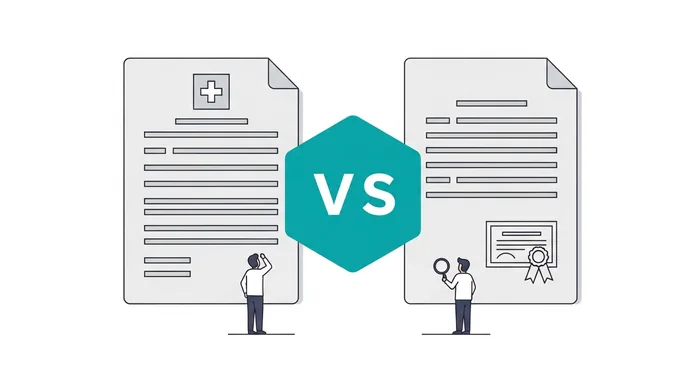
The clearest way to see HIPAA vs SOC 2 side by side is on the dimensions that actually matter to a founder making a budget decision.
| Dimension | HIPAA | SOC 2 |
|---|---|---|
| Type | US federal law | Voluntary attestation report |
| Governing body | HHS Office for Civil Rights | AICPA (audit performed by CPA firm) |
| Applies to | Covered entities and business associates handling PHI | Any service organization storing customer data |
| Output | Self-attested compliance, BAA, optional third-party assessment | SOC 2 Type 1 or Type 2 report |
| Validity period | Continuous, no expiration | Type 2 covers 3 to 12 months, refreshed annually |
| Typical cost | $15,000 to $50,000 for readiness + assessment | $25,000 to $100,000 for Type 2 audit |
| Typical timeline | 4 to 9 months to readiness | 9 to 18 months from start to first Type 2 |
| Penalty for non-compliance | Civil and criminal penalties up to $2.13M/yr | Lost deals, no legal penalty |
| Buyer asking for it | Hospitals, payers, clinics, digital health | Enterprise B2B SaaS buyers across industries |
| Renewal cadence | Annual risk assessment + ongoing | Annual Type 2 audit |
The most important row is the second-to-last. HIPAA is enforced by the federal government when something goes wrong. SOC 2 is enforced by your customers when they refuse to sign your contract.
What overlaps and what does not
A common misconception is that HIPAA vs SOC 2 cover the same controls. They overlap on roughly 60 to 70 percent of the technical safeguards but diverge sharply on scope, evidence requirements, and audit format.
The overlap
Both frameworks demand: access controls with role-based permissions, encryption of data at rest and in transit, audit logging of system access and PHI activity, vulnerability management, change management, vendor management, employee security awareness training, incident response procedures, and business continuity planning.
If you build the security program for one framework competently, you will satisfy 60 to 70 percent of the other. This is why most healthcare SaaS companies eventually carry both.
The HIPAA-specific gaps
HIPAA requires several things SOC 2 does not specifically demand: Business Associate Agreements with every subcontractor that touches PHI, formal HIPAA training tracked per employee, the HIPAA Security Rule technical safeguards (audit controls, automatic logoff, integrity controls, transmission security), Notice of Privacy Practices procedures, breach notification within 60 days to affected individuals and HHS, and a documented HIPAA risk analysis updated annually.
The breach notification clock is the single biggest operational difference. HIPAA forces a regulated, time-bound disclosure process that SOC 2 leaves entirely to the company's own incident response policy.
The SOC 2-specific gaps
SOC 2 demands evidence rigor that HIPAA does not require: continuous monitoring of every control over the audit period (typically 3 to 12 months), formal documentation of control objectives mapped to the Trust Services Criteria, third-party tested change management, documented availability and processing integrity controls if those criteria are in scope, and a CPA-firm audit opinion against the AICPA framework.
SOC 2 is heavier on documentation and lighter on regulatory mandate. HIPAA is the inverse.
Which one do healthcare startups need first?

The decision tree is shorter than most founders expect.
If you handle PHI for a covered entity, HIPAA is first
This is not a strategic choice, it is a legal one. The moment you sign a contract with a hospital, clinic, payer, or digital health provider that involves PHI, you must already be HIPAA compliant and willing to sign a BAA. Many healthcare buyers require HIPAA evidence before the BAA conversation can even start.
Pursuing SOC 2 before HIPAA in this scenario is a misuse of capital. You will spend 9 to 18 months and $50,000 to $100,000 building a SOC 2 report that does not address the Privacy Rule, the breach notification rule, or BAA management, then have to revisit those items anyway.
Concrete pattern we recommend: build HIPAA readiness in months 1 through 6, sign your first BAAs and start revenue, then layer SOC 2 in months 7 through 18 using the security controls you already built. Many auditors will let you reuse 60 to 70 percent of HIPAA evidence inside the SOC 2 audit.
For early-stage healthcare SaaS specifically, our minimum viable HIPAA compliance guide covers the lean approach. For broader healthcare SaaS planning see our HIPAA for SaaS startups breakdown.
If you do not handle PHI, SOC 2 is first
If you are a horizontal B2B SaaS that sells to many industries (and healthcare is just one possible vertical), SOC 2 wins on volume. Almost every enterprise procurement team across finance, technology, retail, and manufacturing will ask for SOC 2 first. HIPAA only kicks in when you actually sign a healthcare customer.
In this scenario, build SOC 2 first, then add HIPAA controls as soon as you are seriously pursuing healthcare deals. The added HIPAA workload on top of an existing SOC 2 program is typically 25 to 35 percent of the SOC 2 effort, not a duplicate program.
If you are pre-revenue and pre-PMF, neither is first
This sounds counterintuitive but every founder who has built compliance too early regrets it. If you have no paying customers, no PHI in production, and no defined buyer profile, you do not need a HIPAA assessment or a SOC 2 report. You need a documented intent (a security policy stack, an architecture diagram, a vendor list) so you can show due diligence later.
Start the formal compliance program when you have either: signed your first healthcare customer, started a healthcare pilot that touches real PHI, or moved past $500K ARR with at least one enterprise lead in the security review queue.
Cost comparison: HIPAA vs SOC 2
Total cost of ownership matters more than the audit fee. The audit fee itself is a small fraction of the program cost in year one.
| Cost line | HIPAA program (year 1) | SOC 2 Type 2 program (year 1) |
|---|---|---|
| Readiness consulting or platform | $8,000 to $25,000 | $10,000 to $30,000 |
| Third-party assessment or audit fee | $5,000 to $25,000 | $15,000 to $60,000 |
| Pen test (often required) | $8,000 to $20,000 | $8,000 to $20,000 |
| GRC platform (Vanta, Drata, Sprinto) | $8,000 to $24,000 | $8,000 to $24,000 |
| Internal labor (FTE allocation) | $25,000 to $80,000 | $40,000 to $120,000 |
| Year 1 total | $54,000 to $174,000 | $81,000 to $254,000 |
| Year 2 ongoing | $25,000 to $50,000 | $50,000 to $100,000 |
The cost ranges assume one in-house compliance owner (often part-time for a startup) and modern tooling. Older approaches that lean on consultants for everything will land at the top of each range.
Timeline comparison
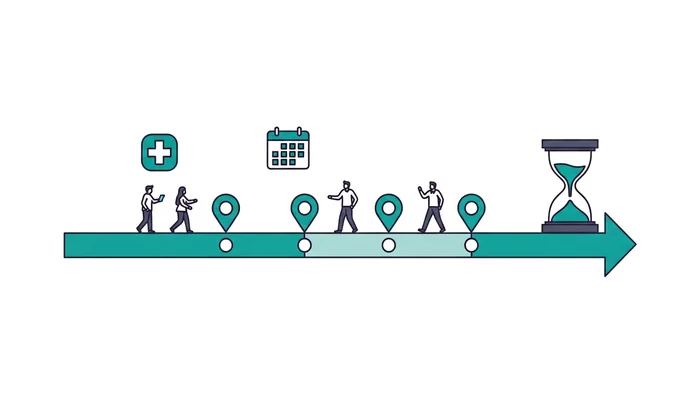
Most healthcare startups do HIPAA in 4 to 9 months and SOC 2 Type 2 in 9 to 18 months. The lower bounds assume a clean greenfield AWS or GCP environment and an experienced compliance owner. The upper bounds assume legacy systems, scattered data, or no dedicated owner.
A realistic stacked plan for a Series A digital health startup that signs its first hospital customer in month 3 looks like this:
- Months 1 to 3: HIPAA readiness, BAA template ready, security policies live, training rolled out, technical safeguards verified
- Month 4: First HIPAA assessment, BAA signed with first customer
- Months 5 to 9: SOC 2 Type 1 readiness using HIPAA evidence as the foundation
- Month 9: SOC 2 Type 1 audit
- Months 9 to 15: SOC 2 Type 2 observation period (6 months minimum)
- Month 15: SOC 2 Type 2 audit
- Month 16: SOC 2 Type 2 report ready, healthcare and non-healthcare deals both unblocked
This is the cheapest viable path from zero to dual coverage if PHI is in play.
How HIPAA vs SOC 2 are audited

The mechanics matter because they shape your evidence collection process all year.
HIPAA does not have a scheduled audit. It has investigations, triggered by either a breach report or an OCR-initiated audit. When OCR investigates, you produce evidence on demand: your risk analysis, your training logs, your access reviews, your BAAs, your incident response records, your encryption status. Third-party readiness assessments simulate this process so you do not face the real one cold.
SOC 2 has a scheduled annual audit by a CPA firm. The auditor pulls samples of evidence across the audit window, tests each control objective, and issues an opinion. You know when the audit will happen, you know what they will look at, and the audit either issues a clean opinion, an opinion with exceptions, or (rarely) no opinion. SOC 2 Type 2 covers a 3 to 12 month observation window, so the audit is in some sense always running.
The difference shapes day-to-day work. HIPAA programs feel like risk management programs. SOC 2 programs feel like evidence factories.
Which one signals more trust to enterprise healthcare buyers?
Both, ideally. In practice, the order they ask for matters.
Hospital security review teams almost always ask for HIPAA first. They will ask: are you HIPAA compliant, can you sign a BAA, do you have a HIPAA risk analysis on file, what are your breach notification procedures? Those questions come up before SOC 2.
After that, mature healthcare buyers will ask for SOC 2 Type 2. Some payers and enterprise health systems treat SOC 2 Type 2 as a hard gate even though it is not legally required. Vendor risk teams have standardized on it.
For a healthcare SaaS, the strongest enterprise position is HIPAA + SOC 2 Type 2. For a digital health startup signing its first hospital, HIPAA alone unblocks the deal. For a horizontal B2B SaaS dipping into healthcare, SOC 2 + HIPAA controls (without a separate HIPAA assessment) is often enough until the PHI volume justifies the dedicated HIPAA program.
For more on what hospitals require see healthcare compliance requirements. For deeper SOC 2 timeline planning see how long does a SOC 2 audit take.
Common HIPAA vs SOC 2 mistakes startups make
Three patterns we see often.
The first mistake is treating SOC 2 as a substitute for HIPAA. They are not interchangeable. A clean SOC 2 Type 2 does not satisfy the HIPAA Privacy Rule, does not include BAA management, and does not exempt you from breach notification. If a healthcare buyer asks for HIPAA evidence and you hand them SOC 2, the deal will stall.
The second mistake is starting both at once before the team is ready. Compliance has a steady-state cost. Two programs running in parallel from day one will burn engineering bandwidth and produce two half-finished programs instead of one strong one. Stack them.
The third mistake is buying tooling before the program. GRC platforms (Vanta, Drata, Sprinto, Secureframe) are excellent at evidence automation but will not write your policies, run your risk analysis, or train your staff. Buy the platform after you have decided which framework you are pursuing and who owns it internally. See our Vanta vs Drata vs Secureframe comparison and SaaS compliance frameworks overview before committing.
When HITRUST enters the picture
A subset of healthcare buyers (especially large payers and integrated delivery networks) will ask for HITRUST CSF certification on top of HIPAA. HITRUST is more rigorous, more expensive (often $100,000 to $250,000 in year one), and takes 12 to 18 months. We cover the HIPAA vs HITRUST decision in detail in our HIPAA vs HITRUST guide. The short version: HITRUST is for companies with significant payer exposure or large hospital systems demanding it specifically. Most healthcare startups can defer it until later stages.
Frequently asked questions
Is HIPAA harder than SOC 2?
HIPAA is broader (covers privacy, security, breach notification, BAA management) but its security control set is narrower than SOC 2's. SOC 2 has more evidence rigor and ongoing audit overhead. Most teams find HIPAA conceptually heavier and SOC 2 operationally heavier.
Can a SOC 2 report cover HIPAA requirements?
A SOC 2 report can include a HIPAA mapping (sometimes called a SOC 2 + HIPAA report), where the auditor cross-references HIPAA Security Rule requirements to your SOC 2 controls. It does not replace a HIPAA assessment but it does reduce duplicate evidence work and can satisfy some healthcare buyers.
Do I need both HIPAA vs SOC 2 to sell to hospitals?
Most large hospitals require HIPAA compliance and a signed BAA at minimum. Many enterprise health systems also require SOC 2 Type 2. Smaller clinics and digital health buyers often accept HIPAA alone. Ask the prospect's vendor risk team directly before assuming.
How much does HIPAA compliance cost a SaaS startup?
For a Series A or earlier startup with one product, expect $54,000 to $174,000 in year one (readiness, assessment, pen test, GRC platform, internal labor) and $25,000 to $50,000 in year two onward. Larger companies with more data systems and customers will run higher.
How long after HIPAA can I get SOC 2 Type 2?
A well-run HIPAA program creates 60 to 70 percent of the evidence needed for SOC 2. From a clean HIPAA baseline, SOC 2 Type 1 is 3 to 6 months and SOC 2 Type 2 is another 6 to 12 months (because the observation window is the gating factor, not the control work).
Is SOC 2 mandatory for healthcare SaaS?
No. SOC 2 is a voluntary attestation. It is not legally required for any healthcare company. It is, however, commercially required by most enterprise healthcare buyers above a certain size. The legal requirement for healthcare SaaS is HIPAA, not SOC 2.
Can a small healthcare startup skip both?
If you are pre-revenue and pre-PHI, yes, defer both. If you are processing real PHI for a customer, HIPAA is not optional. SOC 2 can wait until enterprise deals demand it.
The bottom line
For healthcare startups handling PHI, HIPAA comes first. It is law, the BAA is the deal-blocker, and the controls you build for HIPAA carry forward into SOC 2. Most teams reach a strong position by sequencing HIPAA in months 1 through 6 and SOC 2 in months 7 through 18, sharing 60 to 70 percent of the underlying evidence.
For horizontal B2B SaaS that does not yet handle PHI, SOC 2 comes first because enterprise procurement teams will ask for it across every industry. Add HIPAA controls when healthcare deals start coming in.
The wrong move in either case is to skip the framework your customers actually demand and spend money on the other one. Start with the buyer requirement, build the controls once, and let the second framework reuse the work.
Editorial note: This article was prepared by the Security Compliance Guide editorial team. We draft initial summaries from publicly available compliance documentation, then review every claim against primary sources (AICPA, NIST, HHS, vendor docs, and official breach reports) before publication. We are not licensed auditors. See our editorial standards and disclaimer.