SOC 2 for SaaS Startups: The Minimum Viable Path to Your First Report
TL;DR
- A well-prepared startup can complete a SOC 2 Type I in 8 to 12 weeks (editorial estimate; timelines vary by scope, auditor availability, and remediation speed). Type II requires an additional 3 to 12 months of observation, depending on chosen observation period length.
- Start with Security only. Add Availability or Confidentiality in year two once you know what your buyers actually require.
- Compliance automation platforms (Vanta, Drata, Secureframe, Thoropass) do not publish fixed pricing; budget accordingly and get quotes before committing.
- Audit firm fees for startups: Type I roughly $12,000 to $27,000; Type II roughly $15,000 to $100,000+, based on scope and company size, per Thoropass published guidance.
- The biggest risk is starting too late. A high-value prospect with a 30-day security review deadline will not wait for you.
Who this is for: Founders, CTOs, and engineering leads at SaaS companies with 10 to 200 employees who are facing their first SOC 2 request or planning compliance before enterprise pipeline opens. This guide covers what the process actually requires, what it costs, and how to move through it without derailing product work.
What SOC 2 Is and What It Is Not
The AICPA defines a SOC 2 examination as "a report on controls at a service organization relevant to security, availability, processing integrity, confidentiality, or privacy." Those five categories are the Trust Services Criteria (TSC): Security, Availability, Processing Integrity, Confidentiality, and Privacy. The current criteria document is the 2017 Trust Services Criteria with Revised Points of Focus, updated 2022.
SOC 2 is an attestation, not a certification. A licensed CPA firm examines your controls and issues an opinion. There is no body that awards you a certificate. The report is the deliverable, and it covers a defined period. It does not remain valid indefinitely: enterprise buyers typically want a report that is less than 12 months old.
The two report types serve different purposes at different stages of a company:
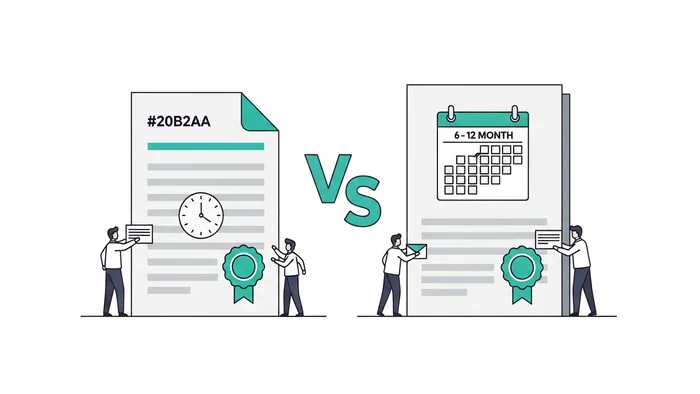
- Type I evaluates whether your controls are designed appropriately at a single point in time. Faster and cheaper to obtain. Useful for closing deals while you build toward Type II, because it provides independent attestation before you have 6 to 12 months of operating history to show.
- Type II evaluates whether those controls operated effectively over an observation period, typically 3 to 12 months, with 6 months the practical floor most auditors and enterprise buyers expect for a first engagement. This is what enterprise security teams ultimately want to see. A Type I tells them your controls exist on paper; a Type II tells them your team actually ran those controls consistently, week over week, across real incidents and real deployments.
Most startups complete a Type I first, then roll directly into a Type II observation period so the clock starts immediately rather than waiting for the Type I report to land.
Why Enterprise Buyers Require It

Enterprise security teams are not reading your SOC 2 report to learn about your controls. They are clearing a checkbox on a vendor risk assessment form that requires third-party attestation. That distinction matters: when a startup says "we take security seriously," the procurement team hears an unverifiable claim that still requires internal escalation and a security questionnaire that commonly runs to hundreds of questions. A SOC 2 report transfers the verification burden from the buyer's security team to your CPA firm. That transfer is what actually unblocks deals.
The friction difference shows up in calendar time. Without a report, the deal enters a vendor risk queue where an analyst sends the questionnaire, waits for responses, escalates to a security architect for review, and potentially schedules a vendor security call. That cycle commonly takes four to twelve weeks at large enterprises (editorial estimate based on typical enterprise vendor review cadences). With a current report, the analyst reads the auditor's opinion, confirms scope covers the relevant service, checks the observation period dates, and closes the ticket. The deal moves to legal and procurement. At regulated buyers in financial services, healthcare, and defense contracting, the difference is often binary: internal policy prohibits vendor approval without a third-party attestation, regardless of how thorough the questionnaire answers are.
Minimum Viable Scope for a First Audit
Startups consistently over-scope their first audit. Including every system, every tool, and every Trust Services Criterion adds cost and time without proportional benefit.
What to include:
- Production infrastructure (your cloud environment: AWS, GCP, or Azure)
- Your application and its data stores
- Identity and access management systems (Okta, Google Workspace, or equivalent)
- Corporate endpoints and the people processes that manage them (onboarding, offboarding, access reviews)
What to exclude:
- Internal marketing tools that do not touch customer data
- Experimental development environments
- Third-party SaaS tools that are not part of your core service delivery
Which Trust Services Criteria to include: Security is mandatory. For a first audit, start there and add Availability only if your largest prospective customers explicitly require it. Privacy and Processing Integrity add significant audit hours and are rarely required by buyers unless you are in a regulated sector like healthcare or financial services.
Narrower scope equals faster completion and lower audit fees. You can expand scope in year two.
Realistic Timeline: Weeks 1 Through 12
This is the timeline for a startup that commits properly, uses a compliance automation platform, and has an internal owner driving the process.
Weeks 1 to 2: Scoping and Gap Assessment
Define what is in scope. Run a readiness assessment to find the distance between where your controls are today and where they need to be. Gaps common in startups at this stage:
- No formal information security policy or risk assessment process
- Missing access review records
- No documented background check process
- Incomplete vendor management program
- No business continuity or disaster recovery plan
Compliance automation platforms run this assessment against your connected infrastructure automatically. The output is a prioritized gap list.
Weeks 3 to 6: Remediation and Control Implementation
This is where most of the work sits, and where timelines most often slip. Four categories of work need to happen roughly in parallel, which requires active coordination between whoever owns compliance and the engineering team.
Policies are the first unlock. You need at minimum: Information Security Policy, Acceptable Use Policy, Access Control Policy, Incident Response Plan, Change Management Policy, Risk Management Policy, Vendor Management Policy, and Business Continuity Plan. Every major compliance platform ships templates you customize rather than write from scratch, which cuts the time substantially. The risk is adopting template language that does not reflect how your team actually works, that creates exceptions in a Type II audit (see the mistakes section below).
Technical controls are where engineering hours go. Enable MFA across every system in scope, configure encryption at rest and in transit, stand up centralized logging, deploy endpoint protection, enable automated vulnerability scanning, and configure backup systems with tested recovery procedures. These are not one-and-done changes; the logging and monitoring configurations need to run continuously and generate evidence throughout any observation period.
Operational processes require calendar commitments. Quarterly access reviews need to actually happen on a schedule your auditor can verify. Onboarding and offboarding checklists need to be followed for every employee transition, with records kept. Your incident response runbook needs to be documented and tested, not just written. A change management workflow (pull requests requiring at least one reviewer) needs to be enforced in your version control system, not just described in a policy.
Monitoring is often the last item completed and the one that bites startups in a Type II. Configure alerts for unauthorized access attempts, infrastructure changes, and security events before the observation period starts. Auditors will ask for evidence that monitoring ran continuously during the observation period. Gaps in logs or alert history are findings.
Weeks 7 to 8: Engage Auditor and Submit Evidence
Provide your auditor access to your compliance platform's evidence room. For a Type I audit:
- The auditor reviews control documentation and the evidence supporting each control
- They test whether controls are designed appropriately and in place as of the report date
- They issue the report within 2 to 4 weeks of completing fieldwork (editorial estimate; report turnaround varies by firm and workload)
For startups going directly to Type II, weeks 7 onward begin the observation period. You operate your controls consistently and collect evidence while the audit clock runs.
Weeks 9 to 12: Fieldwork and Report
Support auditor fieldwork. Answer questions. Resolve any findings that arise. Receive your report.
A clean (unqualified) opinion is the goal. If exceptions appear in the auditor's opinion, address them and disclose proactively to prospects. Enterprise security teams have seen qualified opinions before; what matters is whether the exceptions are material and whether you have a remediation plan.
What This Actually Costs

All dollar figures below come from Thoropass's published cost breakdown, which is based on their customer portfolio. These are directional ranges, not quotes.
| Cost Component | Estimated Range | Notes |
|---|---|---|
| Scope and gap analysis | $5,000 to $10,000 | Internal staff time or consultant |
| Control implementation | $5,000 to $10,000 in labor | 60 to 100 internal hours |
| SOC 2 Type I audit fee | $12,000 to $27,000 | For companies with 5 to 100 employees |
| SOC 2 Type II audit fee | $15,000 to $100,000+ | Varies heavily by scope and company size |
| Policy and legal review | $5,000 to $10,000 | Optional; platforms include templates |
| Compliance automation platform | Custom quote required | Vanta, Drata, Secureframe, Thoropass do not publish fixed pricing |
Why platform pricing is not listed: Vanta, Drata, Secureframe, and Thoropass all use quote-based pricing. Vanta's pricing page (accessed 2026-05-12) lists four tiers (Essentials, Plus, Professional, Enterprise) with no dollar amounts shown; customers must request a demo to get pricing. Secureframe's pricing page (accessed 2026-05-12) shows three packages (Fundamentals, Complete, Defense) all gated behind a "get a quote" form. Request quotes from at least two platforms and model cost at your current headcount and at 2x current headcount.
The total cost picture: A startup doing a Type I audit in year one should budget for the audit fee plus platform cost plus 60 to 100 internal hours of staff time. A Type II engagement adds the observation period cost (platform subscription for a longer period) and higher audit fees. Neither path is cheap, but consider the alternative: a single enterprise deal stalled in security review, one that might represent $150,000 to $300,000 in ARR (editorial estimate; deal size varies widely), will often exceed the full cost of a Type I audit. The math favors acting before you need it.
Choosing a Compliance Automation Platform
These platforms connect to your cloud infrastructure, identity provider, HR system, and other tools to collect audit evidence automatically. Without one, evidence collection means screenshots, spreadsheets, and email threads, a workload that becomes unsustainable once you are collecting evidence across dozens of controls over a 6 to 12 month observation period.
The four platforms most commonly used by early-stage SaaS companies are Vanta, Drata, Secureframe, and Thoropass. All four cover the same core capabilities: automated evidence collection from AWS, GCP, Azure, Okta, Google Workspace, and GitHub; policy templates you customize; continuous monitoring with alerts when controls drift out of compliance; auditor portals that give your CPA firm direct evidence access; and employee security training. The functional overlap is significant, which is why the right question is not "which platform has better features" but "which platform has better coverage of my specific stack and a preferred auditor relationship with the firm I want to use."
How to choose:
Start with integration coverage. Pull your system inventory from the scope exercise and cross-reference it against each platform's native connector list. A missing integration does not mean you cannot get audited, it means you collect that evidence manually, which takes hours per audit cycle and introduces the human error risk that the platform is supposed to eliminate. Any integration gap that affects a high-evidence-volume system (your cloud provider, identity provider, version control system) is a significant negative.
Ask about preferred auditor networks next. Most platforms have relationships with CPA firms at negotiated rates. The practical effect: an auditor who knows the platform can pull evidence directly from the evidence room rather than requesting it via email, which compresses fieldwork from weeks to days. The saving on audit fees from a preferred-network firm can cover a substantial portion of the annual platform cost. Ask each vendor what firms they work with and at what discount.
Then call references. Ask for two or three companies at your headcount and your stack, and ask specifically how long readiness took, not what the vendor said it would take. Vendor-quoted readiness timelines assume everything goes smoothly; customer references will tell you what actually happened when engineering was understaffed or a key integration was missing.
Choosing an Auditor
Your auditor must be a licensed CPA firm. The AICPA's SOC 2 page notes that SOC 2 examinations follow the attestation standards in SSAE No. 18 (Statements on Standards for Attestation Engagements No. 18), the current AICPA standard governing attestation engagements, which superseded SSAE 16 in 2017.
For most SaaS startups, the right auditor is a mid-tier specialist CPA firm, not a Big Four firm. Specialist firms that focus on SOC 2 and technology company audits understand cloud-native architectures. They will not ask about physical server rooms when your entire infrastructure runs in AWS.
What to ask before signing:
- How many SOC 2 audits has this specific audit team completed in the last year?
- Do they have experience with your compliance automation platform?
- Can they commit to a completion date in writing?
- Is the engagement fixed-fee or time-and-materials?
Auditors with prior experience in your chosen compliance platform can pull evidence directly from the platform rather than requesting it manually, which cuts back-and-forth and keeps the engagement on schedule.
Get quotes from at least two firms. Fees vary significantly based on firm size, demand, and scope. For a deeper review of what to look for, see our guide on how to choose a SOC 2 auditor.
Five Mistakes That Delay First-Time Audits

Scoping too broadly
Every system added to scope adds audit hours and fees. Your production SaaS platform, its supporting cloud infrastructure, and the people and processes that manage it are the core scope. Internal marketing tools, personal devices used for non-sensitive work, and experimental environments rarely need to be included.
Starting too late
A recurring pattern: a high-value prospect sends a security questionnaire with a 30-day deadline. The startup responds that SOC 2 is "in progress." The deal stalls. Enterprise procurement teams do not grant extensions for vendors that started the process after the deal opened. Plan to have a Type I report in hand before your first meaningful enterprise conversation.
Not involving engineering from week one
Engineering owns many of the controls SOC 2 evaluates: code review processes, deployment pipelines, access management, logging, and encryption configuration. Treating compliance as an IT or operations project that lands in engineering's lap in week four guarantees delays and frustration. The specific consequence: auditors will request evidence of access reviews, deployment controls, and logging configuration, evidence only engineering can produce. If engineering is not aware of the requirement from day one, that evidence either does not exist or has to be back-filled under time pressure, which creates audit exceptions. Bring your engineering lead into scope discussions at the start.
Treating policies as a one-time deliverable
Auditors test operating effectiveness in a Type II audit. If your change management policy requires two code reviewers but your pull request history shows single-approver merges, the auditor flags it, and that finding appears in the exceptions section of your report, visible to every enterprise buyer who requests it. The practical consequence: the policy you adopt must describe what your team actually does, not what you aspire to do. If your team currently merges single-reviewer PRs in emergencies, your policy needs to account for that with an exception process and documentation requirement, rather than pretending those merges do not happen.
Ignoring the annual maintenance requirement
A SOC 2 report covers a fixed observation period. After your first Type II report, you need a continuous control monitoring program, ongoing evidence collection, and an annual re-audit. This is not optional. Build compliance maintenance into your operational calendar, not as a separate annual project.
What Enterprise Security Teams Check in Your Report
Enterprise buyers receive many SOC 2 reports. Here is what security teams actually look at:
The auditor's opinion. It should be unqualified (clean). A qualified opinion with exceptions may be acceptable if the exceptions are immaterial and you can explain remediation steps, but it raises questions and slows the review.
Scope coverage. Security reviewers check that the audit covers the specific service they are evaluating. If your report covers a legacy product but not the new platform they are purchasing, the report does not satisfy their requirement.
Which Trust Services Criteria are included. Security is expected. Availability is strongly preferred for SaaS companies, because it signals that you have tested your uptime and recovery processes.
Observation period length. For Type II, a 6-month minimum is the practical baseline among enterprise buyers (editorial estimate; the AICPA does not prescribe a minimum observation period length in SSAE No. 18). A 3-month observation period, while not prohibited under AICPA attestation standards, draws questions from experienced security teams and is widely considered insufficient for enterprise procurement.
Report date. Reports should be less than 12 months old. If your report is aging, provide the most recent report plus a bridge letter from your auditor. A bridge letter is a short letter (typically one to two pages) signed by your auditing CPA firm, addressed to a specific requesting party, confirming that your controls continued to operate effectively from the end of the audit period through a more recent date. It is not a new audit; it is a representation by your auditor. Some buyers accept it; others require a current report. Ask your auditor about bridge letter availability before your existing report ages out.
SOC 2 and Other Frameworks: What to Know Before You Stack
SOC 2 is often the first compliance framework, but for SaaS companies growing into specific verticals, it is rarely the last.
ISO 27001: An international security management system standard that results in a certification (not an attestation). Required by many European and Asian enterprise buyers. The control overlap with SOC 2 is substantial, roughly 80 percent of substantive control requirements per Secureframe's analysis of the AICPA's ISO 27001-to-SOC 2 mapping (see our SOC 2 vs ISO 27001 comparison for detail), so a well-run SOC 2 program covers most of ISO 27001 readiness. Key distinction: ISO 27001 is a certification issued by an accredited certification body. SOC 2 is an attestation issued by a CPA firm.
HIPAA: Required if your product handles protected health information. HIPAA is a federal regulation, not a voluntary framework. It operates separately from SOC 2 but can be addressed in the same audit cycle with proper planning.
PCI DSS: Required if your application processes, stores, or transmits payment card data. PCI DSS has its own certification body (PCI Security Standards Council) and audit framework, separate from AICPA attestation.
NIST CSF: Voluntary for most private companies but commonly used as an internal reference. Government contractors may need NIST 800-171 compliance to handle Controlled Unclassified Information.
If you anticipate needing multiple frameworks, map your SOC 2 control library to them before you build. Shared controls mean shared evidence. A well-structured GRC platform captures evidence once and applies it to multiple framework requirements.
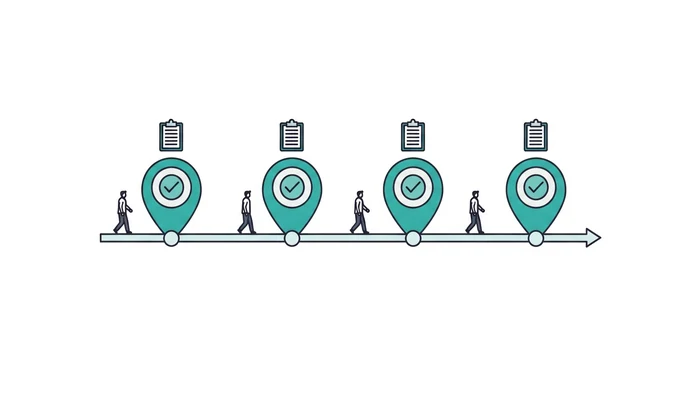
90-Day Startup Readiness Plan
Days 1 to 7: Platform onboarding and baseline Select and onboard a compliance automation platform. The reason this goes first: the platform's automated readiness assessment, run against your connected cloud infrastructure, identity provider, and HR system, will show you the actual gap list rather than your assumptions about it. Most teams discover control gaps they did not know existed. Connect all in-scope systems before the assessment runs.
Days 8 to 14: Gap triage and ownership Review the gap list the platform produces. Categorize gaps by severity (critical blocks audit completion vs. moderate vs. low) and by owner (engineering, IT, operations, legal). Assign deadlines. Identify the 10 to 15 controls that carry the most implementation effort or require engineering work, because those will determine whether the 90-day timeline holds.
Days 15 to 30: Policy adoption and critical technical controls Write and adopt core policies using platform templates. At the same time, implement the critical technical controls: MFA for all systems, encryption at rest and in transit, centralized logging, endpoint protection. These need to be in place before the observation period starts, and some of them (logging, monitoring) need to run long enough to generate the evidence the auditor will review. Conducting the first formal risk assessment in this window also establishes your risk register, which several other controls reference.
Days 31 to 45: Remaining controls and evidence configuration Complete the lower-priority control implementation. Configure automated evidence collection for every in-scope system. Verify that monitoring alerts are active and being reviewed by a human. Alerts that fire into an unmonitored queue are a finding. Close remaining policy gaps.
Days 46 to 60: Auditor engagement Provide your selected auditor access to your compliance platform's evidence room and begin pre-audit preparation calls. This window is also when you confirm whether you are running a Type I (point-in-time, report by day 90) or rolling directly into a Type II observation period (Type I as the readiness marker, then continuing to accumulate evidence).
Days 61 to 75: Fieldwork support Answer auditor questions, provide supplemental evidence, resolve any findings. Keep your compliance lead available on short turnaround during fieldwork. Delayed responses extend the timeline.
Days 76 to 90: Report and next cycle Receive your SOC 2 Type I report. Review the auditor's opinion and any noted exceptions. If the plan is Type II, the observation period is already running. Update your sales materials and procurement response package to include the new report.
Frequently Asked Questions
How long does SOC 2 take for a startup?
A well-prepared startup can complete a Type I audit in 8 to 12 weeks from the decision to start (editorial estimate; actual timelines vary by scope and auditor availability). That includes 4 to 6 weeks of scoping and remediation, plus 4 to 6 weeks of auditor engagement and audit fieldwork. Type II requires an additional 3 to 12 month observation period on top of that.
Can a 10-person startup pass SOC 2?
Yes. SOC 2 controls are designed to scale with organizational complexity. A 10-person company needs simpler processes than a 500-person company. The core requirements, access controls, encryption, monitoring, and incident response, apply at any size. What changes is the implementation complexity, not the requirement itself.
Do we need a dedicated compliance hire?
Not for a first audit. Most startups designate an existing team member as compliance lead: a senior engineer, Head of IT, or COO. A compliance automation platform handles the ongoing monitoring and evidence collection. A dedicated compliance hire becomes worthwhile at 100 to 200 employees or when you are managing three or more compliance frameworks simultaneously.
Is SOC 2 required by law?
No. SOC 2 is a voluntary framework maintained by the AICPA. It is market-driven: enterprise buyers require it as a condition of doing business with you. That distinction matters when you are designing your compliance program, because the scope and criteria are negotiable based on what your buyers actually ask for, not set by a regulator.
What happens if we get a qualified opinion?
A qualified opinion means the auditor found exceptions in your controls. The report is not published publicly, so a qualified opinion does not damage your public reputation. However, you will need to disclose the exceptions to enterprise security teams who request your report. Address the findings, remediate, and plan for a clean report in the next audit cycle. Some buyers will accept a qualified opinion with a documented remediation plan; others will not.
What is the difference between SOC 2 and ISO 27001?
SOC 2 is an attestation: a CPA firm examines your controls and issues an opinion. ISO 27001 is a certification: an accredited certification body audits your information security management system and issues a certificate. SOC 2 is more common in North American enterprise procurement; ISO 27001 is required more frequently in Europe and Asia. The two are not interchangeable, though the control overlap is substantial.
Sources used
- AICPA, "SOC 2, SOC for Service Organizations," accessed 2026-05-12.
- AICPA, "SOC 2 Reporting on an Examination of Controls at a Service Organization Relevant to Security, Availability, Processing Integrity, Confidentiality, or Privacy," accessed 2026-05-12.
- Thoropass, "How Much Does SOC 2 Cost?", accessed 2026-05-12. https://thoropass.com/blog/compliance/how-much-does-soc-2-cost/
- PCI Security Standards Council, "PCI DSS Standards Overview," accessed 2026-07-03.
- Vanta, "Pricing," accessed 2026-05-12. https://www.vanta.com/pricing
- Secureframe, "Pricing," accessed 2026-05-12. https://secureframe.com/pricing
Last reviewed: 2026-09-18. This article was prepared by the Security Compliance Guide Editorial Team. We use AI to draft initial summaries of publicly available cybersecurity compliance documentation, then verify every claim against primary sources before publication. We are not licensed auditors, attorneys, or compliance consultants. For binding decisions, consult a qualified professional. See our editorial standards for full sourcing rules.