ISO 27001 vs SOC 2 vs NIST: Which Framework Comes First?
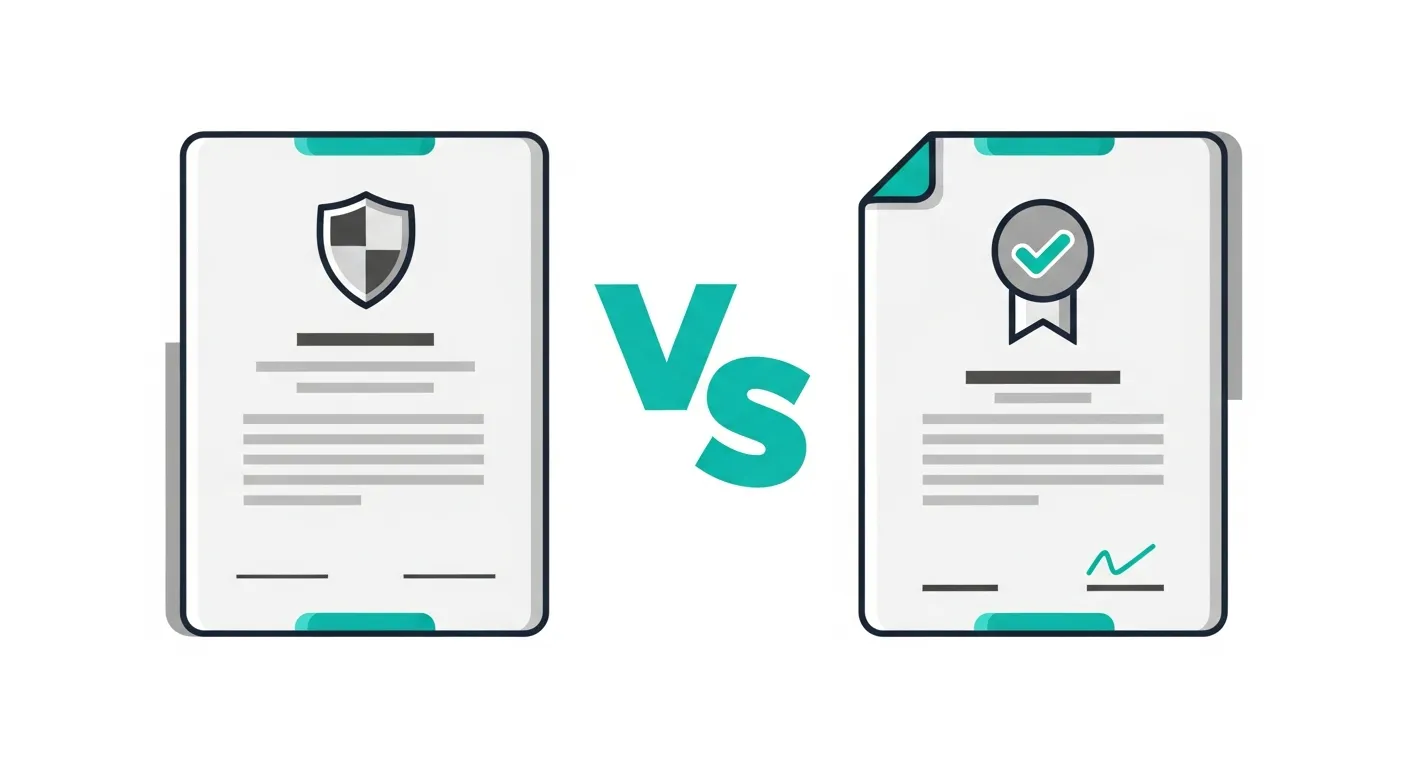
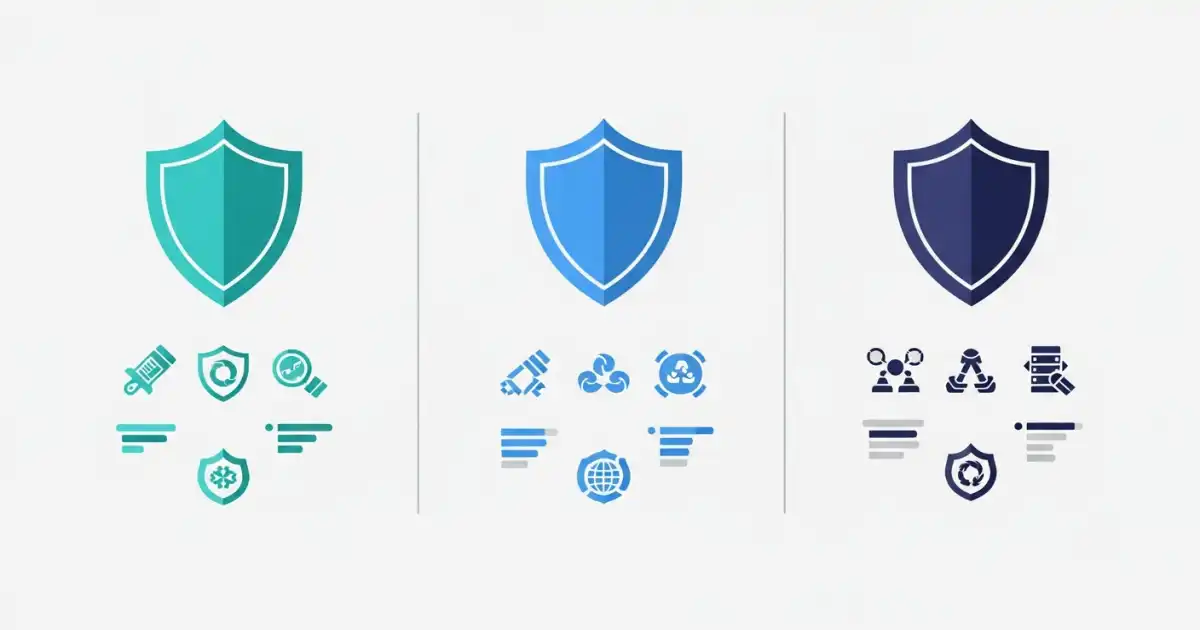
Choosing between ISO 27001 vs SOC 2 vs NIST can paralyze security teams at startups and SMBs alike. Each framework serves a different purpose, appeals to different buyers, and requires different levels of investment. This ISO 27001 vs SOC 2 vs NIST comparison breaks down when each framework makes sense, how they overlap, and which one your organization should prioritize.
If you are a founder, compliance lead, or CTO deciding where to invest your compliance budget, this guide gives you the data to make that decision confidently.
Quick Comparison: ISO 27001 vs SOC 2 vs NIST
| Feature | ISO 27001 | SOC 2 | NIST CSF | |---------|-----------|-------|----------| | Type | International certification | Attestation report | Voluntary framework | | Issued by | Accredited certification body | Licensed CPA firm | Self-assessed (no certificate) | | Validity | 3 years (with annual surveillance) | 12 months (Type 2) | No expiration | | Geographic focus | Global | Primarily North America | United States (growing global use) | | Cost range | K to K+ (first year) | K to K+ (first year) | Free to implement | | Timeline | 9 to 18 months | 3 to 12 months | Flexible | | Mandatory? | No (but often contractually required) | No (but expected by US enterprise buyers) | Required for US federal contractors | | Controls | 93 controls in 4 categories | 5 Trust Service Criteria | 6 functions, 23 categories, 108 subcategories |
ISO 27001: The Global Standard
ISO 27001 provides a comprehensive information security management system (ISMS) framework. It is the most recognized security certification worldwide and is the default requirement for European, Asian, and multinational enterprise buyers.
Best for:
- Startups and companies selling to international markets
- SMBs and organizations in the EU or doing business with EU companies
- Companies that want a single certification covering their entire security program
- Organizations seeking long-term security maturity (the 3-year certification cycle encourages continuous improvement)
Key characteristics:
- Requires building a formal ISMS with documented policies, risk assessments, and management reviews
- 93 controls across organizational, people, physical, and technological categories
- Certification is valid for 3 years with annual surveillance audits
- Must be audited by an accredited certification body (not a CPA firm)
Limitations:
- Longer implementation timeline (9 to 18 months typical)
- Higher upfront cost due to ISMS development
- Less recognized by smaller US-only buyers compared to SOC 2
- Certification audit is pass/fail, so the certificate itself does not detail what you do well
For a step-by-step walkthrough, see our ISO 27001 implementation guide.
SOC 2: The North American Standard

SOC 2, developed by the American Institute of Certified Public Accountants (AICPA), evaluates an organization against five Trust Service Criteria: Security, Availability, Processing Integrity, Confidentiality, and Privacy. It is the dominant compliance framework for SaaS companies selling to US enterprise buyers.
Best for:
- SaaS startups and cloud service providers selling to US enterprises
- Companies responding to vendor security questionnaires from US buyers
- Organizations that need a compliance framework fast (SOC 2 can be achieved in 3 to 6 months with automation tools)
- Companies already using GRC platforms like Vanta, Drata, or Secureframe
Key characteristics:
- Two report types: Type 1 (point-in-time) and Type 2 (observation over 3 to 12 months)
- Audited by a licensed CPA firm, not a certification body
- Report includes detailed descriptions of your controls and the auditor's findings
- Only Security (Common Criteria) is mandatory; other criteria are optional
- No formal certificate issued. Instead, you receive a detailed audit report
Limitations:
- Reports are valid for only 12 months; you must re-audit annually
- Less recognized outside North America
- The report is confidential by default (you share it under NDA, unlike an ISO certificate)
- Does not require a formal management system like ISO 27001
For more detail on SOC 2, see our SOC 2 compliance checklist and SOC 2 audit cost breakdown.
NIST Cybersecurity Framework: The US Government Standard
The NIST Cybersecurity Framework (CSF), now in version 2.0, provides a flexible, risk-based approach to managing cybersecurity. Originally designed for critical infrastructure, it has been widely adopted across industries as a security maturity benchmark.
Best for:
- US federal contractors and suppliers (often mandatory)
- Startups and SMBs that want a free, comprehensive security framework without the cost of formal certification
- Small companies building their security program from scratch who want a structured starting point
- Organizations that need to demonstrate security maturity without pursuing formal certification
Key characteristics:
- Six core functions: Govern, Identify, Protect, Detect, Respond, Recover
- 23 categories and 108 subcategories of security outcomes
- Tiered maturity model (Partial, Risk Informed, Repeatable, Adaptive)
- Free to download and implement
- No certification process. Organizations self-assess or hire consultants for gap analysis
- Version 2.0 (released February 2024) added the Govern function and expanded supply chain risk management
Limitations:
- No formal certification, so it carries less weight in vendor assessments than ISO 27001 or SOC 2
- Self-assessment means no external validation of claims
- Very broad, which makes implementation guidance less specific than ISO 27001 or SOC 2
- Enterprise buyers rarely accept NIST CSF alignment as a substitute for SOC 2 or ISO 27001
For details on the framework structure, see our NIST CSF 2.0 guide and NIST 800-53 controls overview.
How the Three Frameworks Overlap
Despite their differences, these frameworks share significant common ground:
Control Mapping
| Security Domain | ISO 27001 | SOC 2 | NIST CSF | |----------------|-----------|-------|----------| | Access control | A.5.15 to A.5.18, A.8.2 to A.8.5 | CC6.1 to CC6.3 | PR.AA | | Risk assessment | Clause 6.1.2 | CC3.1 to CC3.4 | ID.RA | | Incident management | A.5.24 to A.5.28 | CC7.3 to CC7.5 | RS.AN, RS.MA | | Change management | A.8.32 | CC8.1 | PR.IP | | Vendor management | A.5.19 to A.5.23 | CC9.2 | ID.SC | | Encryption | A.8.24 | CC6.1, CC6.7 | PR.DS | | Monitoring/logging | A.8.15 to A.8.16 | CC7.1 to CC7.2 | DE.CM | | Business continuity | A.5.29 to A.5.30 | A1.1 to A1.3 | RC.RP |
Organizations that implement one framework typically satisfy 60 to 75% of the requirements for the others. This overlap means pursuing multiple frameworks is significantly cheaper than starting each from scratch.
Decision Framework: Which Should You Pursue First?
When evaluating ISO 27001 vs SOC 2 vs NIST for your business, the answer depends on your customers, geography, and stage. Here are the most common scenarios for startups, SMBs, and growing companies.
Scenario 1: SaaS Startup Selling to US Enterprise Buyers
Start with SOC 2 Type 2. US enterprise procurement teams expect SOC 2 reports. It is faster and cheaper than ISO 27001 for your first compliance effort. Add ISO 27001 later when you expand internationally.
Timeline: 3 to 6 months with a GRC platform. Budget: ,000 to ,000.
Scenario 2: Company Selling to European or Global Enterprises
Start with ISO 27001. European buyers recognize ISO 27001 as the default security certification. SOC 2 is less understood outside North America. ISO 27001 also provides a stronger foundation for GDPR compliance.
Timeline: 9 to 18 months. Budget: ,000 to ,000.
Scenario 3: US Federal Contractor or Critical Infrastructure
Start with NIST CSF/NIST 800-171. Federal contracts often mandate NIST compliance. Use NIST as your baseline and add SOC 2 or ISO 27001 if commercial customers require them.
Timeline: 3 to 9 months for initial implementation. Budget: Internal staff time plus optional consulting (,000 to ,000).
Scenario 4: Early-Stage Startup (Pre-Revenue or Seed Stage)
Start with SOC 2 Type 1. It is the fastest path to a compliance credential. A Type 1 report demonstrates point-in-time compliance, which is often sufficient for early sales conversations. Upgrade to Type 2 when you have 6+ months of operations to audit.
Timeline: 4 to 8 weeks with a GRC platform. Budget: ,000 to ,000.
Scenario 5: Company Needs Multiple Frameworks
Start with the one your highest-value customer requires. Then leverage the overlap to add the second framework at 30 to 40% of the standalone cost. Most GRC platforms (compare options here) support multi-framework mapping, which makes maintaining two or three frameworks simultaneously manageable.
Cost Comparison: Year 1 and Ongoing
| Cost Element | ISO 27001 | SOC 2 | NIST CSF | |-------------|-----------|-------|----------| | Implementation consulting | K to K | K to K | /bin/zsh to K | | GRC platform | K to K/year | K to K/year | /bin/zsh to K/year | | Audit/assessment | K to K | K to K | /bin/zsh (self-assessed) | | Annual maintenance | K to K | K to K (annual re-audit) | K to K | | Year 1 total | K to K | K to K | K to K |
Pursuing Multiple Frameworks
Many organizations eventually need two or all three frameworks. Here is how to approach this efficiently:
Unified control library. Map your controls to all three frameworks simultaneously. A single access control policy can satisfy ISO 27001 A.5.15, SOC 2 CC6.1, and NIST PR.AA. Maintaining one control with three mappings is far more efficient than three separate control sets.
Single GRC platform. Use a platform that supports multi-framework mapping. Vanta, Drata, and Secureframe all support ISO 27001, SOC 2, and NIST from a single dashboard.
Staggered audits. Schedule your ISO 27001 surveillance audit and SOC 2 audit in different quarters to spread the workload and cost across the year.
Common evidence repository. Store evidence once, reference it for multiple frameworks. A quarterly access review satisfies requirements across all three frameworks.
Frequently Asked Questions

Can I use NIST CSF instead of ISO 27001 or SOC 2?
For internal security maturity, yes. For customer-facing compliance, usually not. Enterprise buyers and startup procurement teams expect formal certifications (ISO 27001) or attestation reports (SOC 2). NIST CSF self-assessment rarely satisfies these requirements unless you are selling to US federal agencies.
Which framework is hardest to implement?
When comparing ISO 27001 vs SOC 2 vs NIST by difficulty, ISO 27001 has the longest typical timeline (9 to 18 months) and requires the most organizational change due to its ISMS requirements. SOC 2 is faster but requires annual re-auditing. NIST CSF is the most flexible but provides no external validation. See our ISO 27001 implementation guide for the full process.
Do SOC 2 and ISO 27001 cover the same things?
There is roughly 60 to 70% overlap in the controls they evaluate. The main differences are structural: ISO 27001 requires a management system with formal risk assessment, while SOC 2 focuses on control effectiveness against Trust Service Criteria. For a detailed comparison, see our SOC 2 vs ISO 27001 guide.
How long does it take to add a second framework if I already have one?
Adding SOC 2 after ISO 27001 (or vice versa) typically takes 2 to 4 months with a GRC platform, compared to 6 to 12 months starting from scratch. The control overlap means most of the work is mapping and gap-filling, not building from zero.
Is NIST CSF 2.0 mandatory for any organization?
NIST CSF itself is voluntary. However, specific NIST publications (like NIST 800-171 for CUI protection) are mandatory for US federal contractors. Executive Order 14028 also increased NIST framework requirements for federal agencies and their suppliers.
Which framework do investors look for during due diligence?
In the ISO 27001 vs SOC 2 vs NIST comparison for fundraising, SOC 2 Type 2 is the most commonly requested during venture capital and private equity due diligence for US-based SaaS companies. ISO 27001 is more common in European and cross-border transactions.