HIPAA Training Requirements: What the Regulations Actually Say
TL;DR
- Two separate rules require training: the Privacy Rule at 45 CFR 164.530(b) and the Security Rule at 45 CFR 164.308(a)(5).
- Every workforce member must be trained, including contractors, volunteers, and executives, with no exceptions.
- The Privacy Rule requires training before workforce members handle PHI and after any material policy change. The Security Rule requires an ongoing awareness and training program.
- Documentation must be retained for six years from creation or last date in effect, whichever is later.
- Penalty tiers for willful neglect start at $14,602 per violation under the current inflation-adjusted schedule, with an annual cap of $2,190,294 for uncorrected violations.
Who This Is For
This article is for compliance officers, privacy officers, HR leads, and IT security teams at covered entities and business associates who need to build, audit, or defend a HIPAA training program. It covers the regulatory text directly, what OCR looks for during investigations, and how to structure your program so documentation holds up.
The Two Regulatory Hooks

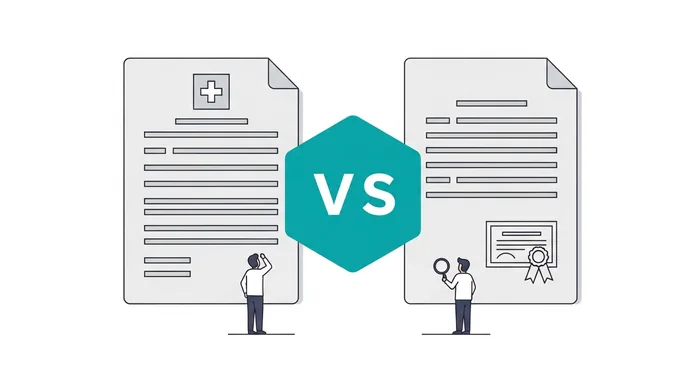
HIPAA training obligations come from two separate subparts of 45 CFR Part 164, and they are not interchangeable.
Privacy Rule: 45 CFR 164.530(b)
The Privacy Rule training standard at 45 CFR 164.530(b)(1) states: a covered entity "must train all members of its workforce on the policies and procedures with respect to protected health information required by this subpart and subpart D of this part, as necessary and appropriate for the members of the workforce to carry out their functions within the covered entity."
This standard applies to covered entities. It has two timing triggers baked in:
- Initial training: New workforce members must be trained "within a reasonable period of time" after joining. The regulation does not define "reasonable period." A defensible organizational policy is completion before any access to PHI is granted, or within 30 days of the start date. That 30-day figure is not a regulatory requirement but a commonly adopted internal standard.
- Material change training: When policies or procedures that affect how workforce members handle PHI change materially, training must follow "within a reasonable period of time" after the change takes effect.
The Privacy Rule training focuses on day-to-day PHI handling: what counts as PHI, permitted uses and disclosures, the minimum necessary standard, patient rights, and how to report violations internally.
Security Rule: 45 CFR 164.308(a)(5)
The Security Rule training standard at 45 CFR 164.308(a)(5)(i) applies to both covered entities and business associates. The standard reads: covered entities and business associates must "implement a security awareness and training program for all members of its workforce (including management)."
This standard is required, not addressable. That means there is no flexibility to skip it or substitute an equivalent. What is addressable are the four implementation specifications under (a)(5)(ii):
- (A) Security reminders, periodic security updates to the workforce
- (B) Protection from malicious software, procedures for guarding against, detecting, and reporting malicious software
- (C) Log-in monitoring, procedures for monitoring log-in attempts and reporting discrepancies
- (D) Password management, procedures for creating, changing, and safeguarding passwords
"Addressable" under 45 CFR 164.306(d) does not mean optional. It means the covered entity or business associate must assess whether each specification is reasonable and appropriate for its environment. If not implemented, the entity must document why and describe an equivalent alternative measure. In practice, most organizations implement all four.
How the Two Requirements Work Together
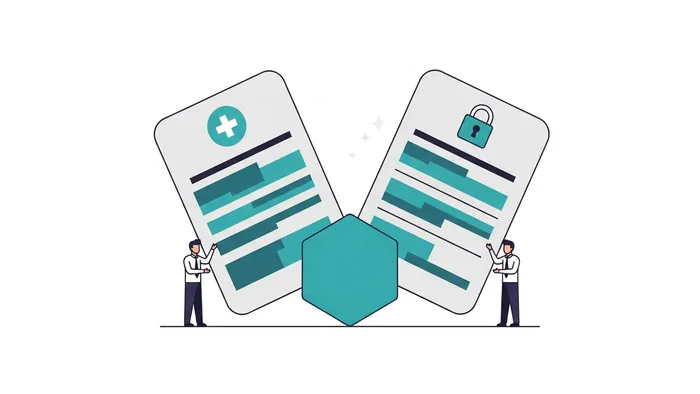
Privacy Rule training and Security Rule training address different risk surfaces. The Privacy Rule covers PHI handling, patient rights, and appropriate disclosure. The Security Rule covers electronic PHI (ePHI) specifically: access controls, system security, malware, and incident reporting. An employee who handles paper records but never touches ePHI still requires Privacy Rule training. An IT engineer who never sees PHI but manages the systems that hold it requires Security Rule training. Clinical staff who access EHRs require both.
Who Must Be Trained
"Workforce" under HIPAA is defined broadly in 45 CFR 160.103 as "employees, volunteers, trainees, and other persons whose conduct, in the performance of work for a covered entity or business associate, is under the direct control of such covered entity or business associate, whether or not they are paid by the covered entity or business associate."
The practical scope is wide:
| Role | Privacy Rule Training | Security Rule Training |
|---|---|---|
| Clinical staff | Full | Full |
| IT and security teams | Overview | Full (including technical safeguards) |
| Administrative and billing staff | Full | Overview |
| Management and executives | Full | Full |
| Facilities and maintenance | Overview | Overview (physical safeguards) |
| Contractors with PHI/ePHI access | Same as equivalent employee role | Same as equivalent employee role |
| Volunteers | Yes, scoped to their duties | Yes, scoped to their duties |
The CEO and the part-time receptionist both require training appropriate to their roles. No workforce member is exempt.
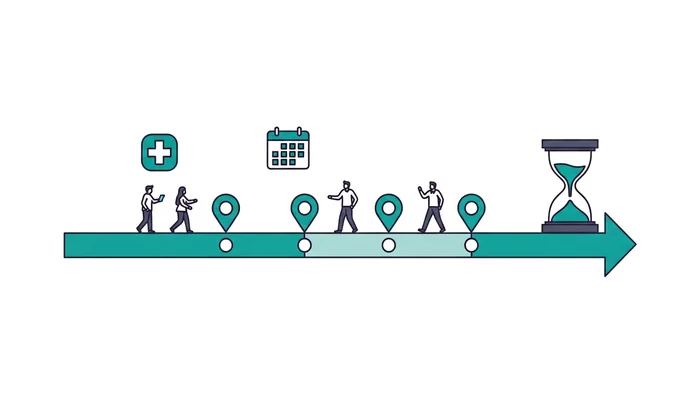
Training Frequency
Neither rule specifies a mandatory annual training cycle. What each rule does specify is different:
- The Privacy Rule requires training at hire and after material policy changes.
- The Security Rule requires an ongoing security awareness and training program, plus periodic security reminders under (a)(5)(ii)(A).
"Ongoing" is the operative word in the Security Rule. HHS has confirmed in its Security Rule guidance that the Security Rule contemplates more than a one-time event. Periodic refreshers are expected, and their absence has been treated as a program deficiency during OCR investigations.
Annual training has become the most widely adopted cadence among covered entities, a pattern reflected in OCR enforcement findings and commonly observed compliance program designs, because it gives organizations a documented, defensible schedule, though the regulations do not mandate an annual cycle specifically. A useful minimum schedule:
| Training Event | Timing |
|---|---|
| Initial training for new workforce members | Before PHI/ePHI access is granted, or within 30 days of hire |
| Annual refresher | Every 12 months from prior completion |
| Policy change training | After any material change to PHI-related policies |
| Security reminders (email, poster, brief) | Monthly or quarterly |
| Incident-triggered training | After any breach, near-miss, or phishing simulation failure |
Organizations that train only at hire and never repeat face significant enforcement exposure. In breach investigations, OCR reviews training records as part of its standard request set. A gap in annual training is documented as a program failure.
What Training Must Cover

Content requirements are not spelled out in a single regulatory checklist. They must be inferred from what the rules protect: PHI and ePHI, patient rights, and the administrative, physical, and technical safeguards for ePHI.
Privacy Rule Topics
- Definition of PHI and what specific data elements are covered
- The minimum necessary standard: only access the PHI your job function requires
- Patient rights: access, amendment, accounting of disclosures, restriction requests
- Permitted uses and disclosures: treatment, payment, healthcare operations
- Authorization requirements for non-routine disclosures
- Notice of Privacy Practices: what it is and when to provide it
- Verbal, written, and electronic PHI handling
- Proper disposal: shredding paper records, secure deletion of digital files
- How to report suspected privacy violations internally
Security Rule Topics
- Administrative, physical, and technical safeguard categories under 45 CFR 164.308, 164.310, and 164.312
- Workstation security: screen locks, unattended workstation policies
- Password management: creation, rotation, and safeguarding
- Mobile device security, remote access, and BYOD policies
- Phishing recognition and reporting
- Malware detection and suspicious email handling
- Physical access controls: visitor management, badge access, server room policy
- Encryption of ePHI in transit and at rest
- Incident reporting: what constitutes a security incident, who to notify, how quickly
- Acceptable use of IT systems and consequences for policy violations
Breach Notification Rule Topics
- Definition of a breach under 45 CFR 164.402
- How to recognize a potential breach versus a privacy incident
- Internal reporting chain: who to contact immediately
- The 60-day individual notification timeline under 45 CFR 164.404
- Consequences of failing to identify or report a breach
Building the Training Program
Start With a Training Needs Assessment
Before building content, review your HIPAA risk assessment results. The risk assessment identifies where workforce behavior contributes to risk. Common high-risk areas include phishing susceptibility, improper PHI disposal, unauthorized record access, and unsecured personal devices. Training priorities should follow risk findings, not a static topic checklist.
Develop Role-Based Modules
Create distinct training tracks for different workforce segments rather than one universal course. At minimum, distinguish:
- General HIPAA awareness: 60-90 minutes covering both Privacy and Security Rule basics. Required for all workforce members.
- Role-specific modules: 30-60 minutes each, scoped to the risk profile of the role (clinical, IT, administrative, management).
- Annual refresher: 30-60 minutes updating workforce on policy changes, enforcement developments, and newly identified threats.
- Targeted micro-training: 5-15 minute sessions addressing a specific risk identified in your risk assessment or triggered by an incident.
These time ranges are editorial estimates based on common program designs; no regulation specifies training duration minimums or maximums.
Choose a Delivery Method
Three delivery approaches satisfy HIPAA requirements. None is prescribed:
Online/LMS: Scales to any organization size. Enables automated tracking, completion reporting, and certificate generation. Certificates are useful documentation during an OCR audit. Recommended for organizations with distributed or large workforces.
In-person: Best for new hire orientation where questions are common, for workforce members with limited technology access, and for sensitive role-specific topics. More administrative effort to track completion.
Hybrid: Use online for annual refreshers and basic topics. Use in-person for initial orientation sessions and complex role-specific content.
Phishing simulations are a useful supplement but not a substitute for formal training. They test behavior rather than knowledge. Run them separately from training events and use the results to trigger targeted follow-up training for individuals who fail.
Document Everything
45 CFR 164.530(j) requires that training documentation be retained for at least six years from the date of creation or the date when the policy was last in effect, whichever is later.
Your training records are the primary evidence of compliance during an OCR investigation or breach response. Keep records of:
- Training materials, including all versions with version dates
- Dates training was conducted
- Names and job roles of attendees
- Completion status and assessment scores
- Policy acknowledgment signatures
- Trainer credentials for in-person sessions
Organizations that cannot produce training records when OCR requests them are treated the same as organizations that did not train. The absence of documentation is treated as the absence of the program.
Test Comprehension
Knowledge assessments at the end of each module serve two purposes: they give you evidence that training was absorbed, and they identify content gaps. Set a minimum passing score (many organizations use 80% as an internal benchmark; no regulation mandates a specific threshold) and require retakes for anyone who does not pass.
Track assessment results over time. Persistent low scores on a particular topic indicate a content or delivery problem, not just individual failure. Revise the material.
Penalties for Training Failures
HIPAA civil penalties are tiered by culpability under 45 CFR 160.404, with amounts adjusted for inflation under the Federal Civil Penalties Inflation Adjustment Act of 1990, as amended. The Tier 1 through Tier 3 maximums below are lower than the raw inflation-adjusted statutory maximum of $73,011 per violation because OCR still applies its 2019 Notice of Enforcement Discretion, which caps those three tiers at reduced maximums and annual limits. That notice is sub-regulatory guidance, not a rule, so OCR could revise or rescind it at any time. The figures reflect the adjustment published in the Federal Register on January 28, 2026; a separate OMB directive (Memorandum M-26-11, April 17, 2026) froze any further 2026 inflation adjustment because the fall 2025 government shutdown delayed the Bureau of Labor Statistics data the adjustment depends on, so these amounts remain in effect through at least January 14, 2027. Verify current figures against the HHS Civil Money Penalties page before relying on them for enforcement planning:
| Tier | Culpability | Per-Violation Range | Annual Cap per Category |
|---|---|---|---|
| 1 | No knowledge | $145 - $36,505 | $36,505 |
| 2 | Reasonable cause | $1,461 - $73,011 | $146,053 |
| 3 | Willful neglect, corrected | $14,602 - $73,011 | $365,052 |
| 4 | Willful neglect, not corrected | $73,011 - $2,190,294 | $2,190,294 |
Training failures typically trigger Tier 3 or Tier 4 findings. When an organization has no training program at all, or has trained only at hire and never again, OCR treats this as willful neglect because the organization had the means and the regulatory notice to train but chose not to. That places the violation in the highest tiers.
Enforcement Cases Involving Training Failures
Anthem Inc. (2018): HHS OCR reached a $16 million resolution agreement with Anthem following a 2015 cyberattack that affected 78.8 million individuals. Among the Security Rule violations OCR cited was a failure to conduct an enterprise-wide risk analysis and insufficient security awareness training across the workforce. The $16 million amount represented the largest HIPAA settlement at the time of resolution. (HHS OCR Resolution Agreement)
Premera Blue Cross (2020): HHS OCR reached a $6.85 million resolution agreement following a breach that affected 10.4 million individuals. OCR's findings included failures in risk analysis, information system activity review, and security awareness training for workforce members. (HHS OCR Resolution Agreement)
Memorial Healthcare System (2017): HHS OCR reached a $5.5 million resolution agreement after employees used the login credentials of a former employee to access the PHI of 115,143 individuals. OCR found failures in access controls, audit controls, and workforce training related to improper PHI access. (HHS OCR Resolution Agreement)
These three cases are cited here because OCR's resolution agreements named training deficiencies as contributing violations, not because the training failure was the primary cause in each case. In multi-violation settlements, OCR typically cites all failed safeguards, including training, as part of the pattern of non-compliance.
Training for Business Associates

Business associates are directly subject to the Security Rule training standard at 45 CFR 164.308(a)(5). If your organization is a business associate (SaaS vendor, cloud hosting provider, billing service, data analytics firm with access to PHI), your training program must cover:
- Security Rule administrative, physical, and technical safeguards
- Breach identification and the internal reporting chain
- The specific terms of your Business Associate Agreements, including notification timelines
- Handling and secure disposal of ePHI in your systems
- Incident response procedures
Business associates whose BAAs contractually require Privacy Rule training (which is common) should treat that requirement as binding regardless of the regulatory technicality.
Subcontractors of business associates are also subject to HIPAA requirements. If your business associate arrangement involves downstream vendors who receive PHI, your agreements with those subcontractors must impose the same obligations, and you should verify their training programs as part of vendor due diligence.
Mini-FAQ
Does HIPAA require annual training?
Not explicitly. The Privacy Rule requires training at hire and after material policy changes. The Security Rule requires an ongoing security awareness program. "Ongoing" implies periodic repetition, and OCR's enforcement record treats annual training as the minimum expected cadence. Organizations that train only once at hire are consistently cited for inadequate programs during breach investigations.
Who is exempt from HIPAA training?
No workforce member is exempt. HIPAA defines workforce to include employees, volunteers, trainees, contractors, and any person under the organization's direct control. Training content must be appropriate to each role, but every person must receive it.
What if an employee refuses to complete HIPAA training?
Employees who refuse training create a documented compliance gap. The standard practice is to deny PHI and ePHI system access until training is completed, and to treat refusal as a disciplinary matter. Document the refusal, your response, and any resulting access restriction. Those records belong in the training file.
How long must training records be kept?
Six years from the date of creation or the date the policy was last in effect, whichever is later, per 45 CFR 164.530(j). This applies to training materials, attendance records, assessment scores, and acknowledgment signatures.
Does HIPAA training satisfy SOC 2 security awareness training requirements?
Partly. SOC 2 security awareness training under CC1.4 overlaps with HIPAA Security Rule topics: security policies, acceptable use, incident reporting, and access control awareness. However, SOC 2 may require additional topics depending on your Trust Services Criteria scope: change management awareness, availability control procedures, and processing integrity controls. Organizations pursuing both frameworks should build a unified training program that maps each module to its applicable requirement and documents which standard each module satisfies.
Sources Used
- Cornell Law School Legal Information Institute, "45 CFR § 164.308, Administrative Safeguards," accessed 2026-05-12. https://www.law.cornell.edu/cfr/text/45/164.308
- Cornell Law School Legal Information Institute, "45 CFR § 164.530, Administrative requirements," accessed 2026-05-12. https://www.law.cornell.edu/cfr/text/45/164.530
- Cornell Law School Legal Information Institute, "45 CFR § 164.306, Security standards: General rules," accessed 2026-05-12. https://www.law.cornell.edu/cfr/text/45/164.306
- Cornell Law School Legal Information Institute, "45 CFR § 164.404, Notification to individuals," accessed 2026-05-12. https://www.law.cornell.edu/cfr/text/45/164.404
- Cornell Law School Legal Information Institute, "45 CFR § 164.410, Notification by a business associate," accessed 2026-05-12. https://www.law.cornell.edu/cfr/text/45/164.410
- Cornell Law School Legal Information Institute, "45 CFR § 160.404, Basis for civil money penalty," accessed 2026-05-12. https://www.law.cornell.edu/cfr/text/45/160.404
- Cornell Law School Legal Information Institute, "45 CFR § 160.103, Definitions," accessed 2026-05-12. https://www.law.cornell.edu/cfr/text/45/160.103
- Cornell Law School Legal Information Institute, "45 CFR § 164.402, Definitions," accessed 2026-05-12. https://www.law.cornell.edu/cfr/text/45/164.402
- HIPAA Journal, "HIPAA Violation Fines, Updated for 2026," accessed 2026-07-09. https://www.hipaajournal.com/hipaa-violation-fines/
- HIPAA Journal, "Largest HIPAA Settlements, Anthem, Premera, Memorial Healthcare System," accessed 2026-07-09. https://www.hipaajournal.com/hipaa-enforcement/
- HHS Office for Civil Rights, "Civil Money Penalties and Settlement Agreements," accessed 2026-07-09.
- HHS Office for Civil Rights, "HIPAA Security Rule Guidance Material," accessed 2026-07-03.
- Federal Register, "Annual Civil Monetary Penalties Inflation Adjustment," document 2026-01688, published 2026-01-28, accessed 2026-07-09.
- Office of Management and Budget, Memorandum M-26-11, "Cancellation of Penalty Inflation Adjustments for 2026," published 2026-04-17, accessed 2026-07-09.
Last reviewed: 2026-09-18 by the Security Compliance Guide Editorial Team. Regulatory citations verified against primary HHS, Federal Register, and Cornell LII source text. We use AI to draft initial summaries of publicly available cybersecurity compliance documentation, then verify every claim against primary sources before publication. We are not licensed auditors, attorneys, or compliance consultants. For binding decisions, consult a qualified professional. See our editorial standards for full sourcing rules.